

Founder, Investor, Listener, Skier
LNK
Joined January 2009
- Tweets3.1K
- Following1.8K
- Followers1.3K
- Likes3.9K




Greg Dynek retweeted

Happy birthday to the man, the myth, the legend.
Teddy Roosevelt established 5 national parks, 18 national monuments, 150 national forests and countless other public lands.
Americans are still enjoying the places he helped conserve.
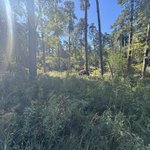
Photo at Theodore Roosevelt National Park.

ALT Sunrise casting golden light over rolling green hills with scattered trees and morning mist.


Greg Dynek retweeted

Bernie Sanders says the top 1% owns more than the bottom 93%, that fewer than a thousand billionaires got $2.2 trillion richer last year, and that it's "obscene."
It's the most seductive and most wrong economic argument of our time. Let me explain why.
First, wealth distribution follows a power law. Always. Everywhere. Books, music, startups, followers on X, goals in soccer. A small minority captures most of the value. That's not a bug of capitalism. It's the mathematical signature of every system where value gets created.
So the only question that matters isn't "how big is the rich's slice?" It's "is the cake growing, and is the slice of the poorest growing with it?"
And the answer is yes. In 1990, more than one human in three lived in extreme poverty. Today it's about one in ten. During exactly the period when billionaires multiplied.
Bernie shows you the slice. He never shows you the cake.
Second thing he won't tell you: past a certain level, wealth stops being consumption. It becomes capital allocation.
Elon Musk isn't sleeping on a pile of cash. He owns stakes in Tesla, SpaceX, xAI. Jeff Bezos owns Amazon stock. That "$2.2 trillion" isn't sitting in a checking account. It's factories, rockets, data centers, millions of jobs. Nobody can eat $100 billion. You can only decide where to invest it.
Once you understand that, the whole debate changes. The real question becomes: who allocates capital better?
The people who built Amazon, SpaceX and Nvidia? Or politicians?
A 5% wealth tax isn't "taking money from the rich." It's taking investment decisions away from people who proved they can create value and handing them to people who proved the opposite.
Because the fundamental difference between an entrepreneur and a politician is consequences.
The entrepreneur invests his own money. If he allocates badly, he loses everything. The market corrects him brutally, no appeal. That's why most startups die: the system kills bad decisions.
The politician invests other people's money. If he allocates badly, nothing happens. Worse, he gets a bigger budget to "fix the problem."
Milton Friedman put it better than anyone. There are four ways to spend money. Your money on yourself: you care about price and quality. Your money on others: you care about price. Others' money on yourself: you care about quality. Others' money on others: you care about nothing.
Government is the fourth box. By design.
Perfect example: California high-speed rail. Approved in 2008 for about $33 billion. Current estimated cost: over $100 billion. Passengers carried: zero. No entrepreneur would have survived that. The politicians who pushed it built careers on it.
And when allocation has no consequences, it eventually finds a buyer. A politician who controls billions without accountability becomes the most profitable target in the world for anyone who wants to steer that money.
The irony is that the left that rails against billionaires is itself funded by billionaires. George Soros is one of the biggest Democratic donors in history. The Gates Foundation shapes public health policy across the planet.
Politicians don't fight billionaires. They pick their own. The ones who fund the state over the ones who compete with it.
So if we actually want fewer poor people, we have to stop judging ideas by their intentions and start judging them by their results. And the results are brutally clear.
China, 1978: Deng Xiaoping opens the economy to markets. More than 800 million people escape extreme poverty. The largest retreat of misery in human history. Not through redistribution. Through the freedom to build.
India, 1991: liberalization. Same movie.
South Korea and North Korea: same people, same language, same starting point in 1953. One became one of the most advanced economies on earth. The other has famines.
Poland and Ukraine: comparable living standards in 1990. Today the average Pole is more than three times richer than the average Ukrainian.
Argentina: a year and a half of liberalization, and the poverty rate falls from over 50% to around 30%.
No country in history escaped poverty by punishing the people who build. Every single one did it by letting them build.
And if you want to see what Bernie's program looks like in real life, you don't have to imagine it. It exists. It's called France. We've been running it for 45 years.
Mass nationalizations in 1981. Two years later, Socialist president Mitterrand has to reverse course into austerity.
Retirement at 60. The 35-hour workweek.
A wealth tax for 35 years. Hundreds of wealthy households left every year for Belgium, Switzerland, London, taking their capital, their companies and their future taxes with them. Macron finally scrapped it in 2018.
Hollande's 75% tax: raised a few hundred million, drove talent out, abandoned after two years.
One of the highest tax burdens in the OECD. Public spending around 57% of GDP, a record in the developed world.
Last balanced budget: 1974. Public debt: over €3.4 trillion. Mass unemployment for four decades.
If taxing the rich and growing the state made people prosperous, France would be the richest country on the planet.
It isn't. GDP per capita in France is barely more than half of America's. It's lower than Mississippi, the poorest state in the US. Not a single global tech giant. Our best engineers build Silicon Valley instead. I've been going back and forth between Paris and San Francisco for years. I see it every week.
And California is about to replay the movie. Prop 40, on the ballot November 3rd, would take 5% of billionaires' net worth. Even Gavin Newsom, a Democratic governor, opposes it. The state's own nonpartisan budget analyst warns that income tax revenue could drop every year if the wealthy leave. Larry Page, Sergey Brin and Peter Thiel have reportedly already started moving their assets out.
You don't fight poverty by shrinking the top. You fight it by growing the cake.
Bernie wants a society where nobody has too much. I want a society where nobody has too little.
The first has been tried everywhere and produces equality in stagnation. The second lifted a billion people out of misery.
Choose.

Greg Dynek retweeted

America & The House Next Door
The first time I understood what America meant, I was standing on a beach on Long Island.
My grandfather had come to America as a Hungarian immigrant fleeing the Holocaust. He arrived speaking little English. He installed carpets in hotels, built a business carpeting many of them, and changed the circumstances of his family.
By the time I was a boy, he owned a waterfront house. It had pear trees, boats and a beach. I thought of it as the trophy of his success.
A few years later, a heart surgeon bought the house next door. He was African American, a rarity along that beach.
I was eight years old. I didn’t have the language for what I was seeing. I knew only that people treated the doctor with great respect. He had devoted his life to becoming exceptionally good at helping other people.
We shared a beach. In the evenings, he would go fishing, and I would be his assistant, grabbing lures and handing him clips. We fished together.
My grandfather and the surgeon gave me two versions of the same lesson. My grandfather had crossed an ocean with almost nothing and built a life. The doctor had become one of the most skilled people in the most demanding profession I could imagine. People respected him for what he could do for them.
I did not think of this as politics. I did not think of it as capitalism. I thought it was how the world worked: a person’s beginning did not have to determine the ending.
That belief shaped how I saw my own life. It also shaped how I understood America.
The idea America has offered the world is simple and powerful: people can change their circumstances through creativity, intelligence and hard work.
Birth matters. Luck matters. The obstacles are real. But they do not have to be the final answer.
For generations, people around the world have looked toward America as a place where that possibility could be tested. They came carrying different languages, histories and hopes. They believed their children might have choices they did not. That belief is larger than any one family. It is a promise to every child who has been told that their starting point defines their future.
America’s importance to the world has never rested on its wealth or power. It has rested on the example of human agency: the ability to make something, learn something, serve someone, and change the shape of a life.
That promise is not automatic. A waterfront house does not prove that every person has the same chance. A heart surgeon’s success does not erase the barriers he crossed. My grandfather’s achievement does not make his journey easy. The point is that their lives were not fixed by where they began. They could act. Their work could matter. Their choices could open a future.
That is the fundamental promise we have to preserve—and make real for more people.
When institutions close paths to opportunity, when tax policy targets people who generate active income, and when concentrated power turns the economy into a system of extraction, children stop believing that effort can change anything. When voters are given increasingly awful choices, that loss reaches beyond one family or one country.
It weakens the foundational idea people everywhere have looked to America to represent.
I think about those two houses on the water. One held the story of an immigrant who built a life after surviving catastrophe. The other held a Black doctor who had devoted his life to saving people. I was a boy on the beach between them.
They made the American promise visible to me.
The world does not need America to be perfect. It needs America to keep proving that a person’s circumstances can change—and that what a person creates for others can change the course of a life.


Greg Dynek retweeted

Finland is the world's happiest country. Forests cover 75% of Finland. Coincidence? We think not.
Greg Dynek retweeted

It’s been ages since I took limnology but I can’t help but answer a trout shaped bat signal. This is a very famous case in my field so I can weigh in here despite my general ignorance about the mighty Midwest.
The Tanner experiment case is one of the most important examples we look at of what are called “large scale ecological experiments” of the same scale/impact/cost as something like Everglades restoration or Yellowstone wolf release, all similar experimental thinking underpins these efforts.
The Great Lakes were originally a cold water ecosystem with the top predator being the lake trout. Lake trout grow slowly relative to other fish, and live in deeper water further from shore. They were at the top of a foodweb that had some remarkably productive commercial fisheries (for lake trout, whitefish, ciscoes (lake herring). Two stressors collapsed the lake trout dominated system: invasive sea lampreys in the early 1900s and overly intense commercial fishing, so few lake trout (large predators) remained.
Alewives from the Atlantic coast reached the Great Lakes over time, with their population exploding. Alewives were the the new top-of-the-foodweb dominant fish by the 1960s, causing huge seasonal die offs that would wreck beaches, close swimming areas, and tank tourism. Alewives had the seasonal die offs because Great Lakes temperature swings just weren't right for a fish that would (on their native East coast) spend winters in the ocean and spring closer to shore or up river.
Howard Tanner, who ran Michigan's fisheries program at the time (60s) was asked by the governor to so something flashy to fix the die offs and maybe bring back a sport fishery. He looked into restoring lake trout and realized because they grow slow (~20 years) this would take pretty long to do. He needed a predator with abundant eggs that he could buy from another state's hatcheries. He realized Pacific salmon, like coho and Chinook, would be perfect becayse they only took 2 years to get big, they'd aggressively feed on the alewives preventing the annual die offs/beach closures, and they're fun sport fish because they jump and put up a fight when they're hooked.
He got the idea from his time spent working fisheries in Colorado and introducing coho and kokanee into reservoirs, so he knew they could be landlocked for life and still complete their life cycle (usually they'd need to spend some time in the ocean).
At this time, Oregon developed a new hatchery tech called the Oregon Moist Pellet (a new type of high quality feed) that resulted in much higher survival of juvenile fish, so they were making more eggs than they needed. Tanner bought a million coho egg from Oregon and releasted them into tributaries of Lake Michigan.
He was looking to create what's called a "trophic cascade" in ecology, or a chain reaction where predators reduce prey, then the prey's food increases, which impacts the next level down. So they needed a predator to eat alewife so the alewives would eat less zooplankton so that the zooplankton could live to graze down algae (and prevent algal blooms). Fewer alewives also allowed the "assemblage" or groups of fish further down the food chain to come back since they weren't eating all their larva.
This is considered one of the first major large scale experimental trophic cascade experiments implemented by an American fish and wildlife agency in a freshwater system that worked. His experiment led to a world class sport fishery, major reductions to beach closures/die offs, better controls of algal blooms, and the original ideas that we might want to manage fish for recreation and ecosystems simultaneously.
The system today is what we call heavily managed (so there was never a return to the native lake trout at the top of the foodweb). The state agency stocks Chinook, coho, steelhead, and lake trout. They use really neat predator-prey models to determine stocking decisions and keep alewives at preferred levels. This case completely transformed what Americans think of when we think of the capacity of a state's hatcheries. Working across state lines for eggs, stocking millions of fish annually, determine assemblages based on what anglers like, and using hatchery raised fish for ecological management were all tried here at a scale that hadn't really been done before, and it worked. One of the prestige fisheries scholarships in America is named after Tanner at Michigan State, and he has a research vessel or two named after him which is a huge honor.

On my knees begging @RodeoProfessor for an analysis of the guy who put salmon in Michigan lakes and rivers

A good read on why the music never stopped for Jim James and Jeff Tweedy #thedaysbetween npr.org/2026/08/08/nx-s1-590…
Greg Dynek retweeted

The Arcane Texas Fact of the Day: The Armadillo World Headquarters in Austin opened 56 years ago today, on August 7, 1970. The bill that night was Shiva's Headband, The Hub City Movers, and Whistler. I have such great memories of it. I saw Frank Zappa, Blue Oyster Cult, Bill Bruford, Dire Straits, Taj Mahal, Townes van Zandt and others there. I'd love to hear any memories that y'all have.

This makes no sense to me. npr.org/2026/07/23/nx-s1-590…

Reclaiming the lost art of listening to music - CBS News cbsnews.com/video/reclaiming…
Greg Dynek retweeted

Happy birthday Mel Brooks — and thanks for the laughs! ‘Blazing Saddles’ director turning 100 trib.al/BW5FpLV

Greg Dynek retweeted

Tom Bombadil is the most mysterious character in The Lord of the Rings.
He's the oldest being in Middle-earth and completely immune to the Ring's power — but why?
Bombadil is the key to the underlying ethics of the entire story, and to resisting evil yourself...
Tom Bombadil is an enigmatic, merry hermit of the countryside, known as "oldest and fatherless" by the Elves. He is truly ancient, and claims he was "here before the river and the trees." He's so confounding that Peter Jackson left him out of the films entirely.
This is understandable, since he's unimportant to the development of the plot. Tolkien, however, saw fit to include him anyway, because Tom reveals a lot about the underlying ethics of Middle-earth, and how to shield yourself from evil.
The hobbits meet Bombadil early on in their quest, before they reach Bree and the Prancing Pony Inn. He rescues Merry and Pippin from Old Man Willow, and invites the hobbits to stay at his house in the Old Forest.
There, the hobbits realize something strange about him: the Ring has no power over Bombadil whatsoever.
When he wears it, he remains visible. He treats it as a plaything, making it disappear with a magic trick. Indeed, at the Council of Elrond, Gandalf rejects the idea of giving the Ring to Tom, for he would likely misplace it or forget about it entirely.
So just who is he, exactly?
When Frodo asks this very question to Tom's wife Goldberry, she simply responds "He is." It's a cryptic answer that echoes God's famous answer to Moses in the Book of Exodus: "I am who I am."
Thus, many theorize that Bombadil is God, some kind of angelic being, or even the spirit of the Music of the Ainur (due to the fact that he is constantly singing). But Tolkien's letters reveal something considerably more interesting…
In April 1954, Tolkien wrote:
"The story is cast in terms of a good side, and a bad side, beauty against ruthless ugliness, tyranny against kingship… but both sides in some degree, conservative or destructive, want a measure of control.But if you have, as it were, taken a 'vow of poverty', renounced control, and take your delight in things for themselves without reference to yourself… then the questions of the rights and wrongs of power and control might become utterly meaningless to you, and the means of power quite valueless…"
So, Bombadil is a representation of what it means to take pure delight in the world around you — to experience people and things simply as they are, without any thought for what they could be or how you could use them. And this is why the Ring has no power over him.
To Bombadil, the One Ring is simply a ring, and the possibilities of what can be achieved through its power are of no importance. He is able to resist its evil precisely because he is entirely content with the world around him.
At the end of the story, having accomplished what he set out to do in Middle-earth, Gandalf pays Tom a visit before returning to the Undying Lands:
"I am going to have a long talk with Bombadil: such a talk as I have not had in all my time."
If Bombadil is the epitome of simply enjoying life and being, Gandalf is the epitome of doing. He guides the hobbits, fights the Balrog, and runs up and down Middle-earth to help destroy the One Ring.
But now that he's finally liberated from doing, he immediately heads to Bombadil's. He does so with a sense of relief, as if he's at last able to access a purer and higher mode of being — a sort of innocence that cannot be fully experienced by those consumed by doing.
Of course, by this Tolkien doesn't disparage the value of action. The entirety of LOTR displays the importance of rising up against evil, even in the face of all odds. But with the inclusion of Bombadil, he does remind readers that fighting isn't all there is.
Bombadil reminds us that while it's important to strive and *do*, it is just as important to occasionally step back and *be*. Indeed, your ability to do so plays a crucial role in helping you resist the allure of evil…
Read the full piece here:
theculturist.io/welcome
The unsung hero of The Lord of the Rings...

Spoiler alert: yes
Is playing music good for the brain?
economist.com/science-and-te…
Was the town of Viborg, SD founded by a group of @Vikings fans who were never fully assimilated by the #Borg?
#Interstate29ponderings
Greg Dynek retweeted

🇸🇮 Tadej Pogacar wins his 4️⃣th #LBL, his 3️⃣rd in a row!
🇸🇮 @TamauPogi remporte son 4️⃣ème #LBL, le 3️⃣ème à la suite !

Greg Dynek retweeted

Texas actually did something like this, but better. Starting in the 1960s, thanks to Lady Bird Johnson and the Highway Beautification Act, Texas began planting native wildflowers along highways.
Today, TxDOT manages about 800,000 acres of roadside and intentionally delays mowing until early summer after wildflowers have bloomed and dropped seed.
Mowing late in the season allows the wildflowers to stay vigorous and not get crowded out by taller grasses or trees and shrubs.
Take a drive along Texas highways in the Spring and you will enjoy a beautiful display of Bluebonnets, Indian Paintbrush, Coreopsis, Winecup, Mexican Hat, Indian Blanket, and more!
Then thank Ladybird Johnson and TxDOT’s commitment to keeping Texas Highways beautiful.


