








Alison Cousin retweeted

Ex-Ukrainian PM Yatsenyuk: This winter will be terrible. Russia makes 70 to 100 ballistic missiles a month. Add North Korea’s supply, and it’s about 170.
To shoot them down, we need 130 Patriot interceptors at best, 260 by protocol. Right now we have zero. 1/
Alison Cousin retweeted

One more manifestation of Trump’s realignment toward adversaries and away from allies:

Trump officials push the idea of a U.S.-Russia-China joint candidate for U.N. Secretary-General: former Hungarian Prime Minister Viktor Orbán. wsj.com/opinion/viktor-orban… via @WSJopinion

Alison Cousin retweeted

And then some facts:
More than 90 % of the Russian soldiers in Ukraine are contract soldiers.
Their average age is almost 40.
I had one Tesla before this guy went batshit crazy. Never again.

Alison Cousin retweeted

Putin says Ukrainian land belongs to Russia because of history. But what happens when we apply his logic to Russia itself?
On October 22, Putin once again claimed that Ukrainian territories are historically Russian.
“This is not their territory. It’s the territory of historical Russia,” he said.
Interesting argument. Let’s apply the same logic to Russia.
🇯🇵 Japan: The Soviet Union seized the southern Kuril Islands in 1945. Japan still claims four of those islands, which Russia controls today.
🇨🇳 China: Vladivostok and large parts of Russia’s Far East were once under China’s Qing dynasty. Russia acquired these territories through treaties in the 19th century.
🇫🇮 Finland: Vyborg and parts of Karelia belonged to Finland before World War II. Finland was forced to surrender them to the Soviet Union.
🇩🇪 Germany: Kaliningrad was once Königsberg, a German city and part of East Prussia until 1945.
🇹🇷 Turkey: The Ottoman Empire once controlled Azov and held territory and influence around the northern Black Sea before Russian expansion.
So here’s a question for Putin:
Should Japan take back its islands? Should China reclaim Vladivostok? Should Finland reclaim Vyborg? Should Germany reclaim Kaliningrad?
Of course, historical possession does not automatically give any country the right to seize territory today. Most of these countries do not even make such claims.
And that is precisely the point.
If every country started invading its neighbors to recover territory it controlled centuries ago, where would it end?
Ukraine is an internationally recognized sovereign country. Russia recognized its borders.
History is not a license to invade. And Ukraine does not belong to Russia simply because Putin says it does.
Stand with Ukraine. 🇺🇦
Sources: Reuters (October 22, 2026); historical records and territorial treaties.
Photo credit: Reuters / Russian Pool
#StandWithUkraine #Ukraine #RussianAggression #InternationalLaw #UkraineWar

Alison Cousin retweeted

Nearly 4, 000 Russian bombs, missiles and drones launched against Ukraine in just one week.
Even as diplomatic efforts continue, Russia keeps striking Ukrainian homes, energy infrastructure and even the rescuers who come to help.
Putin is showing no willingness to end his aggression. We must increase pressure on Russia and strengthen Ukraine's air defence. Military support for Ukraine must not slow down.

This past week alone, Russia has launched around 1,600 guided aerial bombs, 48 missiles of various types, including ballistic missiles, and nearly 2,300 attack drones against Ukraine. Unfortunately, almost every day, these brutal strikes leave people killed and injured. In the evening, Russian strikes on the Dnipro region killed four people. My condolences to their families and loved ones. Another 22 people were injured, including an 11-year-old girl. In Vinnytsia, a Russian drone struck a high-rise apartment building. Six people were injured. In Kharkiv, the Russians first struck a home improvement hypermarket and then carried out a cynical double-tap strike on the emergency services that arrived at the scene. First responders were injured. There were also strikes overnight on a thermal power plant, substations, coal mines, grain storage facilities, shopping malls, and a postal logistics hub. Damage has been reported in nine regions.
This is how Russia responds to diplomacy and deisolation. And it is very important that support for those who protect lives not diminish alongside the negotiation process. We need to unblock the deliveries of Patriot interceptors already approved by European countries. We need to continue supporting Ukrainian combat aviation to defend against jet-powered “shaheds.” Every such defense package, especially ahead of winter, helps save lives. I thank all partners who provide this kind of support.
Alison Cousin retweeted
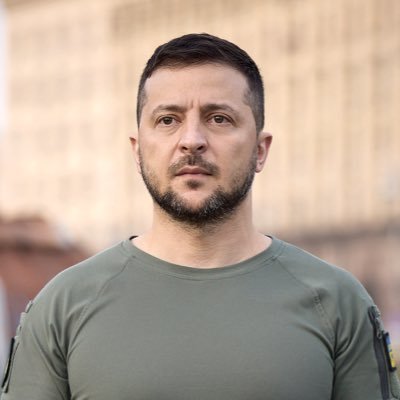
Our conversation with the American side in Oslo was accompanied by three challenges. These were the shortage of air defense, restrictions on Starlink/Starshield, and restrictions on intelligence sharing from the United States of America. I am grateful to the Americans and our team that two of these issues – intelligence and Starlink/Starshield – have been resolved as of today.
The issue of air defense remains. There is progress on missiles for Patriot systems, but things are moving very slowly. More slowly than Russian missiles fly. You cannot say, “Yes, we will give the missiles to you,” and then not deliver them for a month or two. It simply does not work that way.
From an interview with Alla Mazur for TSN Week on 1+1, as part of the United News telethon. (1/5)

Alison Cousin retweeted
10 years? Maybe one, while the Russian occupation policy of murder, rape, torture, and kidnapping would expand immediately. Putin needs war. There’s no off-ramp, no victory other than the destruction of Ukraine. He cannot reintegrate a million soldiers back into a failed economy.

Alison Cousin retweeted

Secretary of State Rubio just called the war in Ukraine a regional war over the Donbas.
First, the Kremlin’s goal is to conquer all of Ukraine and erase Ukrainian identity.
Second, this war is bigger than Ukraine. It is about defending international law and the rules-based international order, and standing up to imperialist dictatorships whose ambitions should have been consigned to the dustbin of history.
Alison Cousin retweeted

To stop the killings, murderer Putin must be stopped. He is the one who started and is waging the war in Ukraine.
The Russian troops who are waging the war in Ukraine are mostly contract soldiers. They are people who went to a foreign country to kill civilians for money. Some of the Russian soldiers are prisoners who get their prison sentences annulled. There are also some mercenaries. The percentage of those who "didn't have a choice" is very low.
This video contains interceptions of conversations between Russian soldiers. They talk about the atrocities they do in Ukraine. There are thousands of documented cases where Russian soldiers kill Ukrainian civilians in several regions of Ukraine. They are confirmed by Ukrainian courts and international investigators and prosecutors.
The slaughter must indeed stop. This means Putin must be stopped.

Alison Cousin retweeted
The Russian propaganda operation begins, with American collusion

Exclusive Senior Adviser to First Lady Melania Trump Marc Beckman claims Russian kids are being kidnapped too #BothSides
Readers added context they thought people might want to know
There is no evidence that Ukraine has kidnapped Russian children.UN investigation concluded that Russia’s deportation, transfer and disappearance of Ukrainian children constitute war crimes
UN report: ohchr.org/en/press-relea…
Alison Cousin retweeted

This is demonstrably true. Previously, each Vatnik Soup thread received between 300k and 5M impressions. Now, we're lucky if we get 100k.
Our annual views have dropped from 700M to 280M. Posts about Ukraine shared by accounts with millions of followers barely get any traction, whereas our more generic posts about AI, for example, can get millions of views.
Ukraine is still one of the hottest topics on this platform, yet voices supporting the country are being throttled, just like Starlink/Starshield was.

Alison Cousin retweeted

Imagine being a CEO of an US energy company and thinking that you work with close associates of the Trump family, only to find out that behind them is a sanctioned Russian company, really pulling the strings.
This happened in Alaska. Polar Train LNG's CEO, Joel Riddle, stepped down after finding out that the Russian "Novatek" company, which is under US sanctions, has been involved in a $25 billion energy project in Alaska. The CEO thought that he was working with Gentry Beach, a close friend of Donald Trump Junior.
Reportedly, that project was also discussed between Witkoff and Jared Kushner when they were with Putin. The White House admitted that the project was talked about "briefly".
We are witnessing the greatest corruption scandal the USA has ever witnessed. It all leads to Trump, his family and the Russians, and apparently they were even ready to sell riches of Alaska to the Russians.
The people in Alaska just need to look over to Russia, where the richest regions in terms of minerals and hydrocarbon resources have been stripped-mined, transferring all the wealth to Moscow and Saint Petersburg and leaving a scarred landscape in extreme poverty. That is the result of rampant corruption.
We are starting to see more details why Trump and his friends are trying so strongly to bully Ukraine into surrender. This is most certainly only the tip of the iceberg.

Alison Cousin retweeted

Oh my… it feels like this was filmed in another universe🥲
Kyiv in 2021.
So bright, so beautiful, so full of life.
We had no idea how much our world was about to change.
I miss this Ukraine💔
🎥: beesaero


Alison Cousin retweeted
You absolutely must watch Zelensky’s interview with Stephen Bartlett. On camera, we see a man who is deeply weary—at times on the verge of collapse—someone who has spent nearly five years living under the constant, direct pressure of war. From the very first minutes, his exhaustion is palpable. When asked the standard question, "How are you?", he replies that he sleeps very little, spending his nights on the phone with military commanders, trying to shift the few remaining air-defense assets from one region to another.
He shares two particularly poignant stories. The first concerns a missile that struck a playground in a matter of seconds; parents watched, through their windows, as their own children were torn apart before their eyes.
The second involves presenting posthumous honors to the families of fallen soldiers: "You hand a medal to a father—you feel the strength in his hand—and he asks, in a hushed voice, 'May we have a hug?' In that moment, I simply cease to exist. Those people are gone, and the survivors will never be the same again."
When the host tries to take him back in time—showing him old photographs from Kryvyi Rih, images from his university years in the KVN comedy troupe, his voice work for *Paddington*, or scenes from the series *Servant of the People*—Zelensky looks on with indifference, as if these things belonged to someone else’s life.
He also recalls February 2022, devoid of any heroic rhetoric. He describes how, for the first twenty days, he was driven purely by adrenaline—rushing from office to office, making endless phone calls, and scrambling to organize supplies of food and water for Kyiv. The full weight of his fear, and the stark realization of what had truly transpired, only hit him three weeks later, when mass graves containing the bodies of hundreds of residents were discovered in Bucha. It is precisely through the example of Bucha that he explains why he is so deeply irritated by those who advise him to reach a quick agreement with everyone: "Imagine if a mass grave were discovered in the United States or Great Britain containing 500 people who had been tortured, their hands bound. How could one simply forgive all that?"
The rest of the conversation centers on the stalemate in which the Ukrainians—and everyone else—find themselves. Zelensky explains the reasons for the war in simple terms: Moscow is attempting to forcibly rebuild the Soviet empire, a project that would be definitively shattered by Ukraine’s move toward Europe. Yet, when he speaks about the present, his words reveal a profound sense of frustration.
Nearly a fifth of the territory is occupied, the east of the country is under heavy bombardment, cities are left without electricity, and people are dying every single day. Meanwhile, any discussion of a ceasefire would require Kyiv to withdraw from its fortified positions—with no guarantee that the offensive wouldn't simply resume within a year.
Finally, the conversation turns to the subject of Trump and the attacks on oil facilities. Trump has publicly criticized Zelensky for striking Russian refineries, fearing that such actions could lead to a sharp rise in diesel prices for American farmers ahead of the elections.
It is here that it becomes clear just how much this attitude hurts Zelensky: his country is in flames, Moscow has rejected his proposal for a mutual halt to attacks on energy infrastructure, and the Americans are sending Patriot missiles—paid for by Europe—to the Middle East—yet he is the one being blamed for fuel prices in the United States.
The entire conversation leaves a rather bleak impression. A man trapped between the daily deaths in his own country and the pragmatic negotiations of allies—who have their own elections and political calculations to consider—can no longer distance himself from it all.
Look at it.
Ayan Sharipbayev

Alison Cousin retweeted
This past week alone, Russia has launched around 1,600 guided aerial bombs, 48 missiles of various types, including ballistic missiles, and nearly 2,300 attack drones against Ukraine. Unfortunately, almost every day, these brutal strikes leave people killed and injured. In the evening, Russian strikes on the Dnipro region killed four people. My condolences to their families and loved ones. Another 22 people were injured, including an 11-year-old girl. In Vinnytsia, a Russian drone struck a high-rise apartment building. Six people were injured. In Kharkiv, the Russians first struck a home improvement hypermarket and then carried out a cynical double-tap strike on the emergency services that arrived at the scene. First responders were injured. There were also strikes overnight on a thermal power plant, substations, coal mines, grain storage facilities, shopping malls, and a postal logistics hub. Damage has been reported in nine regions.
This is how Russia responds to diplomacy and deisolation. And it is very important that support for those who protect lives not diminish alongside the negotiation process. We need to unblock the deliveries of Patriot interceptors already approved by European countries. We need to continue supporting Ukrainian combat aviation to defend against jet-powered “shaheds.” Every such defense package, especially ahead of winter, helps save lives. I thank all partners who provide this kind of support.
Alison Cousin retweeted

Fallout from the Starlink restrictions could hit US weapons exports such as the F-35.
There were already concerns that the F-35 has a built-in software kill switch. And the US actions on Starlink just turned that risk from theoretical to something proven and real.
Very costly choice by the US.
Alison Cousin retweeted

For anyone claiming to care about human life, the solution is simple:
Russia, which started this unprovoked war, stops fighting and withdraws to its borders. The killing would end immediately

Alison Cousin retweeted

I'm sick and tired of Americans demanding that we babysit their toddler-in-chief, who, by the way, is unable to go two seconds without lashing out at someone.

Volodymyr Zelensky’s recent turn to denouncing Donald Trump for “weak” decisions seems based on a gamble that an electoral drubbing will soon weaken America’s president. That may be misplaced economist.com/europe/2026/10…

Alison Cousin retweeted
Putin's army is stuck. Now he is trying to win through propaganda and a terrorist campaign


