

Casual commentator, qualified engineer, part-time builder, full-time developer.
Melbourne, Victoria
Joined December 2024
- Tweets33.7K
- Following548
- Followers9.8K
- Likes102K






Pinned Tweet
Australia has a relatively small population.
We share no land borders and are protected by vast oceans.
We have abundant agricultural land, enormous natural resources, and some of the world’s most valuable exports.
We’ve enjoyed more than 80 years without war on our own soil and never experienced a civil war.
There is no reason poverty should be increasing in this country.
There is no reason the middle class should be shrinking.
There is no reason each generation shouldn’t have the opportunity to live better than the last.
Australia’s challenges aren’t the result of a lack of land, resources, wealth, or stability.
They are the result of political decisions.
And for too long, we’ve kept electing politicians who fail us.

Marko Matvikov retweeted

This is a terrific and terrifying read from @insteconomics
Australia truly is the anti-Abundance nation
It's self-inflicted damage
We keep shooting ourselves in the foot and then wondering why we can't sprint anymore

Planning regulations add $42,000 in compliance costs to an attic renovation -- for no discernible benefit (other than as a make-work scheme for consultants).
stephenkirchner.substack.com…

The problem is the complete absence of any clear collective objective.
No assessment of whether filling those roles via migration actually lifts productivity, real wages or living standards.
No serious consideration of training more Australians, changing incentives, or reforming systems so we simply need fewer of them.
Just an endless conveyor belt of more people to pay more tax to fund a bigger and less effective government that delivers diminishing value.
When shortages keep worsening while living standards keep falling, you’re insane to think more of the same will produce a different result.


David is spot on.
Unless we make it cheaper and more convenient to dump rubbish legally, it’s only going to get worse.
I’ve been seeing this in the construction industry for years as costs have risen and waste management has become more bureaucratised.
Crank up taxes to fund more crackdowns? Good luck with that.
It’s absolutely moronic to think you can simply enforce your way towards a better society.

Marko Matvikov retweeted

Inflation is bad.
It's worse for those who already spend everything they earn.
And worse still when the inflation *rate* on essentials is greater than on discretionary spending.
*Those* are the people getting hurt most, and why we *must* bring inflation down.

I almost feel bad for saying this because it’s inflammatory, but I actually don’t because I believe it to be true.
I doubt Albo’s initial reaction to hearing of Helen Haines’ attack was sorrow and remorse.
I doubt it wasn’t calculating how he could use her tragedy for political gain.
Of course his dirt sheet on her had nothing to do with why she was physically attacked, but he clearly had no issue coming at her a different way for daring to question his integrity.

Prime Minister Anthony Albanese’s dirt unit launched their smear campaign against Helen Haines within 48 hours of the independent MP raising concerns about Labor using taxpayer money to buy votes. news24.com.au/politics/austr…

The "narrow path" concept required government to boost productivity, reduce immigration and cut spending while the RBA was tightening interest rates.
It was always possible, but only if there was a simultaneous effort from government to make up for the less aggressive interest rate hikes.
Maybe the RBA was foolish enough to believe the government to do its part. Or maybe they were just optimistic about their assumptions.
Either way, what's undeniably true is that the combined approach of government and the RBA in recent years has prolonged and deepened the pain.

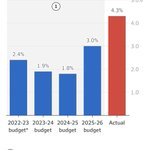
This government has racked up $145bn in unexpected spending forecast revisions since taking office.
This is apparently “budget restraint”.
While the RBA is raising rates to cool demand, government is running expansionary fiscal policy.
This is apparently “responsible economic management”.
The truth is they’re just redefining words because higher inflation and higher interest rates is what Australians are actually getting.

Spending blowouts
afr.com/policy/economy/ndis-…

Marko Matvikov retweeted

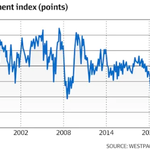
Why did the RBA take the narrow path, and why is it now talking tough?
A balancing clause that treats jobs as a short-run trade-off against inflation. Two definitions of full employment. And a NAIRU estimate in the low 4s that was always wishful.
Three errors, all pointing the same way. Trimmed mean inflation persistent at 3.6 per cent is the bill.
markthegraph.blogspot.com/20…


When leaders say ‘we need to turn down the temperature’, it’s usually just a subtle deflection.
What they typically mean is ‘you need to change’, which often means ‘you need to agree with me’.
This isn’t true leadership.
If a leader believes there’s too much divisive rhetoric, they need to acknowledge their own contribution to it and lead by example to dial it down.
But in this instance, the root cause of the Helen Haines attack isn't just angry rhetoric - it’s a failure of managing a public mental health risk.
Motherhood statements sound nice, but they’re not solutions - whether through words or policy, something tangible needs to change.
This is the difference between wanting to be seen as a leader and actually being one.

Opinion: A generic call for Australians to ‘lower the temperature’ must be backed up by an acknowledgment the temperature has hit boiling point under Anthony Albanese. Read more: bit.ly/47v0cQc

I prefer to stay clear of the Israel-Palestine debate and focus on what’s happening here in Australia.
But anybody looking objectively at the last few years can see that Hamas and its allies have been winning the culture war.
Long after the leaders responsible for the October 7 attack have been killed, useful idiots in Western nations are undermining their own social fabric and committing heinous acts of violence on their behalf.
Too many politicians have been too gutless to take a hard stance against those using this foreign conflict as an excuse to sow division at home - often choosing to stay silent or deflect out of tribalism and political self-interest.
The Bondi and Helen Haines attacks highlight the perverted alliance between elements of the far left and radical Islam.
Unfortunately, the feckless political leadership at state and federal levels under which this been allowed to spread is also weak on dealing with violent crime and mental health risks to the public.
We need a serious cultural correction.
This wet lettuce should never have been a magistrate.
I grew up around violent crime and can tell he doesn’t understand the first thing about the people he’d happily release.
Here he’s demonstrating his poor judgement by so confidently and carelessly assuming he does.
He argues both that they’re too young to understand and also that the punishment is appropriate because it’d work on him - a fully grown adult with entirely different life experience.
That’s illogical.
More important than punishment and deterrents is that the public has a right to know that their safety is a priority in every decision to release repeat offenders.
And he should spend more time with the victims to understand the consequences when it isn’t.
To think of how many times he would’ve been successfully manipulated by kids a fraction of his age throughout his career should embarrass him.

Jacqui Felgate has challenged former magistrate Tony Parsons, after two teenagers arrested in the Monash Freeway chaos earlier this month were released on bail.
MORE 👉 brnw.ch/21x6yPV?utm_source=X
Despite raising many taxes over recent years - including an explicit 'Covid debt levy' - the Victorian Labor government is still spending as if we're in a pandemic.
In other words, the special levy to pay down debt is just being used to fuel more debt.
I've always been open to all kinds of reform - including raising taxes if I knew it'd actually deliver social and economic returns.
But the last few years under state and federal Labor has made me increasingly cynical.
The more taxes go up and living standards go down, the more my position hardens towards 'only spending cuts for the foreseeable future'.


GDP per person tells a different story:
US Aust
Q3 2025 2.1% 0.4%
Q4 2025 1.6% 0.9%
Q1 2026 2.3% 1.0%
Q2 2026 1.9% 0.7%
As does productivity growth:
US Aust
Q3 2025 2.5% 0.8%
Q4 2025 2.5% 1.0%
Q1 2026 2.9% 0.3%
Q2 2026 2.2% –0.2%

The "narrow path" concept required government to boost productivity, reduce immigration and cut spending while the RBA was tightening interest rates.
It was always possible, but only if there was a simultaneous effort from government to make up for the less aggressive interest rate hikes.
Maybe the RBA was foolish enough to believe the government to do its part. Or maybe they were just optimistic about their assumptions.
Either way, what's undeniably true is that the combined approach of government and the RBA in recent years has prolonged and deepened the pain.

