

PhD in Neuroscience. Technology, human-machine interfaces, robotics, wearable devices, neural stimulation, sensorimotor training and rehabilitation
Vancouver, British Columbia
Joined May 2024
- Tweets2.6K
- Following778
- Followers572
- Likes1.9K




Nice feature to try out!

Reply "@ResearchHub test this" under any post with a scientific claim and we will automatically generate a preregistered proposal you can fund to seek the truth!
Brandon Rasman retweeted

Science organizations are either embracing AI or keeping it out of their workflows.
@ResearchHub is leaning into AI for writing and reviewing funding proposals, as a complement to human experts, not a replacement.

Lots of debate this week on whether journals should ban AI in peer review.
We actually tested this in our new preprint, and the results were pretty clear to me.
For context, I've reviewed for most of the big journals and evaluated 1,000 human reviews as an editor. I love to read and evaluate science.
TLDR: From now on I won't do any peer review without AI. For clinical trials, I'd even call human-only review dangerous 🧵

Myomatrix arrays facilitate much higher resolution recordings of motor units compared to traditional fine wire electromyography.


Myomatrix arrays are a game changer for neuroscience.
They can be used to record high resolution motor unit activity in freely moving animals, across a wide range of muscles and species.
Developed by the CAMBER team at Emory University and Georgia Tech.


Brandon Rasman retweeted

1. CRISPR came from basic research on bacteria.
2. Optogenetics started with a discovery in algae.
3. The GFP protein comes from jellyfish.
The biggest breakthroughs all trace to scientists follow their curiosity. This is one huge reason why we must keep funding basic research!

The warm blooded king of the dinosaurs

New @ScienceAdvances research finds that Tyrannosaurus rex was warm-blooded, according to enamel isotopic data from three T. rex teeth. scim.ag/3UZGGIr

Need commercial space in the heart of Vancouver, British Columbia?
Spaces are available in Mount Pleasant, well suited for:
- creative firms
- tech start ups
- design studios
- light industrial operations
- storage and distribution
Reach out if interested.
Yes. And regardless of what the exact timeline will be, the point is to relentlessly strive to solve problems. In this case, sickness of any kind

With all due respect, I will never, ever stop talking about cures. Indeed, where are all these cures after decades of trillions of dollars in research by millions of scientists and doctors? Because biology is complex? Yes obviously but perhaps also because we simply have not been capable of understanding that complexity fast enough.
We are advancing at a snail’s pace while millions of people are dying and suffering. That is the whole point of AI: we have not been able to figure out biology fast enough on our own. AI can help us advance thousands of times faster, accelerating research that once took months into days, using digital twins to simulate and optimize clinical trials, identifying who is most likely to benefit from a treatment with the fewest side effects, and compressing processes that currently take many years into months or weeks, eventually at real time.
So no, some of us will not stop talking about cures. Instead, we need to push as much intelligence, compute, experimentation, and innovation as fast as possible toward curing every disease in the next decade.
We have AI today because a few pioneers believed we could build intelligence greater than our own, at a time when countless experts said that was impossible. How could a machine possibly become smarter than us? Yet here we are. And how many of those who confidently dismissed the possibility later apologized for discouraging what may become the greatest technological advance in human history? Essentially none.
It is always easier and safer to tell people with seemingly impossible claims to stop talking, stop predicting, and lower their expectations. There is almost no reputational cost to saying something transformative will take much much longer or may never happen. But there can be an enormous human cost to excessive caution when urgency matters.
People are dying and suffering every second from all the diseases being discussed and, above all, from aging, which is associated with roughly 100,000 deaths every day worldwide. And the response should be that we stop talking about the C-word?
Sorry, but I’m going to say it again: we will CURE every disease and reverse aging.
I believe we can do it within a decade. Maybe we will be off by a few years. Maybe it will take 15 years rather than 10. But I do not believe it will take longer than that, and if it did, that will be our failure, because we didn’t believe or care enough.
And perhaps relentlessly talking about cures and setting a decade as the deadline is exactly what can help us get there sooner. Even accelerating that future by a single year could mean millions of lives saved and an unimaginable amount of suffering prevented. Ambitious deadlines are not guarantees; they are targets that force us to ask what would have to become possible to reach them. Now “we” includes unimaginable new intelligence, AI geniuses arriving to help.
For the first time, we have something an alien intelligence to help us do what humanity, despite all our brilliance and effort, has so far failed to do. That list below needs to have zero disease listed!
The answer is not to stop talking about cures.
It is to accelerate!
I look forward to no longer fretting about a single PDF version of a paper. But instead updating a live research document

I think we are getting very close to an era where:
1. New mathematical discoveries are published as repositories on GitHub.
2. You can formalize papers live as you write them.
3. Making a single discovery won't matter. You have to populate an entire branch of investigation.
4. Human operators control swarms of agents that help with technical tasks.
5. Complicated, multi-level definitions are not a problem. Problems are translated into their core components.
6. Formalization software is used and written wherever it is needed.
7. There is an interesting dynamic between questions and solutions. New definitions and notions become the most valuable assets.
8. Ugly new proofs immediately become part of the public debate and are rapidly simplified.
9. New branches of mathematics are developed.
10. Nobody writes papers anymore - they become optional reports.
I like that the article photo about a longevity study shows a surfer.
Fully endorse this! Surfing is great for the mind and body.

Can Humans Live Forever? Study Puts a Cap on Life Span at 194 Years
healthline.com/health-news/u…
Original study below. Fair as critique — though if the damage can be slowed or (partly) reversed, that changes the calculation entirely.


It’s unfortunate that so many people don’t think about falls, and the risk of falling, until something happens to them or someone they know.
Falls are one of the leading causes of accidental injury and death worldwide.
🏄👀

South Britannia’s Wavegarden-powered surf lagoon is set beneath British Columbia’s Sea to Sky peaks, promising one of the world’s most scenic manmade waves. surfer.com/news/canada-first…
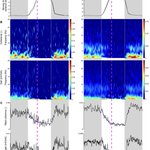
Complex Morlet wavelets are often used for time-frequency analysis of recorded signals in neuroscience and biomechanics. Our group has used them for characterizing how vestibular contributions to balance control change during postural transitions (e.g. from standing to walking, balancing in different sensorimotor conditions). See heat maps in below 👇
This wavelet analysis provides a powerful tool for estimating dynamic changes in neural signals and neuromotor control.
However, they can come with limitations regarding their temporal resolution.
We are exploring novel methods to deliver finer temporal resolution to track how vestibular contributions to balance control modulate during motor activities.


Nice data set. Also inspiring for parents to better track and understand the neuromotor development of their children.
An advanced wearable with motor sensors captures growth metrics and motor growth charts in infants playing at home over the course of more than a year—offering an unparalleled ability to track early patterns in motor and neurodevelopment. @ScienceTM scim.ag/44MZsEB

