

Sr. Fellow Atlantic Council (NR), analyst, consultant, speaker. Ex Ambassador to Canada, France, designate to Belgium/EU. Tweets are personal, RTs#endorsement.
United States
Joined May 2012
- Tweets39.7K
- Following5.4K
- Followers43.5K
- Likes12.5K


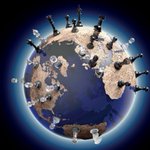




Eight Concurrent Global Stress Points: Select Open-Source News/Analyses
Compiled by: World Affairs 21C (on Substack) - Oct 26, 2026
WHAT’S BREAKING?
Several major stress points are moving at the same time. Recent reporting and open-source analysis show overlapping diplomatic, military, economic, and social pressures that raise the chance of wider disruption. This is a short selection of those pieces, not a full picture, and not a prediction.
Note: There are many other viewpoints and sources. The aim here is to surface a few that help put the developments in context.
1. Middle East oil supply risk
Last-minute diplomatic contacts involving a Mecca-linked initiative and Tehran, amid ongoing concerns over energy supply routes.
xitter.cf/hormuzreport/status/21…
xitter.cf/marionawfal/status/211…
2. Who stands to lose or gain
Short assessment of how the current balance of pressure may shift for different actors.
xitter.cf/sprinter_press/status/…
3. Political tension in Tel Aviv ahead of elections.
xitter.cf/ntarnopolsky/status/21…
4. Official UK warnings on current risks: UK government and media signals highlighting elevated security and geopolitical concerns.
xitter.cf/bbcnewsnight/status/21…
5. Europe under sustained pressure: Hybrid activity continues; analysis of a possible political armistice, a new “Iron Curtain” dynamic, and Russia treating Europe as its principal adversary (including non-nuclear strategic deterrence concepts). NATO cohesion is an open question in parts of the discussion.
xitter.cf/ivan_8848/status/21137…
xitter.cf/vtchakarova/status/211…
xitter.cf/HoansSolo/status/21142…
6. China’s strategic posture
Discussion of a possible US–China–Russia trilateral framework and of Xi’s longer-term approach linking Global South leadership with the Taiwan issue.
xitter.cf/vtchakarova/status/211…
xitter.cf/TheWorldToday/status/2…
7. Internet and cyber vulnerabilities: Recent signals on threats to connectivity and broader cyber security risks.
xitter.cf/marionawfal/status/211…
8. Youth protests across multiple countries: Shared grievances (cost of living, education, housing, governance failures) driving protests from Europe to Asia and Latin America; outcomes so far include some concessions but limited structural change.
aljazeera.com/opinions/2026/…
gatewayhouse.in/the-outcomes…
Disclaimer: Curated selection of public posts and analyses. Not original research, not an official view, and not a forecast. Each linked piece reflects its author’s perspective. Check the sources and draw your own conclusions. xitter.cf/hormuzreport/status/21…


BREAKING: Saudi Arabia, Turkey and Pakistan are rushing their top security officials to Tehran for a last-ditch diplomatic push, with Saudi Defense Minister Khalid bin Salman, Pakistani Army Chief Asim Munir and Turkish intelligence chief Ibrahim Kalin set to meet Iranian officials over the Houthi crisis, Iran’s threats and the looming U.S. strike, per Reuters and Iranian state media.
The emergency visit follows Iran’s offer to broker peace between Saudi Arabia and Yemen’s Houthis, potentially opening a path to end the fighting. A Saudi C-130 reportedly carrying the Saudi defense delegation has landed in Tehran, while a Saudi government-linked Airbus A320-214 also touched down at Mehrabad Airport shortly afterward before departing. Pakistani Army Chief Asim Munir is also en route to Tehran.
The timing is critical: Trump has warned that a U.S. attack on Iran could come “as soon as tomorrow,” while Tehran threatens massive retaliation against energy infrastructure and warns it could cut undersea cables.

Here’s the YouTube video of this week’s presentation and discussion on the independent examination of humanitarian aid figures, delivery mechanisms and channels since 2021.
Kabul Institute - Who Gets the Aid Money in Afghanistan? Report Launch a...
youtu.be/90VRCYeh3Rg?is=pGN9…
via @YouTube
Omar Samad retweeted

An Afghan-led aid tracker says only about 9% — $721.9 million — of roughly $8 billion in humanitarian assistance for Afghanistan since August 2021 can be publicly traced beyond the first recipient.
The Kabul Institute stressed that the finding points to gaps in public disclosure and does not indicate that the remaining funds were lost or misused.
amu.tv/254976/

The Sunni Arc Rearranges Its Defenses
Iran-Focused Calibrated Assistance Replaces Open-ended Dependence
By Carlos BRANCO
and Omar SAMAD
October 21, 2026
With the war pitting the United States and Israel against Iran’s clerical regime nearing an unpredictable new phase, the signing of the Badr Memorandum of Understanding in Doha today, on 21 October, may not have attracted the same attention as recent military crises in the Middle East, yet it is part of a broader shift that deserves closer scrutiny. Turkiye, Qatar, Pakistan and Indonesia presented the agreement as a mechanism for expanding cooperation in defense production, technology transfer, training, and research. Coming only weeks after the Mecca Joint Defense Agreement between Saudi Arabia, Turkiye and Pakistan, it points to an emerging trend across a large swath of the Muslim world.
Taken together, these initiatives suggest that several Sunni-majority states are searching for new ways to strengthen their security at a time when regional tensions remain high and external guarantees appear less certain than before. This is not the birth of a "Muslim NATO," despite frequent comparisons. Nor is it an attempt to create a rigid geopolitical bloc. Rather, it reflects a practical effort to build indigenous capabilities, deepen cooperation among like-minded partners, and reduce excessive dependence on outside powers.
The immediate backdrop is the continuing confrontation with Iran and its remaining network of regional partners and proxies. Equally important, however, is a growing perception that major powers are increasingly reluctant to become deeply involved in regional conflicts unless their interests are directly at stake. Washington continues to play a central role, but its preference for greater burden-sharing among allies is hardly a secret.
Building Capacity Rather Than a New Alliance
A closer look at the two agreements reveals more modest ambitions than some observers suggest. The Mecca accord establishes mechanisms for consultation and cooperation, but it stops short of creating an automatic collective-defense arrangement. Assistance remains tied to the circumstances of a crisis and to the capabilities and political decisions of member states. The Badr memorandum takes a different track by emphasizing industrial and technological cooperation over military commitments.
The emphasis is less on creating a unified military command and more on developing the practical foundations of strategic autonomy. Defense industries, supply chains, training programs and common standards are often less visible than military alliances, but they can prove more durable over time.
There are already building blocks in place. Turkiye's defense cooperation with Qatar, naval production projects with Pakistan, and expanding military-industrial ties with Indonesia provide a foundation for broader cooperation. Whether these initiatives evolve into something more significant will depend on tangible achievements.
A Changing Strategic Environment
N/1 ->

2/
A Changing Strategic Environment
The wider geopolitical context helps explain why these arrangements are emerging now. The expectation that external powers would shoulder most regional defense responsibilities is giving way to a more pragmatic outlook. Countries increasingly seek partnerships that enhance self-reliance while preserving strategic flexibility.
Improved defense production, logistics, intelligence-sharing, and military readiness can raise the costs of coercive action without committing participants to the risks of a formal alliance structure. The deterrent effect may be gradual rather than dramatic, but it should not be underestimated.
Not every regional actor views these developments through the same lens. The United Arab Emirates, Kuwait, Oman, and Bahrain remain tied to different security calculations and have, thus far, shown little appetite for binding new commitments. Their cautious approach underscores a broader reality: while concerns about regional instability may be shared, perceptions of threats and priorities continue to differ.
Major powers are also adjusting to the new landscape rather than attempting to block it. China sees opportunities for economic and defense cooperation. Russia watches developments carefully as regional actors diversify their relationships. India remains attentive to Pakistan's growing role. Israel, meanwhile, is likely to welcome measures that complicate Iranian calculations while monitoring the long-term implications for the regional balance of power.
The United States enters this period facing simultaneous demands in Ukraine and the Iran theater, while domestic political calculations surrounding the midterm elections are likely to influence both pre- and post-election positioning on overseas commitments. Washington's preference for greater burden-sharing among regional partners remains evident, but political bandwidth and competing strategic priorities leave less appetite for underwriting every security arrangement, creating space for local actors to assume a larger role in shaping their own defense architecture.
For Afghanistan, these developments are unlikely to create direct pressure, but they may gradually reshape the regional environment in which Kabul manages its often-complex relationship with Pakistan. As Islamabad deepens its strategic partnerships with key Sunni-majority states, Afghanistan’s Taliban authorities will have an added incentive to pursue pragmatic engagement and avoid new sources of bilateral friction.
Azerbaijan, meanwhile, may see additional opportunities for defense cooperation, training, and logistical connectivity through its existing relationships with Turkey and other regional partners, without having to formally align itself with a new bloc.
Key Tests of Durability
N/2
3/
Key Tests of Durability
The real test lies ahead as the anti Islamic Republic of Iran war is nearing a point of climax. History offers many examples of regional initiatives that generated headlines but struggled to produce lasting results. Whether the Mecca and Badr frameworks prove different will depend less on political symbolism than on sustained implementation.
Among the key challenges are:
1. Managing differing threat perceptions and uneven industrial capabilities among participating states.
2. Ensuring that commitments to mutual assistance remain credible enough to strengthen deterrence without creating unrealistic expectations.
3. Producing measurable results in defense production, technology transfer, training, and interoperability before political differences begin to erode momentum.
For now, the Mecca and Badr agreements should be viewed as evidence of an evolving security landscape rather than the emergence of a new alliance system. If these efforts remain grounded in practical cooperation rather than grandiose ambitions, they may in the future contribute to greater stability across a region that has known too much volatility. Their ultimate significance will depend not on the rhetoric surrounding them, but on whether the participating states can translate aspiration into capability and cooperation into lasting results.
Omar SAMAD is a former Afghan Ambassador to France and Canada, Government spokesperson, speechwriter and Senior Advisor. He has think-tank experiences as a Senior Fellow, South-Central Asia (Atlantic Council, USIP and New America). He is a facilitator and convener of dialogue processes. He contributes as a speaker and international media commentator/analyst. His writings include Springer’s academic series “The Great Power Competition” Vol. 4 (Lessons Learned in Afghanistan: America’s Longest War) and Vol. 6 (The Rise of China). He is a member of Diplomats Without Borders.
Carlos BRANCO is a retired Major-General of the Portuguese Army, conflict resolution lecturer, and defence and security analyst. He served with the United Nations in the Balkans and at the Department of Peacekeeping Operations (DPKO), and held senior NATO positions, including spokesperson for COMISAF and Director of Regional Cooperation and Security at the International Military Staff. He is also co-editor of The Geopolitics of Iran (2021), part of Springer's Studies in Iran Politics series.
References and links:
reuters.com/world/asia-pacif…
(Reuters: Turkey, Qatar, Pakistan, Indonesia sign defence cooperation accord)
dailysabah.com/business/defe…
(Daily Sabah: Türkiye, Qatar, Pakistan, Indonesia sign ‘Badr’ defense co-op accord)
bbc.com/news/articles/c30418…
(BBC News: Saudi Arabia, Turkey and Pakistan sign defence agreement)
aljazeera.com/news/2026/10/6…
(Al Jazeera: Pakistan, Turkiye and Saudi deterrence against Houthis)
britannica.com/event/Mecca-P…
(Britannica: Mecca Pact)
middleeasteye.net/news/how-m…
(Middle East Eye: How the Mecca Agreement aims to manage US separation from Middle East)
dawn.com/news/2038690
(Dawn: Text of the Makkah defence agreement)
middleeasteye.net/opinion/me…
(Middle East Eye: Mecca Agreement: A Muslim Nato or yet another Baghdad Pact? — additional analytical commentary)

Omar Samad retweeted

Tomorrow, we launch the Afghanistan Aid Tracker, and you are invited.
Who gets the aid money in Afghanistan? Nobody has been able to answer that in public, so we built a way to. Join Omar Samad, Layma Murtaza, Mohib Iqbal, and Shoaib Alami for the launch of the Afghanistan Aid Tracker.
Thursday, Oct 22, 9:15 a.m. ET, on Zoom. Link in the first comment:
@IamMaqsood
@shoaib_alami
@LMurtaza07
@attal_shams
@OmSamad
@kawusi
@rimohib


Three out of 4 land crossings (even if one is said to be a temporary measure) leaves one land + sea ports + air corridors open for global and regional commerce and connectivity.
Each of these have their own complexities, adding to the burden of security+monitoring responsibilities.
Not to mention the ongoing twin insurgencies and tactical martial law imposed on a volatile (yet rich) province at a time when popular opposition political movements and public sentiments are triggered.
Won’t mention the fiscal and monetary pressures or the extra-territorial defense pact commitments that are already creating angst and tension about macro economic indicators, and in the wider region.
What happens on all fronts in the next few weeks will determine future stability and governance factors.


#Afghanistan
Acute malnutrition is projected to worsen significantly in Afghanistan, with 4.04 million children and 1.27 million pregnant or breastfeeding women likely to require treatment in the coming year. Levels are already at their highest level recorded for the August–October period.
Read more: ipcinfo.org/ipcinfo-website/…

There’s a growing frustration and worry that funds and allocations geared toward humanitarian relief and basic needs are shrinking.
Rightly so. So the question begets: who thinks that this humanitarian challenge (alongside a couple of other fundamental rights and welfare concerns) are less important or deserving than diaspora pet projects feeding off Afghanistan funds yet producing little or no benefit/value for the millions in survival mode, and caught in a bind inside the country?!
Are our priorities off or self-serving?
What are the driving criteria for donors and spenders?

More than 4 million children in Afghanistan are projected to need treatment for acute malnutrition in 2027, including over 1 million with severe acute malnutrition.
Sustained investments are critical. unicef.link/4jnZaMY

A comprehensive and analytical look at Russia’s current flurry of diplomatic and intelligence outreach underway in South-Central Asia partly tied to CT efforts and surrounding conflict theatres.
A Timely piece by @RFERL @DaudKhattak1 although my remarks are from last week post Moscow Format and prior to recent talks held in #Kabul, #Islamabad and #NewDehli.

#Russia And The #Taliban Are Drawing Closer. What's In It For Both Sides?
In the 1990s, Russia backed forces fighting the Taliban. Today, Moscow recognizes its government and is expanding military cooperation. What's behind the turnaround? #Pakistan
rferl.org/a/russia-and-the-t…

In a nutshell:
As far as the new Wakhan corridor secondary road recently extended to the Chinese border by Afghan authorities is concerned: “…the chances of Beijing opening the mountain pass any time soon ‘are extremely low.’”
Per Zhu Yongbiao, the director of the Center for Afghanistan Studies at China’s Lanzhou University: “Afghanistan's economy is very small and its value to China is negligible… Meanwhile, the financial costs and security risks associated with opening the route would be substantial.”
In other words, for now, the threats are far outweighing any potential benefits to opening the border.
However, no condition is static nor permanent.
Technical data per credible news reports: “The Wakhan Corridor Road is a 121 km (75-mile) gravel track running from Sarhad-e Broghil in Wakhan district, Badakhshan province, to the “zero point” on the Chinese border near the Wakhjir Pass.”
“The Afghan Taliban administration inaugurated it on Oct. 4, after two years of construction. It cost about $5.5 million, was funded domestically, and includes four major bridges, 66 culverts, and roughly 3,100 meters of retaining walls. It was built by Afghan engineers under the Ministry of Rural Rehabilitation and Development.”
“Harsh high-altitude conditions (near 4,900+ m at the pass) and seasonal closures further limit use without future upgrades such as paving.”
'We'll Keep Waiting': Afghanistan's Dead-End Road To China rferl.org/a/afghanistan-chin…

This is highly distressing and troubling. It is an embarrassment for both the unaccountable aid orgs and recipients who are accused (needs adjudication) of irregularities, waste or embezzlement, and the donors who do not take the time or put in the effort to enforce accountability and thorough auditing.
To defend the most vulnerable, to increase funding via non-profits, NGOs and charity orgs registered inside and outside Afghanistan that claim to help the poorest or most needy, or a segment of society (like girls’ education or mine victims rehab etc), it’s time for donors and investors to impose strict rules that would not only prevent impunity and such corrupt practices, but also initiate a thorough investigation into these allegations to prosecute those found guilty of misappropriation and abuse.
Failing to do so would violate established rules and hurt those who depend on assistance via NGOs and non profits.
We need to avoid a repeat of the same scenarios experienced under corrupt regimes and institutions lacking oversight. The net result at the very least is loss of credibility, trust and accountability.

Ok guys, I’ve been looking into Malala Yousafzai’s charity, the Malala Fund and I have some questions.
According to its 2024–2025 financial reports:
Revenue: $16.48 MILLION
Expenses: $23.34 MILLION
Net assets: $42.97 MILLION
That means the charity spent approximately $6.86 MILLION MORE than it brought in‼️
And then there are the executive compensation figures:
CEO: Approximately $372,000
Chief Adviser: Approximately $320,000
COO: Approximately $241,000
The charity’s tax filings also disclose FIRST CLASS or PRIVATE travel for officers or key employees. ✈️ WTF?!
But here’s what I’d like to know:
How much of that $18.94 MILLION in program spending actually reaches girls and local educational organizations?
How much goes toward salaries, consultants, advocacy campaigns, and travel?
What measurable educational results can donors independently verify?
And why did a charity with $16.48 million in annual revenue spend over $23 million that year?!? 🤯
When you’re raising millions in the name of educating vulnerable girls, I don’t think asking where the money goes is unreasonable.
Charity should be about the cause, not the celebrity attached to it.
It now makes sense why Malala looked so comfortable dining at Claridge’s. Malala lives a life like a rockstar.
malala.org/?gad_source=1&gad…

A valid point. Evolving dynamics some of us have been watching for a while. Factors that impact the next moves include:
1. Deepening Pakistani fault lines and over-stretching at home and abroad.
2. Geopolitical realignments in the wider region impacted by Ukraine and Mideast conflicts.
3. The opening of new hot fronts on the Red Sea-Gulf of Aden, Arabian Peninsula and Horn of Africa theaters.
4. The passive/shaded role of countries such as China, India, Russia (outside Ukraine zone, Türkiye (inside and outside Mecca Pact) and mediation seeking roles of Qatar and Oman.
5. The new balancing act played by the semi isolated, security conscious Afghan Taliban Emirate trying to avoid regional entanglements.
It’s a messy situation out there… and America (plus a few European countries) have elections slated in the next few months, as economic conditions worsen for many leading to more social unrest and protests in a growing number of countries.

Good analysis of the challenges Pakistan faces if it were to get involved in Yemen. One that is not mentioned is that Pakistan is also in a quasi war with the Taliban Afghanistan. Would Iran exploit that vulnerability?If Pakistan open a front with Houthis, would Iran throw its support behind the Taliban? Comments by an Iranian parliamentarian in Kabul last week caused quite a bit of worry in Islamabad.
Good deed. Hope it expands.

On #DayOfTheGirl, UNDP’s #SESEHA project equipped 833 schools & health facilities in Afghanistan with solar PV, benefiting 812,000+ women & girls, including 4,410 female teachers & 1,607 female healthcare workers. It also trained & deployed 20 female solar PV technicians.


If this is confirmed (not likely given the nature of the covert ops), and the are indeed different types of training camps in the vast Baluchistan no-man’s land grey areas, then this means that the tit-for-tat retaliatory attacks are part of the new normal bilateral relations that Pindi seeks to capitalize on and where Kabul/Kandahar see as part of crack(s) worthy of tinkering with.
Contrary to what conventionalists and smart military academy grads may think, this is no ordinary war or low-to-medium intensity conflict.
One side can (and has) use any type of high grade or shiny weapon system at its disposal, while the other side(s) will be further emboldened to offer sacrifices using the most primitive tools at its disposal to hit where it hurts, where morale takes a dive and public sentiments turn sour. It’s not just about the payload that indiscriminately kills civilians.
That specific line for trust-building has now been crossed and despite the belligerent rhetoric and lowly disinformation and spin tactics funded with borrowed money on one side, the dye has been cast by now. Only time will tell how this playbook might end.

𝗣𝗿𝗼-𝗧𝗮𝗹𝗶𝗯𝗮𝗻 𝗔𝗰𝗰𝗼𝘂𝗻𝘁𝘀 𝗥𝗲𝗽𝗼𝗿𝘁 𝗗𝗿𝗼𝗻𝗲 𝗮𝗻𝗱 𝗚𝗿𝗼𝘂𝗻𝗱 𝗔𝘁𝘁𝗮𝗰𝗸𝘀 𝗼𝗻 𝗙𝗼𝗿𝗺𝗲𝗿 𝗔𝗳𝗴𝗵𝗮𝗻 𝗥𝗲𝗽𝘂𝗯𝗹𝗶𝗰 𝗦𝗼𝗹𝗱𝗶𝗲𝗿𝘀 𝗖𝗮𝗺𝗽 𝗶𝗻 𝗤𝗶𝗹𝗮 𝗔𝗯𝗱𝘂𝗹𝗹𝗮𝗵, 𝗕𝗮𝗹𝗼𝗰𝗵𝗶𝘀𝘁𝗮𝗻
Read more: substack.com/@afghanistanstr…


As follow-up commentary to the latest opinion by @DrShenwari (link listed here):
BREAKING: “On the brink” became more acute and imminent as Pakistani rulers imposed emergency measures in the form of “governor’s rule in KPK, suspending the PTI provincial government today, citing its ‘deliberate disengagement from the fight against terrorism.’”
Apparently, a presidential proclamation cited the “grave law and order situation” amid rising terrorist attacks.
PML-N and PPP (the federal ruling coalition) support the latest KPK measures spearheaded by the military top brass.
These measures refer to the emergency (under Article 232) and governor’s rule (under Article 234) imposed on Oct. 11, 2026, in Khyber Pakhtunkhwa. The measures transfer powers to Governor Faisal Karim Kundi (PPP), deploy the army under Article 245, and set up advisory/ administrative structures for the province (with a focus on certain districts).
• PTI: Strongly rejects it as undemocratic, a violation of provincial autonomy (citing the 18th Amendment), and politically motivated against Imran Khan’s party amid the long march demanding his release. PTI leaders called it a “grave political mistake.”
• JUI-F (Maulana Fazlur Rehman): Explicitly rejected the measures as unconstitutional and an “attack on democracy,” after his mediation efforts failed.
• ANP: Opposed any such imposition as unconstitutional and likely to worsen the situation.
The federal government’s stated rationale centers on security (TTP-linked militancy, attacks on police/security forces, and alleged provincial non-cooperation), while critics frame it as a power grab.”
Outside Pakistan coverage “treats it as a major political escalation against Imran Khan’s PTI amid security claims. No prominent official international condemnations or endorsements appeared in immediate reporting.”
The latest crisis is happening at a time when Yemen Gov and Saudi tensions against Yemeni Houthis escalate. The attacks continue as Riyadh airport was struck on Oct 10 killing 12 and injuring more than 300.
Pakistan has condemned the attacks and reaffirmed its “firm and unshakeable” commitment to Saudi security under the Makkah Joint Defence Agreement, stressing that “Pakistani forces in Saudi are for defense only and will not cross into Yemen.” Despite rumors of PAK air and ground operations against the Houthis, the Foreign Ministry has denied reports of Pakistani jets joining combat strikes.
xitter.cf/drshenwari/status/2108…


Omar Samad retweeted

ALERT: OFA Network | X Space
Join the OFA Network for a strategic dialogue examining how corruption and organized criminal enterprises eroded the Afghan Republic from within—and how governance failures, security challenges, and regional dynamics shaped its eventual collapse.
The dialogue will also explore lessons for Afghanistan’s future.
#OFANetwork #Afghanistan #PanAfghanism

Per Nobel’s Committee: Promoting Peace and International Law Still Matter
News analysis by World Affairs 21C Substack channel - Oct. 9, 2026
Congratulations to this year’s Nobel Peace Prize winner. “Navanethem ‘Navi’ Pillay, 85, was awarded the 2026 Nobel Peace Prize today for ‘her efforts to promote peace and international law.’
There are obviously many deserving the increasingly “politicized” prize, however, whether you agree or not, here’s content and info to put this selection in context per online and research data that is as impartial and reliable as possible:
“The Norwegian Nobel Committee called her one of the leading defenders of an international legal order and said she has been instrumental in seeing that war crimes, crimes against humanity, and genocide are prosecuted. The prize is worth about $1.2 million and will be presented in Oslo on 10 December.
Major achievements:
• Born in Durban on 23 September 1941 to a Tamil family, she became the first woman to open a law practice in Natal (1967). She defended anti-apartheid activists, including prisoners linked to Nelson Mandela, and exposed mistreatment of political detainees. In 1995 she was the first Black woman appointed to South Africa’s High Court.
• Judge, then president (1999–2003), of the International Criminal Tribunal for Rwanda. In the Akayesu case she helped establish that rape and sexual violence can constitute genocide and crimes against humanity, and that hate propaganda can be prosecuted.
• Judge at the International Criminal Court (2003–2008).
• UN High Commissioner for Human Rights (2008–2014).
• Chair of the UN Independent International Commission of Inquiry on the Occupied Palestinian Territory (2021–2025). That commission concluded in 2025 that Israel had committed genocide in Gaza; Israel rejected the report as “scandalous.”
• Since 2019, ad hoc judge at the International Court of Justice in the case accusing Myanmar of genocide.
She learned of the award while at a forum in Nuremberg’s Courtroom 600, site of the postwar trials, and dedicated it to survivors of international crimes and people defending international criminal justice. Three reasons the committee gave:
1 . A continuous line from defending apartheid prisoners to judging the major international atrocity cases of the era, building a more complete global legal order.
2. Concrete expansion of accountability: her Rwanda jurisprudence made sexual violence prosecutable as genocide, and her later roles pressed states and leaders to answer for war crimes and crimes against humanity.
3. Judicial rigor and personal courage at a moment when wars are rising and international courts and judges are under political attack. The committee argued that peaceful settlement depends on the rule of law, and that holding perpetrators accountable is a precondition for peace.”
She has not shied away from political attack or controversy. Her public line is that there is no durable peace without accountability, and that impunity only emboldens further crimes.
“On Afghanistan, as UN human rights chief in 2009, she attributed most civilian deaths to anti-government attacks and IEDs, but also condemned pro-government and US airstrikes, and demanded independent investigations and remedies for victims. N/1 ->

2/
More recently, in a March 2026 essay, she argued that Taliban rule over Afghan women is gender apartheid in substance, even if current law does not yet name it that way.
The 1973 Apartheid Convention and the Rome Statute define apartheid as racial oppression and domination. That racial limit, she wrote, is the only reason the Taliban system cannot yet be charged as apartheid. The ICC has issued arrest warrants for the crime against humanity of gender persecution.
Her sharpest recent position concerns Palestinians. The Gaza commission she chaired concluded that the post-1945 system failed to stop genocide. She has urged states to back the ICC, use universal jurisdiction, and warned arms suppliers of possible complicity. She also sits as an ad hoc ICJ judge in the Myanmar genocide case.”
The prize citation frames the award around her lifetime work on international law, not any single report. The harder test is whether that standard is applied without exception. International law and the fight for peace and justice still matter. However, what matters most in order to maintain public trust, is avoiding double standards, and applying the law equitably, with no exceptions and no prejudice.
Edited by Omar SAMAD
xitter.cf/nobelprize/status/2108…

BREAKING NEWS
The Norwegian Nobel Committee has decided to award the 2026 #NobelPeacePrize to Navanethem “Navi” Pillay for her efforts to promote peace and international law.
#NobelPrize
