

President, Iranian American Majority @iamajority
Joined January 2012
- Tweets11.7K
- Following2.3K
- Followers1.7K
- Likes12.1K


Peter Kohanloo retweeted

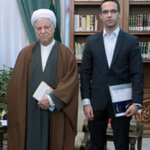
The central figure is Mohammad Javad Zarif, then Iran’s Foreign Minister. The man to his left is Abbas Araghchi, then deputy foreign minister and lead nuclear negotiator. The man circled in yellow is Trita Parsi, founder of the National Iranian American Council (NIAC). The photo is from the 2015 nuclear talks in Lausanne.
Peter Kohanloo retweeted

Trita made a major mistake here.
It’s well known he knows members of the VP’s team.
Now his need to seem important shows someone leaked highly classified info to a foreign national who is a tool of Iran’s regime.
This must be rooted out and eliminated.

“The model is Dugin's anti-West, anti-American multipoliarity plan, which is like the evil twin of George Soros's ‘Open Society’ left-wing Mondialist plan to break the West.”

Their plan, which they say I'm 100% right about, is to
1) Make sure there's no viable candidates at all in 2028;
2) To ensure that the Republican Party itself is completely shattered into small, weak pieces over the 8 years starting 4 years ago;
3) To position themselves, though small, to be the biggest and strongest of those pieces in 4-6 years so that electoral necessity causes conservatives to rally around them;
4) Ensure Republican losses and DSA wins so that we have insane Democrat/Marxist abuses that radicalize us and are unbearable in the meantime;
5) Then to forward a strongman in 2032 or 2036 who ends the Constitution if it hasn't already been ended by the DSA.
They might have some fantasies about ruling the country, but the real objective is to split it into pieces that hate each other.
The larger strategy this plugs into is that the Russia, China, Iran, NK, BRICS (New Axis) rises and strengthens itself internally in its various power poles in the East while the Western Alliance and each strong Western nation shatter, diminish, impoverish, and weaken themselves.
The model is Dugin's anti-West, anti-American multipoliarity plan, which is like the evil twin of George Soros's "Open Society" left-wing Mondialist plan to break the West.
Soros, et al., want one big global order, so the Western nations, US especially, have to be weakened from within so they'll be pathetic enough to join a "global EU."
Dugin and the New Right want a multipolar world split into three to five superpower poles: the West, Russia, China, Islam, at least, that mostly mind their own business. This is only possible if the West and America are severely diminished, and they must also be punished for the last 500 years of history by being the weakest of these poles.
That means isolating us ("America First") so we ignore the rest of the world as they build their poles of power there and weakening us mostly by getting us fragmented, balkanized (ideologically or literally), infighting, or even at civil war with one another. This is what the New Right is facilitating in America now.
Where the Woke Left wants to diminish America to get it to join one global order, the Woke Right wants to diminish America to usher in a new global order where we're weak and irrelevant.
What you see from Fishnut here is just the next coordinated step in this program, and the whole New Right, even the ones who claim not to like him or the Groypers or Fuentes, are participating in this program, playing their own roles in a vast strategy.
Peter Kohanloo retweeted

As an Iranian woman, I want to expose Iranian-American Congresswoman Yassamin Ansari.
NIAC Action, the political arm and lobbying organization of the Islamic regime in the USA, endorsed her run for Phoenix City Council. In Congress, she filed articles of impeachment against Pete Hegseth, citing U.S. military action in Iran among the grounds. Sazandegi, a newspaper affiliated with a faction within the Islamic Republic’s political establishment, put her on its front page. Tasnim (another Islamic regime media outlet) amplified a clip of her attacking President Trump.
Ansari is Iranian-American, and I’m Iranian. I want a free Iran, and she doesn’t speak for me. If Washington wants to know what Iranians fighting the Islamic Republic have to say, it should hear from them directly.
Not only do all Iranians fighting for Iran’s freedom distrust this woman, they also hate her. She is a disgrace to Iran and Iranians.
@LauraLoomer


“As far as Iran is concerned, the idea that we’re going to find some people in Iran who are going to be moderates is just pure nonsense.”

But I thought the Crown Prince supposedly has very little support among Iranians. Strange.

🔴 BREAKING:
Extremely worrying development.
Allegedly, the German police has decided that the Shah of Iran is NOT ALLOWED to attend or speak at tomorrow's planned rally in Frankfurt.
According to a statement by Princess Yasmine Pahlavi in the last hour, the islamic regime has directly threatened violence against the crowd if he takes the stage, and German police has bent over to their intimidation tactic.
The IRGC has infiltrated the entire world like a cancer.
But what this means is that they fear us, and they are so panicked that they want to silence our Shah even in Europe.
And to everyone attending tomorrow:
Please don't be afraid, and make your voices heard. Do not let this terrorist regime bully you or demoralise you.
Raise your voices high, for the sake of our homeland and the people inside Iran who count on us.
JAVID SHAH.
🇮🇷


Why is the Islamic pariah regime in Iran so concerned about an individual who supposedly has little support in Iran? Strange.

Belgium’s defense minister said on Friday that Tehran had warned his country of dire consequences if it allowed Reza Pahlavi, Iran’s exiled crown prince, to speak in Brussels, and that the event had gone ahead anyway.
Speaking at the Royal Military Academy in Brussels, where he welcomed Pahlavi before a lecture on the Middle East, Theo Francken said the Iranian leadership had tried to prevent the discussion.
“We have been warned of dire consequences if the lecture went ahead,” he told the audience.
Francken said the objection showed that Tehran was concerned about Pahlavi’s message and was seeking to pressure Belgium’s democracy.
“This attitude demonstrates to us that the Iranian regime is genuinely concerned about Mr. Pahlavi’s message. And not only that; It also seeks to coerce our own democracy,” he said, adding that the academy should be free to discuss and study issues without interference from abroad.
iranintl.com/en/202611066548

Peter Kohanloo retweeted

All signs indicate that the Iranian regime has launched a new information operation through the Iran Lobby. The goal is to capitalise on the midterm election results and shape U.S. public opinion and policy to secure maximum concessions from Washington for Tehran. There is precedent for this, as exposed by Iran International and Senator 👇 semafor.com/article/09/25/20…

Peter Kohanloo retweeted

Mr. Vice-President,
Please allow me to present a different perspective.
The problem was not the Iran War. It was the cease fire.
If you start a war, you need to win it and finish it – otherwise don’t start it.
This war should have been over six months ago, with the Strait of Hormuz wide open and oil flowing. The second and third tiers of Iranian leadership should have been destroyed, and we should have supported the pro-western forces who could have taken leadership. We stood on the brink of a new, more peaceful Middle East - and then we blinked. We had a chance not only to deny Iran nuclear weapons, but to get rid of the world’s biggest supporter of terrorism.
Instead, we had a cease fire, which was followed by months of will we or won’t we finish the job. Every day was a different message. There still is. Is the war over? Is it about to begin? No one knows. There is confusion and inconsistency.
In June 2025, America was not involved. This was an Israel vs Iran issue.
No one forced the United States to attack Iran then, or in February of 2026. It was a decision made by President Trump. In my opinion, it was the right decision.
Once the decision was made, we should not have stopped until the regime fell. But instead, you negotiated a cease fire that didn’t last, didn’t work and left us in no man’s land, with higher prices and our troops still deployed.
Our troops could have been home, the Navy returned to its bases, a peaceful regime in place , new alliances forged, and gas prices below $3.00 a gallon.
No, Mr. Vice President. It’s not the war. It’s the so-called cease fire.

One of the things the data analysts on our side obsessed over was "composition"—whether the electorate looked close enough to 2024 for Republicans to win. And despite polls that showed a Democrat blowout, the data kept on telling us the same story: in some states turnout was merely OK, in other states it was downright amazing, and in no state was it catastrophic. There was a genuine sense of optimism on our team: our people were showing up.
So, I asked the smartest data guy I know, does that mean we're going to shock the world? "No," he told me. "We might do better than the polls suggest. But the data is telling us that a lot of Trump/Vance 2024 voters are pissed and planning to vote for the other guys. Our voters are turning out, but they may not vote for us."
Well, that looks prophetic now. Our voters did show up. In Florida, for example, the electorate was 9 points more Republican than Democrat, just a couple points worse than 2024. Undoubtedly there were places we could have done better on turnout. But the main problem is not turnout. The main problem is that many people who voted for Trump/Vance in 2024 voted for Democrats in 2026.
There will be a lot of infighting and arguing over what happened and why that is. One of the pollsters I really respect told me that our economic messaging wasn’t sharp enough down the stretch. I’m sure that’s true.
But the real reason we lost is obvious to almost everyone.
Another pollster—one of the smartest people I know in politics, told me yesterday we’d lose the generic ballot by 13 points. I felt negative going into Tuesday, but even I was shocked by this. In his polling, he saw that a lot of Trump 2024 voters were angry and planning to vote for Democrats. He asked those voters who had abandoned us what would cause them to come back on our team. The top four answers, accounting for nearly all of the responses were:
1) End the war
2) Focus on cost of living/inflation
3) Put America First
4) Change our relationship to Israel
Our voters showed up. And the above four reasons are why many of them voted for Democrats. This is according to a pollster who nailed the results. While many spent Monday attacking Rachel Campos Duffy for calling for a diplomatic resolution to the conflict, it turns out her political advice was sound. (She’s also a great person.)
In the next few months, there's going to be a lot of gaslighting. Expect to hear any number of establishment politicians say the solution to our woes is amnesty. I'm open to the idea that we should change enforcement—by focusing more on businesses that hire illegal labor, for instance. But anyone pushing amnesty is lying to you.
The reason we lost is the war. The president himself said so last night.
If you'd like to argue it was worth it, that losing the Senate for the next 6 years was worth it, then do so. Argue it was a worthwhile cost to pay. Agree or disagree, that's at least honest.
But everyone knows why we lost. And any honest conversation about where we go from here must start there.
I remain hopeful about our country. To the people who are pissed off and want to say, “I told you so”: you’re right, you did tell us so. Take that energy into electing Republicans who share your worldview. To the people who are just pissed at the results, you should be. Let’s take that anger and get back to the work of saving our country.

Peter Kohanloo retweeted
IRGC forces have started to hide military vehicles in cities and tunnels it appears they are on some form of high alert.
Peter Kohanloo retweeted

The U.S. military has prepared plans for strikes against Iran beginning as early as Wednesday, November 4, following the midterm elections, with three American aircraft carriers positioned in the region, according to The New York Times. U.S. officials say the optimal window for the operation is limited, as one carrier must return to its home port after early November. The timing also coincides with moonless nights, providing the darkness preferred by the U.S. military for conducting strikes.


Peter Kohanloo retweeted

Iran is the culture shock capital of the world.
The western tourist is stunned by the hospitality of the population despite the propaganda.
Muslim tourists are shocked by the lack of adherence to Islam despite a theocratic regime.
Others in the third world are surprised by how relatively tidy the streets are despite the economic situation.


One of the coolest things I’ve ever seen. The Arthurian Legend of “The Sword in the Stone” has roots in ancient greater Iran by way of the Alans (an offshoot of Scythians).


Peter Kohanloo retweeted

Regime officials spared in the first war to keep negotiations alive may not survive the next, as the United States and Israel could wipe out entire layers of the Islamic Republic’s leadership.
Hamzeh Safavi, the son of former IRGC commander Yahya Rahim Safavi, warns that the next attack could expand from targeting roughly 40 senior officials to eliminating between 1,000 and 1,500 members of the regime.
He calls it the “lawnmower” strategy.
The objective would no longer be limited to removing the Islamic Republic’s highest commanders. The campaign could move systematically through the regime’s provincial IRGC commanders, intelligence officials, Basij leaders and other functionaries responsible for maintaining control across Iran.
Safavi considers this one of the most serious scenarios for the next phase of the war. Its purpose would be to paralyze the regime’s command structure and force it into absolute surrender.
This is not a confirmed American or Israeli plan. It is a warning from a regime-connected figure that reveals how vulnerable the Islamic Republic now believes its entire governing class has become.
Safavi admits that officials were caught off guard during the previous attacks. They did not believe the United States and Israel would locate and eliminate senior figures so quickly, freely and without hesitation.
The next phase he fears would scale that model dramatically.
Precision strikes could target officials as they move, meet and communicate. Cyber operations could disrupt command networks while simultaneous attacks on missile facilities and underground headquarters prevent surviving leaders from coordinating an effective response.
Safavi also warns that missile cities and command centres buried between 60 and 120 metres underground could be targeted. Such an operation would likely require American bunker-busting weapons, sustained intelligence coverage and continued air superiority over Iran.
The political calculation may also be changing.
Earlier in the conflict, some officials were reportedly spared because the United States needed interlocutors capable of negotiating. Figures such as Mohammad Bagher Ghalibaf and Abbas Araghchi retained value as channels through which a ceasefire or settlement could be reached.
The “lawnmower” scenario assumes that restraint has ended.
Instead of preserving negotiators, the next campaign could dismantle the governing layer that allows the Islamic Republic to repress unrest, mobilize loyalists and rebuild military power after every round of strikes.
Eliminating 1,000–1,500 officials would be vastly more difficult than targeting several dozen senior leaders. The regime can disperse personnel, restrict communications, move officials underground and rapidly appoint replacements. Such an operation would also risk civilian casualties, retaliation and institutional fragmentation rather than an orderly surrender.
But Safavi’s warning exposes the deeper crisis.
The Islamic Republic built its deterrence around the assumption that its leaders, underground facilities and security hierarchy were beyond the enemy’s reach. The previous war shattered that assumption.
Regime insiders are no longer debating whether senior officials can be reached. They are warning that the next campaign could move from leadership decapitation to the systematic destruction of the regime’s entire command structure.
The Islamic Republic spent decades threatening to destroy its enemies. Its own elite is now discussing how much of the regime may survive the next attack.


Peter Kohanloo retweeted

#BREAKING US embassy staff and families ordered to leave Saudi Arabia, with families of embassy staff in the United Arab Emirates, Jordan, Qatar and Bahrain also ordered to leave, diplomatic source tells AFP
