

Expert testing for AI agents and apps. Helping businesses ship with confidence since 2015.
Ukraine
Joined April 2016
- Tweets1.6K
- Following2.3K
- Followers491
- Likes695



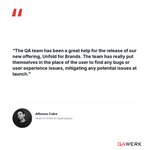


2/2 The automated and manual testing work we did with them was delivered to a high standard, and we’ve become trusted partners."
-- Benjamin Stuart, Product Manager at Kazidomi
More client stories: qawerk.com/testimonials/

1/2 "QAwerk team has been of enormous help in improving the quality of our releases at Kazidomi. They are communicative and highly professional, with a proactive attitude.

9/9 AI is moving the floor up faster than anything before it. That part is real.
The testing still needs a brain behind it.
8/9 Ten years running QAwerk, we've watched every wave of "this will automate QA." Codeless testing, record-and-playback, model-based testing. Each one moved the floor up. None of them replaced judgment.
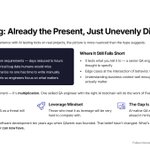
7/9 What's actually happening is more like: AI handles the repetitive, well-defined surface. Human testers get pushed toward the harder, contextual, adversarial work. Which is where the interesting bugs live anyway.
6/9 The Nasscom piece calling 2026 the year AI transforms QA is not wrong, exactly. Adoption is accelerating. In 2024, 72% of companies were using AI in at least one business function, up from 55% the year before.
But "transforms" is doing a lot of work in that sentence.
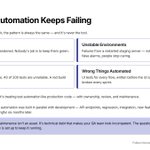
5/9 - The teams that got real value from AI testing were not the ones who automated the most. They were the ones who were disciplined about what NOT to automate.
4/9 - Test generation is useful but noisy. You get coverage. You also get 40% redundant tests that someone still has to review and prune.
3/9 - It falls apart on business logic. The kind of bug where technically the code does what it says, but what it says is wrong. AI has no idea. It needs someone who understands the product.
2/9 Here's what we actually observed:
- AI catches a certain class of regression bugs faster than any human. Genuinely impressive on stable, well-documented code.
1/9 Every few months a new article drops declaring AI has finally "solved" software testing. 2024, 2025, now 2026.
At QAwerk, we've spent the last year actually running these tools on real client projects. Not benchmarks. Real codebases, real deadlines, real bugs.

found a bug last week that passed every test
AI wrote it. looked clean. compiled fine.
failed in production because it had no idea how the rest of the system behaved
green tests aren't the same as correct code.
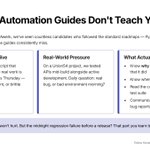
9/9 The certification at the end of a 40-hour course won't hurt you. But it won't prepare you for the moment a regression suite fails at midnight before a release and you're the one who has to sort it out.
That part you learn by doing it.
8/9 - Being comfortable with ambiguity. especially when requirements change mid-sprint
- Communication skills, because a bug report no one reads is just noise
7/9 - Understanding why a test fails, not just that it failed
- Knowing when NOT to automate (manual testing still has a place, and pretending otherwise is expensive)
- Reading the codebase, not just the test suite
6/9 It was the daily question: did this fail because of a real bug, or because the environment had a bad morning?
No course teaches you that instinct. You build it by being wrong a few times and dealing with the consequences.
What actually matters, from where we sit:
5/9 We ran into this constantly on a project with Union54. We were testing API endpoints as they were being built, in parallel with development. New features, integration changes, regression. all moving at once. Test automation stability wasn't an abstract concept.
4/9 That distinction, made quickly and correctly under pressure, is what separates an automation engineer from someone who took a course.
3/9 Anyone can write a Selenium script that passes on Tuesday. The real work starts when it fails on Thursday for no obvious reason. and you have to figure out whether that's a bug, a flaky environment, or your own brittle locator strategy.