

Professor of Sociology, Psychology, & OB @Stanford Direct @PASCL_Stanford and the AI for Public Benefit Lab (@ai4pb_stanford)
Palo Alto, CA
Joined August 2014
- Tweets8.5K
- Following2.8K
- Followers7.7K
- Likes22.6K







Robb Willer retweeted

Exposure matters more than persuasiveness for digital mass persuasion dlvr.it/TWTf8Z

Robb Willer retweeted

In testing GPT-6.2, I used it to make a significant historical discovery which I detail in the post below. This suggests that the process of research and discovery we’re already seeing in verifiable domains like math is starting to generalize to non-deterministic fields like history.
You can read the full post here:
generativehistory.substack.c…
In a nutshell, Yale’s Beinecke Library holds an anonymous sketchbook of an 1808 journey from Montreal to Lake Superior and back. I’ve spent many hours over the years trying to figure out who made the sketches with no luck. The artist could literally be any one of several thousand people. There are few clues: only four dated and labelled images.
With minimal prompting, in just 22 minutes, Astra used publicly available sources to identify a minor French aristocrat, the vicomte de Chabot, as the artist and suggested that we test the hypothesis by ordering copies of a little known microfilmed diary of Chabot’s trip it also found.
I was truly stunned. I’d never heard of Chabot or this diary! New document finds are also exceedingly rare in a well worn field like fur trade history.
I ordered scans of the journal from microfilm and when they arrived the handwriting matched the captions in the sketchbook. The itinerary also aligned perfectly with the few dated drawings in the book. But there was actually the type of conclusive evidence we rarely get as historians: on 18 June 1808, after Chabot’s canoe reached Fort St. Joseph, he wrote “I took a sketch” before describing the exact view of the fort depicted in a matching drawing.
The journal itself is also a major find. It had been mentioned once in a dissertation footnote, but in a completely different area of history and is unknown to fur trade or Canadian historians. It’s long and detailed, covering some 162 notebook pages which makes this a significant new document to my field. Attached to the journal was another trove of documents too: excerpts from long-destroyed North West Company papers, journals, and letters. Again, this almost never happens. Both finds equally surprised the other leading experts I consulted.
Although we can construct a coherent narrative in hindsight, I cannot emphasize enough how exceedingly difficult this sort of thinking and recall is for humans. Unlike a human, Astra was able to tackle the problem from both ends at once: working forward from the scant facts of the 1808 journey pictured in the sketchbook and backwards from the immense number of surviving facts about 1808 British North America in general.
While we can technically explain Astra’s path to this find as a product of enhanced search capabilities, it conducted the investigation from end to end. I basically acted as the research assistant, restricting copies of the paper documents it needed.
To my mind, this puts historians in a similar position as the mathematicians found themselves about eleven months ago, when LLMs started to solve the first Erdős problems. Over the past year, we’ve watched these same models go from learning to read handwriting, to beginning to think historically, to mastering the undergraduate essay, and finally to making small but real contributions to human knowledge more or less autonomously.
The trajectory seems clear.

Robb Willer retweeted

People spot AI-written political posts only 58.6% of the time. That is barely above chance.
New in @PNASNews from our team at @Georgetown :"Humans show limited ability to distinguish human-authored from AI-generated political content on social media" 🧵

ALT https://www.pnas.org/doi/10.1073/pnas.2534309123
Robb Willer retweeted

🧵 What could healthy governance of open-weight models *actually* look like?
Right now, the state of the discussion on open models, including in the recent CA legislative report, is almost invariably just 🤷.
So here's a thread on what I think our goals should be.

Robb Willer retweeted

The affective evaluation of presidential nominees has polarized only very recently.
Data from the @electionstudies cumulative file.

Robb Willer retweeted

The internet runs on trust, but websites can’t trust AI agents that no one is responsible for.
We propose a standardized framework to make agents accountable using privacy-preserving IDs: accountableagents.ai


Robb Willer retweeted
📢 New paper!
We argue that treating pluralism as a technical alignment problem is poorly conceived, misaligned with real human interests, and commercially convenient. The pluralistic alignment field may be doing far more harm than good via "pluralismwashing."

Robb Willer retweeted

After the election, ChatGPT will (sometimes) tell you who you should have voted for!
By re-running our audit (n=162), we found that many guardrails had an expiration date! Eg, ChatGPT now picks a candidate in 5.5% of voting-advice answers (from 0.3%).
elections.citp.princeton.edu…

Robb Willer retweeted
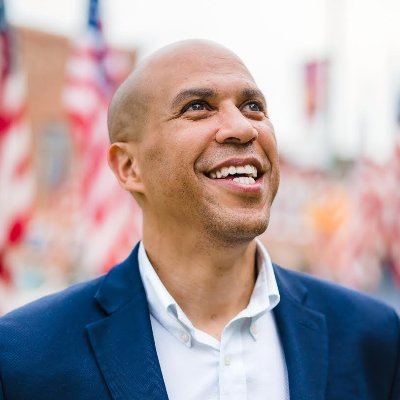
What a powerful moment at the Soul Bowl.
Alcorn State and Jackson State set aside their rivalry to honor Senator-elect Scott Colom—Mississippi’s first Black U.S. Senator since Reconstruction.
Robb Willer retweeted

we are introducing two new tiers for persimmon, now available to the public in our API 🤗 (no more needing to ping us to get off the waitlist!)
huge shoutouts to @__Charlie_G for leading the work on persimmon pro & ultra and @polaris_7369 for developing our safety filters (in his first week too!)

Introducing Persimmon v0.1 Pro and Ultra: two new tiers that use test-time scaling to make every turn more realistic, now available to all for the first time
Ultra more than doubles Persimmon's score on our 8 turn Multi-User Turing Test, from 18% to 48%. At 50%, a model is indistinguishable from real people according to our held-out judge

Robb Willer retweeted

"While MSNBC and CNN shifted leftward during Republican presidencies and moderated under Democratic presidencies, Fox News increased its conservative alignment following each election regardless of the electoral outcome."


Robb Willer retweeted

Let me get this straight: we rushed AI along without regulating safeguards in order to stay ahead of China and at the same time, we sold China the very chips they’d need to get ahead of us. Smells of profit, corruption and perhaps worse.
Robb Willer retweeted

Postdoctoral fellowships in my lab to study innovation across history in the U.S., Europe, China, and Persia. Work with a crack team that includes psychologists, economists, anthropologists, historians & data scientists. @mmuthukrishna @MohammadAtari90 @_MaxPosch_ @slingerland20
Robb Willer retweeted

What does kindness ask of us when we think someone has done real harm?
I explored that question with George Saunders last Thursday at @NorthwesternU. We talked about Vigil, his novel about a ghost tasked with comforting a dying oil magnate, and what it takes to give someone a real hearing when your first instinct is to dismiss them.
dailynorthwestern.com/2026/1…

Robb Willer retweeted
Literally does anyone in business or tech realize the damage that they are doing to the rule of law and free markets in the U.S.? These are the basis for our world-beating economy.

Robb Willer retweeted

I updated my paper "Can AI Forecast Treatment Effects in Economics" to include more recent papers, extract more research questions per paper, and do a number of extra robustness checks.
This paper generated forecasting questions based on pre-analysis plans and pre-registrations on the AEA RCT Registry and the Open Science Framework and forecast treatment effects using models whose training or knowledge cut-off dates were before the papers were released.
Despite the much larger number of results included, headline numbers are essentially unchanged: the median absolute error is 0.053 SD, the MSE is 0.021, and this falls to 0.015 after adjusting for sampling variance where standard errors are available. 1/

Robb Willer retweeted

November 20, 1982
"THE BAND IS OUT ON THE FIELD!!!"
Joe Starkey's memorable call of "The Play" — Cal's improbable, unforgettable, epic five-lateral kickoff return touchdown to beat Stanford in their annual "Big Game"
Robb Willer retweeted

Which candidates are making themselves the star of the show in their ads? And when the camera’s not on them, who and what else are they putting on screen?
Robb Willer retweeted

Future of AI science?
"We’re seeing agents actually trying to reproduce each other’s work, to check whether they want to build on that work.”—@SRSchmidgall
A landmark study on agentic driven science
science.org/content/article/… @ScienceMagazine by
@T_E_Howarth
alphaxiv.org/abs/2611.societ… @askalphaxiv

Robb Willer retweeted

We've made another big jump in ability to simulate human conversation! Persimmon v0.1 Ultra is very hard to tell from real humans, in longer conversations. We've also been working hard on safety guardrails so that we can give access more widely.
Introducing Persimmon v0.1 Pro and Ultra: two new tiers that use test-time scaling to make every turn more realistic, now available to all for the first time
Ultra more than doubles Persimmon's score on our 8 turn Multi-User Turing Test, from 18% to 48%. At 50%, a model is indistinguishable from real people according to our held-out judge