

Former head of credit strategy | Investor/Trader | Add your email at https://teapaw.org/t.co/XTLs3jKi6C to receive our research to your inbox for no charge
Joined March 2022
- Tweets3.6K
- Following580
- Followers21.2K
- Likes1.6K




The Spread Thread retweeted

Also for the love of everything holy please stop comparing the U.S. to Singapore. Singapore has a massive positive NIIP. If you don't understand what that means and how the U.S. situation is different you need to do more work on this topic.

Warren makes a good point. But another way you could phrase it is current multiples are baking in the expectation that record margins rocket even higher (a productivity boom). If that doesn’t happen, then you are left with peak multiples and peak margins.


We put this out on BDCs a while back for those who want to better understand the sector…
thespreadsite.com/bdc-yields…

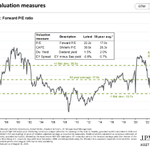
This is a great way to frame it. The only additional question - what’s in the price? In 1995 the SPX was trading at ~14x forward p/e. Today ~23x (yes a different market). And we’ve been pricing this soft landing for a while. Stocks are up ~20% since the first cut last year.

Lastly, I put out this chart a while back with price action around the first cut, that may be relevant.


Maybe it’s not that inconsistent. Bond yields falling b/c growth is weak, pricing in cuts. Stocks rallying b/c investors believe the cuts will work (I.e., looking through the soft patch).
When/if investors no longer believe the cuts will work (or will cause harm) stocks go down
This Post is from an account that no longer exists. Learn more
The Spread Thread retweeted
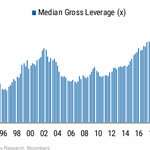
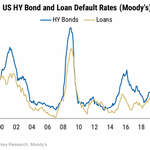
Not the tightest ever. But yes, tight. Either way. Credit isn’t the forward looking indicator people think. Spreads were at all-time tights in mid-2007. Also, note, unlike stocks, credit has not gotten back to the tights hit early this year. A bit of a divergence
Left chart MS


4 prints, not 1. +19, -13,+79, +22 (may-aug). My simplistic view - when the economy is averaging 150k like early this year, there is cushion to absorb headwinds. When it’s averaging 25k that cushion is gone. Things aren’t falling off a cliff. But risks are higher at stall speed.

I don’t quite see how most are coming to the conclusion that the tariffs are done.
Do we think the most likely scenario is that Trump backs down from his top policy priority after being slapped by the courts?


Worth a quick read

Seems like Trump can use various other measures to reinstitute the tariffs while appealing IEEPA all the way to supreme court, per GS
4. The Trump administration has other authorities it can use to impose tariffs similar to those the court struck down:
The administration could quickly replace the 10% across-the-board tariff with a similar tariff of up to 15% under Sec. 122. Those tariffs would last for only up to 150 days, after which the law requires Congressional action to extend (the law is not clear on whether the period could end after 150 days and then quickly restart again). Sec. 122 authorizes the President to address a balance of payments deficit or to prevent an imminent and significant depreciation in the dollar, but it does not require any formal investigation or process, so the administration could theoretically replace the current 10% tariff with a Sec. 122-based tariff within days if deemed necessary.
The US Trade Representative could quickly launch Sec. 301 investigations on key trading partners, laying the procedural groundwork for tariffs after the investigation is complete. This would take longer, likely several weeks at a minimum and probably a few months to complete several investigations. There is no limit on the level or duration of tariffs under Sec. 301.
Sec. 232 tariffs, which President Trump has already used for steel, aluminum, and autos, could be broadened to cover other sectors. We already expect additional sectoral tariffs (pharmaceuticals, semiconductors/electronics, etc) and uncertainty regarding the IEEPA-based tariffs could lead the White House to put more emphasis on sectoral tariffs, where there is much less legal uncertainty. President Trump has not emphasized sectoral tariffs as frequently lately as he did earlier this year, but if the White House finds it has less flexibility on country-focused tariffs, sectoral tariffs might receive more attention again.
Sec. 338 of the Trade Act of 1930 allows the President to impose tariffs of up to 50% on imports from countries that discriminate against the US. This authority, which has never been used, is similar to the authority under Sec. 301, except that it limits the amount of the tariffs but does not require a formal investigation.
5. As it seems unlikely that the administration could win an appeal in the 10 days it has under the CIT order to remove the tariffs, we would expect the White House to announce a similar across-the-board tariff using Sec. 122. This would then provide the administration time to launch a series of Sec. 301 cases against larger trading partners, potentially opening the door to imposing tariffs higher than 10% in some cases. However, it seems unlikely that the administration could complete Sec. 301 investigations on every US trading partner within the next several months. If the court’s ruling against the IEEPA-based tariffs remains in effect, this could mean that smaller trading partners and/or countries with smaller trade surpluses with the US might not face a baseline tariff when Sec. 122 tariffs roll off after 150 days (assuming the Trump administration cannot find a legal means to extend them).


Which of the following will have the highest total return over the next 12 months:
30%S&P 500
8%High Yield Credit (HYG)
30%30 Year Treasury Bond
32%Cash
323 votes • Final resultsThe bond market is now getting cited by those who oppose the tax bill.
Remember when the stock market couldn’t go down b/c of supposed “pumping” every day by Bessent? How long before they try to calm down the bond mkt the same way? Not a reason to buy bonds, but it’s coming

Another example

The U.S. country risk trade is back as bonds, stocks and the dollar all fell sharply today. A few more days like today and recession will be likely. And financial accident risk is rising as well. President @realDonaldTrump needs to retreat on taxes just as he did on tariffs.

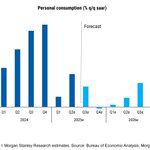
Updated MS forecasts below taking into account tariffs, tax, immigration, etc... Core PCE rises to 4.5% in 3Q25, and growth slows to 0.7% by 4Q25. No recession, no rate cuts in '25. A lot of rate cuts in '26.
(Charts from MS)

