

Former head of credit strategy | Investor/Trader | Add your email at https://teapaw.org/t.co/XTLs3jKi6C to receive our research to your inbox for no charge
Joined March 2022
- Tweets3.6K
- Following580
- Followers21.2K
- Likes1.6K




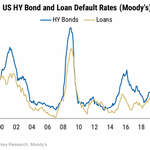
Same in credit. CCCs getting hit hard while high quality HY is fine. Rates certainly playing some role impacting the weak links as you would expect.
But the 2y is already 100bp above FFR and the 10y is at/above where it was when FFR was 5.25, so we have a buffer to absorb a shallow cycle. I guess my bottom like is I think the rates market needs to believe this will be more than a shallow cycle to make bonds a short from here.
Right, I guess the question is - after 3 hikes would the market start to price cuts, a long hold, or more hikes. I lean towards the first given how I think data would unfold over the next 6 months but lots of unknowns like oil, etc…
A bunch of moving parts. But maybe 4.40ish on 2s and a 50bp on 2s/10s if that. I like the ‘99 comp where this is less a new hiking cycle and more a late-cycle restarting of the prior tightening wave to take back a few mistaken/ not-needed cuts.
But in most cases those were material rate hike cycles (not a few hikes). And 10s still didn’t always move that much. For ex, the 10Y rose by ~50bp in 2000 and 2006 from first to last hike. 10s are now up ~100bp off the YTD lows. If we only get a few hikes, maybe that’s enough.
But it’s a relative game, right? I doubt anyone is arguing you get rich off 3% real in Treasuries. But that may look very good relative to the alternative given very high valuations in equities and credit, implying potentially quite low long-term returns in those asset classes.
Isn’t this just a timing issue. Markets price in hikes due to better growth/ higher inflation. The curve bear flattens. Once the hikes do their job and weaken the economy, bond yields fall as the market looks forward to no more hikes/ cuts. People jumping right to step 2.
Probably depends on what impact the 100bp in hikes has on markets. If none, then agree a slightly higher cost of capital probably doesn’t matter for AI co’s. If stocks drop 20% and credit spreads widen as they hike, access to capital dries up, which would matter.
But you’ve also had treasury yields higher since May and dollar higher. Credit spreads flattish. So what is offsetting that to loosen fci?
The rich people that owned lots of fixed income as we transitioned from zirp to a high(er) rate regime certainly didn’t benefit.
That said I get your point. Risk assets have done well. And agree on those near 3% real yields
Where do you show it didn’t tighten credit? Every category in the Fed SLOOS showed meaningful tightening in lending standards. Yields for levered borrowers hit nearly 10% driving a 30-40% reduction in corp issuance in ‘22. It became more expensive and harder to borrow.
Your chart is just showing that treasury yields have risen over the past month. High yield credit spreads are still at very tight levels.

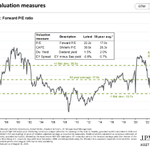
And to add - the multiple on the market is down almost 20% since last oct. Not far from where it bottomed on liberation day.
We’ve cleared out some froth in the past 6mo - crypto, profitless tech, mag7, etc… If the cycle is still in tact, this may have been a healthy reset.
Question is where is the market today on earnings since the P moves faster than the E. We’ve had a sizable correction in the forward p/e since it peaked at 23x last oct (almost 19x now). Not exactly ‘cheap’ historically but starting to bake in some softness.

The forward 12-month P/E ratio for the S&P 500 is 19.9.
This P/E ratio is equal to the 5-year average (19.9) and above the 10-year average (18.9) @FactSet


A 10% correction (assuming we gap down on Monday) and 30 Vix is serious vol and some pain. Not saying you pile in. But worth thinking about whether investors are doing what they often do - hoping for a dip, then not buying when it comes.
Assume we know for certain oil stabilizes ~$100. Yes, s/t CPI is ugly and Fed prob does nothing. Growth gets hit by a few 10ths. In that scenario do stocks drop another 10% or do we look through it? I’d bet the latter.
We can handle an oil shock. Just not this uncertainty.
Not scientifically and I don’t know how this plays out. But just like after liberation day, markets didn’t need the tariffs to go away to look through them, they just needed to reduce the probability of the extreme tail. Think it’s a similar playbook here.