

Systematic investor/trader, Kevin C Maki, PhD QV/MT investing = quality, value/momentum, trend Research scientist/educator, long-time investor/trader
SW Florida
Joined July 2023
- Tweets8.2K
- Following5.3K
- Followers3.5K
- Likes8.7K


Systematic Investment Research & Education retweeted

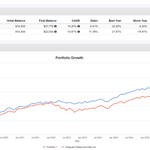
The futures trend-following project I shared a few months ago is now at a new all-time high in paper trading.
A useful reminder if you’re interested in learning how CTA-style futures portfolios work.
Lucas Joly has published his master’s thesis research on GitHub, using a Carver-style framework, alongside an ongoing paper-trading dashboard.
Research + code:
github.com/Lucas-Joly-GH/tre…

Systematic Investment Research & Education retweeted

It highly depends on your personal situation and risk profile. I diversify broadly: from my total net worth, I have 5% in gold, 45% in Real Estate, 30% in B&H ETFs and DCA ETFS, 20% is in systematic trading strategies.
Systematic Investment Research & Education retweeted

"There is a time to go long, a time to go short, and a time to go fishing." - Jesse Livermore.
Is one of the best pieces of advice a trader can heed, but the words preceding it are rarely quoted, and they carry some real weight:
"There is the Wall Street fool, who thinks he must trade all the time. No man can always have adequate reasons for buying or selling stocks daily or sufficient knowledge to make his play an intelligent play."
Sitting on your hands is an active position. Knowing when to step away or step back is what separates long-term performance from the slow bleed of overtrading.
🤖 Made with AI

Systematic Investment Research & Education retweeted

You do not need to predict the future.
You just need to be in position when it arrives.
Our forthcoming book, The Trend Following Manifesto, explores how to prepare for a world that refuses to follow a forecast.
Join the launch list for updates and details of the first-week discount:
leadpages.toptradersunplugge…
#TrendFollowing #TheTrendFollowingManifesto #SystematicTrading #BookLaunch

Systematic Investment Research & Education retweeted

An often overlooked aspect of the Dot Com Crash is that stocks not tied to the Internet and mobile buildout did quite well for a long stretch.
From the end of 1999 to the end of 2001, the S&P 500 Equal Weight index not only didn’t fall, it was up 5%. $SPY $RSP

Systematic Investment Research & Education retweeted

Most traders quit during the exact stretch that separates the average from the consistent.
They quit when the losses stack up.
When the strategy feels broken.
When their friends are flashing new cars and they’re still grinding charts at 2 AM.
The market doesn’t care how many courses you bought or how hard you studied.
It only cares whether you can execute with discipline when every instinct in your body is screaming to do the opposite.
Protect your capital.
Follow your rules.
Review your journal.
Then show up tomorrow and do it again.
The ones who make it aren’t the smartest in the room.
They’re the ones who refused to quit on the process.
Do you have what it takes?
Systematic Investment Research & Education retweeted

Today, the calendar makes a right triangle, for the last time this century.
This Saturday is October 24, 2026.
Write it as 10/24/26 or 24/10/26, and the same beautiful relationship appears:
10² + 24² = 26²
100 + 576 = 676
But here’s what makes today special.
There are infinitely many Pythagorean triples. Only a handful fit our calendar.
Using the rule
month² + day² = (last two digits of the year)²,
the month cannot exceed 12, and the day cannot exceed 31. Those small limits leave exactly 12 qualifying dates in this century.
Today is the last.
The next will be March 4, 2105:
3² + 4² = 5²
That is a wait of more than 78 years.
An infinite family of triangles. Just twelve appearances on a century’s calendar.
Happy Pythagorean Triple Day.

Systematic Investment Research & Education retweeted

A planet of monkeys typing for the entire lifetime of the universe won't produce Curious George. It's a long time - but not long enough.
Chance is a weak explanation for these, too:
Ed Thorp's investment track record
"The odds of randomly selecting a specific atom in the earth would be about a trillion times better."
xitter.cf/ReformedTrader/status/…
Medallion Fund's returns (1988-2018)
"To date, there is no adequate rational market explanation."
xitter.cf/ReformedTrader/status/…
Unguided origin of life
Lee Cronin vs. James Tour debate
xitter.cf/ReformedTrader/status/…
A Numerical Evaluation of the Finite Monkeys Theorem (Woodcock and Falletta)


Systematic Investment Research & Education retweeted
This Week in Trend | 23 October 2026
Trend Strength Recovered. Returns Told a Different Story.
The TTU Trend Barometer recovered from 36% to 41%, but the SG Trend Index slipped further to +14.31% year to date.
Crude oil advanced while Natural Gas collapsed. Precious metals continued to weaken. Beneath the weekly movements, the trend environment showed tentative signs of improvement.
But improving trend strength does not necessarily mean improving portfolio returns.
The trends available and the trends a portfolio captures are not always the same.
Read this week's full analysis: atstradingsolutions.com/this…
#TrendFollowing #SystematicTrading #GlobalMacro #TTUTrendBarometer

Systematic Investment Research & Education retweeted

Howard Marks on the AI Boom: Why Today Rhymes With the Dot-Com Bubble youtu.be/UC6XCGsj444?is=Oenp… via @YouTube

Systematic Investment Research & Education retweeted

$FIX 38% drawdown in 2 weeks is a great example of why stops are necessary to avoid big losses.


Industrial sector/datacenter stocks breaking down hard and to the right, below the 40-week MA (red line). On the bluechipdaily.com site, any chart below the 10-week MA (blue line) is off the best ideas/potential buy list. This helps to avoid a lot of drawdown.

Systematic Investment Research & Education retweeted

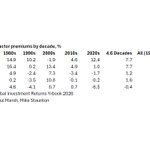
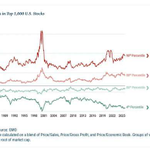
My latest Morningstar article is Valuation Spreads Continue to Favor Value Stocks
While spreads have narrowed, they still support a positive outlook for value stocks.
morningstar.com/financial-ad…

Systematic Investment Research & Education retweeted

Proper portfolio construction is a tricky problem to solve, but fortunately, there are several ways to approach it. I use three methods when constructing my portfolio:
1. Pearson Correlation Matrix - My general rule of thumb is to avoid combining strategies with a correlation above 0.20. However, this isn't a hard rule and can be overridden based on the second method.
2. Strategy Logic and Market Regimes - Correlation alone doesn't tell the full story. Two strategies may have a correlation above 0.20 but still complement each other if they exploit different market conditions. For example, one strategy might perform best in strong, trending markets, while another performs better in weaker market environments.
Because of this, around 10–20% of the strategies in my portfolio may exceed my 0.20 correlation threshold, provided their underlying logic is sufficiently different and they offer meaningful diversification across regimes.
3. Downside Diversification - Rather than looking only at overall correlations, I also analyze how strategies behave during the portfolio's worst 10% of trading days. The goal is to understand whether strategies that appear diversified under normal conditions still provide diversification when the portfolio is experiencing losses. After all, diversification matters most when things are going wrong.
I combine all three approaches when constructing my portfolio. None is sufficient on its own, but together they give a more complete picture of how strategies interact.


Running 10 trading strategies doesn't mean you're diversified.
You could have:
• 3 breakout systems on NASDAQ
• 2 trend-following systems on S&P 500
• 3 momentum systems on DAX
• 2 breakout systems on Bitcoin
Congratulations.
You might have built 10 different ways to express essentially the SAME market exposure.
When market conditions change, all 10 strategies could start losing money simultaneously.
This is why strategy count means absolutely nothing without understanding correlation.
A portfolio with 4 genuinely complementary strategies can potentially be more robust than one with 20 highly correlated systems.
And here's something most traders overlook:
The best strategy isn't necessarily the best strategy to ADD to your portfolio.
A system with mediocre standalone performance might significantly improve your overall portfolio if its returns behave differently from your existing systems.
Stop optimizing individual equity curves.
Start optimizing how your strategies work TOGETHER.
That's where portfolio construction begins.

Systematic Investment Research & Education retweeted

Holding positions for longer is where the big gains come from. Stocks take time to move. If you want to catch the big moves, you need to increase your time frame. - Kristjan Kullamagi @Qullamaggie 137/n lnk.to/marketwizardsnextgene…

Systematic Investment Research & Education retweeted

If you think trading books can’t be useful, you probably haven’t come across the work of @clenow.
As we show in our latest piece, his core trend strategy (combined with our portfolio construction approach) has historically outperformed the SG CTA Index net of costs. Moreover, it can still look competitive once typical management and performance fees are taken into account.
After walking through the rules, we also explain how to adapt and implement the strategy via ETFs.
You can find all the details, results and key practical considerations at the link in the first comment. 👇

Systematic Investment Research & Education retweeted

New episode is out now.
open.spotify.com/episode/4y7…
@rjpjr12 Mike and Jerry the Yankees, the moral imperative of money managers to ask their clients about how to design the strategy, how crisis alpha needs to go away, how trend-followers are opportunists at their core.

Systematic Investment Research & Education retweeted

Your strategy should fit:
Your personality.
Your lifestyle.
Your risk tolerance.
Your available time.
A profitable strategy you can't consistently execute isn't the right strategy for you.
Systematic Investment Research & Education retweeted

“Amateurs go broke taking large losses; professionals go broke taking small profits.” — Bill Eckhardt
#misManagedFutures™
mrzepczynski.blogspot.com/20…
Systematic Investment Research & Education retweeted
"I have spent five decades trading on a simple premise: Markets aggregate information no committee possesses, and prices are how that information reaches decision-makers." — Stan Druckenmiller, WSJ opinion
"Spoken like a true trend-follower: market prices aggregate and disseminate information."
mrzepczynski.blogspot.com/20…

