

if I claim to be a wise man, it surely means that I don't know. This is a former elder & seminarian's place to discuss theology & share posts from the blog
The Silent Planet
Joined September 2022
- Tweets17.1K
- Following607
- Followers427
- Likes10.6K




Dead Heroes Don't Save retweeted
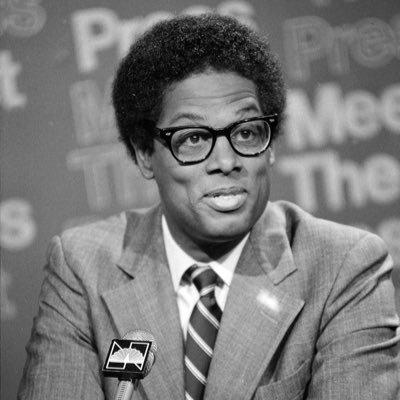
"Much of what is called 'social problems' consists of the fact that intellectuals have theories that do not fit the real world. From this, they conclude that it is the real world which is wrong and needs changing."
— Thomas Sowell
Dead Heroes Don't Save retweeted

I don’t think the disagreement between compatibilists and incompatibilists will ever be solved, because it turns largely on the question of whether one thinks “acting according to one’s strongest desires” (when those desires are themselves determined) is enough to ground moral responsibility. That cannot be demonstrated. It is a subjective judgment.
Dead Heroes Don't Save retweeted

We just can’t catch a break man.. happy Jax was able to walk off under his own power. But damn man..
Dead Heroes Don't Save retweeted
Calling an offer of something you don't have to give & planned not to have available well meant sounds like sophism designed to deal with cognitive dissonance
Dead Heroes Don't Save retweeted
Salvation is of the Lord
He chose to extend mercy
He chose to send His Son
He chose the condition
He offers us enabling grace
He places us in Christ
He forgives
He adopts
He make us alive
To Him be the glory forever
Amen
Dead Heroes Don't Save retweeted
God remains faithful in everything He has said. He cannot deny Himself
How we understand God's faithfulness when we are faithless likely will be influenced by how we understand faithlessness, apostasy and other warnings
We read that none can be snatched from his hand (John 10:29) and that He will sustain us to the end (1 Cor 1:8) and bring His work to completion (Phil 1:6)
But we also read that some will fall away (1 Tim 4:1) and that some have a faith that doesn't endure (Matt 13:20-21)
We read that God is faithful to save those in Christ and present them holy and blameless
But
Is God faithful to remove those who don't remain in the faith (Col 1:22-23)?
Is God faithful to deny those who deny Him (Matt 10:32-33)?
It God faithful when He has promised blessing but brings disaster instead based on our choices (Ezek 18:24; Jer 18:10)?
The bottom line: We can trust God loved us enough to send us a Savior who died for us. We can trust that He will give all spiritual blessings to those in Christ and that we are placed in Him by faith.
We can know that we are saved in Christ when we endure in faith, don't deny our Lord and exhibit fruits of the Spirit
Dead Heroes Don't Save retweeted

With the Dinesh v. Bignon debate, I hope more determinist Calvinists recognize how difficult it is to reconcile Edwardsian determinism with the historic Reformed insistence that God is not the author of sin. If God causally determines the creature’s will to this particular sinful act rather than another, simply saying afterward that the creature acts voluntarily does not by itself explain how God is not the determining cause of the sinful specification.
The good news is that Calvinism does not require that kind of determinism. In fact, early-modern Reformed thought affirmed a much stronger account of created contingency and free choice than many modern Calvinists realize. The will was understood to possess genuine alternative potency and the will has a basic indifference to objections and actions, not to be antecedently necessitated to one particular act. The divine decree made the event infallibly certain without therefore functioning as an efficient cause necessitating the creature’s will to that act.
Calvinists (and even many non-Calvinists) historically made important distinctions to reconcile freedom and God’s decree, such as effective and permissive decrees, necessity of consequence and necessity of the consequent, first and second causes, concurrence without predetermination, etc. Franciscus Gomarus, for example, says that God decrees “not to effect sins, but to permit them.” Robert Baron explaining concurrence says , “[God] does not effect that we act in this way rather than that” and “does not determine us to the species of the action.” The creature determines the particular specification of its own act, while God concurs with, permits, and providentially governs it.
Another weakness in these determinist debates is that “decree” is rarely defined. In fact, Bignon never defined it. Based on the debate, I assume it was being used to mean “causally determined.” The early Reformed did not define a decree as “God causally determining something to occur.” A decree is fundamentally God’s eternal purpose, counsel, or determination concerning what will come to pass; what He will providentially effect or permit. The question of how that decree is executed is a further question. Some things God decrees to effect; sinful acts He decrees to permit and govern.
I don’t think the real choice is between Edwardsian determinism and abandoning the doctrine of an eternal decree. There is a historically Reformed alternative.
Dead Heroes Don't Save retweeted

Jonathan Edwards and those who echo his arguments have so thoroughly poisoned the discourse on free will and the decrees of God such that all energy must be wasted excising poison and the conversation can never progress to discussion of actual Calvinism.
Dead Heroes Don't Save retweeted

At the end of his famous book, Thomas Kuhn explained why competing scientific paradigms cannot communicate properly and come to an agreement. He compared it to how schools of theology communicate.
Regardless of what you think about his views regarding the philosophy of science (I was a fan of Norwood Russell Hanson back, in the day), Kuhn was correct about the schools of theology.


Dead Heroes Don't Save retweeted
Saw this other post and think you've explained yourself well
It is a grace that we have inspired Scripture but the debate is not whether there is any grace given but on whether the HS must "attend" or "assist" the reader to overcome an incapacity
In terms of incapacity, I think that we can separate "understanding" from "applying"
After all, a natural ability would allow understanding while a moral inability would prevent application
Thus some might acknowledge an incapacity of fallen people born in such a condition that they cannot believe (or do good) without the aid of the HS but can still allow for comprehension/understanding of the content in Scripture without that aid
On the other side, setting aside TD, we see in Scripture that the HS does draw, illuminate & convict and these are all "assisting" the reader (inwardly) to understand both the content and the need to apply it
For many of us this work of the HS would fall short of the demand some make for a full regeneration that must come first
Finally, an active HS that does "assist" us can work in us in such a way that we can cooperate (or not) and that He will also respond to how we use this light (or don't)

If someone wishes to claim that the Holy Spirit may “attend” an unbeliever as he reads Scripture—assisting him to discern its truthfulness—that claim does not, by itself, challenge the view I am defending.
God knows what any given person needs in his particular circumstances, and I have no interest in denying that the Spirit may use a host of providential means to bring a sinner into contact with the truth.
The question is not whether God ever assists a reader. The question is whether fallen people are born in such a condition that they cannot understand or willingly believe the gospel until an additional, miraculous work first gives them this ability.
That distinction is simply the difference between what is sufficient and what is necessary. Scripture itself treats the Word as able to do the work God assigns it. Paul writes that “the sacred writings… are able to make you wise for salvation through faith in Christ Jesus” (2 Tim. 3:15) and that “faith comes from hearing, and hearing through the word of Christ” (Rom. 10:17). John states the purpose of his Gospel with the same confidence: “these are written so that you may believe that Jesus is the Christ, the Son of God, and that by believing you may have life in his name” (John 20:31). James likewise says that the implanted word “is able to save your souls” (Jas. 1:21). None of these texts treat the message as an empty husk that must wait for a prior, secret regeneration (or whatever you wish to call it) before it can be understood or believed.
The same principle applies to other means God may choose. A person in a land with no access to a Bible or a preacher may be reached by a dream, a vision, or some other unusual providence. Job 33 describes God speaking “in a dream, in a vision of the night,” in order to turn a person from destruction. Cornelius received an angelic visitation that prepared him to hear the gospel. Such means are sufficient for the purpose God intends in that situation. They are not thereby shown to be necessary for everyone, nor do they imply that human beings are born with a moral inability that uniquely prevents them from believing the Scriptures. They simply illustrate that God meets people in the circumstances in which He finds them.
The point of contention, therefore, is more specific. It is the claim that we are born so corrupt that we cannot believe—or even adequately understand—what the Bible teaches about Christ, until an extra-biblical grace first grants us a capacity we otherwise lack. That claim sits uneasily beside ordinary human experience. People devote themselves, often at great cost, to philosophies, political ideologies, religious systems, self-help programs, and sacred texts of every kind. They can grasp arguments, weigh evidence, change their minds, and reorder their lives around books that make far more extravagant demands than the gospel does. The doctrine of total inability asks us to believe that this same rational and moral creature is uniquely incapacitated when the book in question is the Bible—despite the Bible’s own testimony that it is “living and active” (Heb. 4:12), that it “will not return void” (Isa. 55:11), and that it is “the power of God for salvation to everyone who believes” (Rom. 1:16).
Jesus Himself presupposed that His hearers could search the Scriptures and yet refuse to come to Him (John 5:39–40). The scriptures do not describe people who were constitutionally unable to understand; they describe people who were responsible for what they did with what they heard.
In short, God may use whatever means He chooses—Scripture, preaching, dreams, circumstances, or the quiet attending of His Spirit. Those means are sufficient for the purpose for which He employs them. What they do not require, and what Scripture does not teach, is that we inherit a moral defect so total that we can believe any other book in the world and yet cannot believe the one God sent to call all to be reconciled to Himself!
Dead Heroes Don't Save retweeted

There are many cases where the complaint of “misrepresentation” of a view is directed at an accurate representation of the view, just stated in an unflattering way they don’t like.
So what? Flattery isn’t the standard for accuracy.
Ignore the complaints in such cases.
Dead Heroes Don't Save retweeted
preventing grace: all the drawings of the Father; the desires after God, which, if we yield to them, increase more and more; all that light wherewith the Son of God "enlighteneth every one that cometh into the world;" showing every man "to do justly, to love mercy, and to walk humbly with his God"; all the convictions which His Spirit, from time to time, works in every child of man - although it is true, the generality of men stifle them as soon as possible, and after a while forget, or at least deny, that they ever had them at all.
🤖 Made with AI

Dead Heroes Don't Save retweeted

Catigorical means without conditions. Either ability, in 1 Cor. 10:13, has conditions, or it does not. No conditions are stated. So, denying 1 Cor. 10:13 speaks of a categorical ability does assume some implied condition on the ability.
If you are open to 1 Cor. 10:13 teaching categorical ability (i.e. if you don't deny it), then you are also open to there being no implied condition. But being open to categorical ability requires being open to the falsification of determinism.
You might have other grounds for thinking Paul is a compatiblist or determinist. But you have to both defend them and also integrate 1 Cor. 10:13 into Paul's broader view. If that's what you think, show the integration, especially if you think you have an integration that doesn't require an implied condition.
Dead Heroes Don't Save retweeted
Most scholars who offer neo-classical models of God want to affirm that God is in fact a perfect being.
Where they differ from classical theists, however, is primarily in terms of how we should understand the nature of a perfect being.
- Timpe
Dead Heroes Don't Save retweeted

We all believe that Grace is necessary prior to faith. We just don’t assume that Grace is irresistibly given to some people while the rest are left hopeless.
Dead Heroes Don't Save retweeted
The butterfly effect here would be something.
No Pelagius then Augustine is not refuting him and he doesn't write those documents. Luther may not be a Augustininan monk and Reformed theology would be without their major influence
Dead Heroes Don't Save retweeted
There is truth in the Gospel being a proclamation of a promised conquering King who has come and has defeated death and inaugurated His kingdom under a new covenant. Yet apostles also argue that love was the basis
John wrote
For this is the way God loved the world: He gave his one and only Son, so that everyone who believes in him will not perish but have eternal life. (3:16)
In this is love: not that we have loved God, but that he loved us and sent his Son to be the atoning sacrifice for our sins. (1 John 4:10)
Paul wrote
But God demonstrates his own love for us, in that while we were still sinners, Christ died for us (Rom 5:8)
But God, being rich in mercy, because of his great love with which he loved us, even though we were dead in offenses, made us alive together with Christ (Eph 2:4-5)
Dead Heroes Don't Save retweeted

Not so fast, Belgium.
The city of Los Angeles still has another 29 days to count all the goals from tonight's match.
Dead Heroes Don't Save retweeted
Scripture consistently portrays faith as an active human response. Paul contrasts justification “by faith” with justification “by works of the law”.
Faith is the condition set by God by which one is placed in Christ and receives all spiritual blessings, not a deed that earns anything
Only Calvinists are fixated on who is "better" when on believes and another doesn't
They act as if the beggar that recognized his need for help and called out for it is in some way morally better than the beggar who either failed to recognize his need or didn't ask for help when the altruist walks by
Only Calvinists see the beggar as meriting a meal by asking for it
Only Calvinists see the beggar as preparing the meal themselves when the altruist gives them a fully prepared meal
Only Calvinists see the beggar as boasting in the meal prepared and eaten when the altruist gives it to them
Jesus told us that the one that thought themselves "better" was the one focused on their works/law keeping rather than on their own sins and weaknesses. When one humbly recognized their sin and called for mercy rather than appealing to any good they do or the sin they avoided was the one that showed faith and thus would be justified