

Building agentic solutions for finance, logistics & media | My Chief Agent Officer never complains | Research 👨💻 Data Machina AI newsletter
London
Joined January 2012
- Tweets6.2K
- Following836
- Followers19.7K
- Likes489







Carlos retweeted

Grok Bot just got Tailscale!
One click, and my Grok Bot can reach the devices on my private network by name. No port forwarding. No exposing anything to the internet. It can reach the machines at home now, and sooner or later, it’ll be able to run most of our digital devices.

Carlos retweeted

Did some reading on formal verification this weekend:
hashcloak.com/blog/tutorial-…
vitalik.eth.limo/general/202…
adam.math.hhu.de/#/g/leanpro…
Absolutely worth reading. Especially vitalik's post if you want spark notes version. FV is hot these days, and it's not just empty hype.
Carlos retweeted

Subagents are the biggest cause of AI failures
In most harnesses:
1. Main agent writes a summary of what it knows
2. Subagent starts from that summary only, and makes assumptions
3. Subagent works and sends back a new summary of what it did
Same flaw as compaction: all summaries are lossy. This is how your assistant makes emails you never wanted, or purchases what you told it just to get the price of
So I tried something new: checkpoint agents
The initial agent has complete context of what needs to be done. And that input is already cached
Fork the session where it is. Send the fork ahead to do the task and it will do exactly what the main agent would have done; their context is identical
What is even better is when the fork finishes, the cache of the main agent is kept warm by the subagent (they share the same prefix)
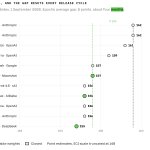
I measured it on a 137k-token session with Opus 5.5:
→ Main agent does it on its own: 67 s, $0.38, context +8-17k
→ Checkpoint: 117 s, $0.68, context +2k
→ Classic subagent: 123 s, $0.57, context +4-5k
But here is what I found: avoiding large input is even more important than keeping cache. And most subagent tasks were done better either in series with retrieval, or split up to be parallel over fresh sessions from the start
I do not think there is a place for subagent delegation at all. There should either be a super-agent that orchestrates and does no work, or a long running agent that can retrieve from previous sessions, not a worker that completes tasks partially and delegates the rest to other workers
Don't design harnesses based on our assumptions of human behavior


Carlos retweeted

maybe a hot take but i now consider adversarial reviews mostly a waste of tokens. far better to use those tokens on empirical combined with formal verification. i have updated pstack to use the interrogate skill less, and eventually i think i may remove it altogether
i have found very little value with code review in the abstract, agents tend to just get lost in the nitpicks and yagnis


Carlos retweeted

I turned @googlegemma EmbeddingGemma 2, an embedding model, into a speech-to-text model, and it turned out to be one of the fastest STT models you can run on device.
On a base M3 MacBook Air it transcribes an hour of audio in about 13 seconds: 288× real time.
The idea came in March with Gemini Embedding 2. It puts text, images, audio and video into one shared space, so a spoken word lands right next to the written word. If that's true, you should be able to read a transcript straight out of the embedding model. I couldnt tried it then, but last week EmbeddingGemma 2 came out as an open model, so I tried it.
Carlos retweeted

You can now train your own Decision model like Jev locally!
We increased Qwen3.5 0.8B’s aggregate accuracy from 20.7% to 74.3% across 3 decision benchmarks - on just 4GB VRAM.
Turn any LLM like Qwen3.8, Gemma 4 into decision models with our open-source Unsloth repo.
We fine-tuned with a Clef head using Unsloth and LoRA (r=64) for one epoch, increasing downstream accuracy from 30–37% to 78%.
GitHub: github.com/unslothai/unsloth
Guide and Notebooks: unsloth.ai/docs/basics/train…


Carlos retweeted

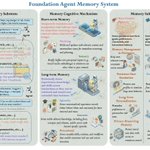
‼️The Bitter Lesson for context management: Giving LMs unrestricted control over their context beats human-designed SOTA!
Introducing 🩵Context Language Models (CLMs)🩵
- Natively manage their own context
- Treat context as a file
- Learn policies in CLM weights, no harness

Carlos retweeted

While everyone was busy asking Claude to write TLA+, we wrote up a tutorial on
- what it actually is
- why it’s not the formal verification silver bullet we are hoping for
- and what we have been working on ( to make a silver bullet out of it )
Complete with an interactive TLA+ playground!
reasonable.io/blog/tla-tutor…
Carlos retweeted

Jev can’t do any of these:
1. Image inputs
2. String, integer, and number types
3. Dependency execution in a single call
TypeLLM can.
Try it: github.com/TypeLLM/TypeLLM
Carlos retweeted

It's actually weird feeling to watch recursive self-improvement start working in your own harness, and to finally see the results.
With Opus 5.5 and GPT-6 Astra, our harness now improves itself and agents do almost every step of it.
1. Agents write the evals.
They turn failing call traces into versioned scenarios: caller persona, goal, the tools that should run, and the final state expected in the EHR.
2. Agents call agents.
Simulated callers are wired to phone our deployed receptionist in real rooms, with real tools and a sandbox EHR, in text and audio, across both of our runtimes.
3. Agents grade agents.
An LLM judge plus deterministic end-state checks score each call, and failures are clustered by runtime, tool and check. Agents then write one fix and one new scenario per root cause as a stacked PR.
4. Agents review agents.
Reviewer agents critique every PR, findings get fixed with tests, and scenarios are rerun. A change proposed only if it passes on both runtimes. We still own merge and deploy, for now.
We're early, but for the first time the loop is starting to close. I've never experienced a pace like this. It's getting faster so RAPIDLY.


Our internal data shows Claude is accelerating AI development—a possible path to recursive self-improvement, or AI autonomously building a more capable successor.
It’s happening faster than we thought, and the implications deserve greater attention. anthropic.com/institute/recu…

Carlos retweeted

We now run the largest frontier lab composed entirely of autonomous AI researchers.
Introducing Primus Society: a society of agents composed of thousands of researchers working under structured institutions designed to solve the world’s toughest problems. We believe this is how AI research should run at scale, safely and productively: an entire society of agents with institutions and purpose.
One discovery we can already share is that the society has discovered a novel result which improves model training by 30%.
Primus Society was inspired by the structures that have organized science for centuries and stress-tested against what’s known about how populations of AI agents fail.
Everything is observable. You can open the virtual city in a browser and read what any researcher is working on.
Learn more about Primus Society here:
lab.cloud/society
The biggest opening in the AI race is running the largest well-governed organization of AI researchers in the world. We’re building the institutions that let a million AI scientists safely tackle the world's toughest problems in AI and beyond. And we’re doing it right here in Canada.
Carlos retweeted

Claude Coders: run this Opus 5.5 instruction cleanup prompt *NOW*.
'/claude-api prompt-audit'
Optimizes your skills, AGENTS.md, CLAUDE.md and removes anti-patterns that restrict Opus 5.5.
The results are amazing. Best 5 mins you'll spend.
From @RLanceMartin.
Carlos retweeted

Introducing Gemini 3.8 Flash and Flash-Lite TTS, our new SOTA text to speech model with:
- a new voice design experience
- 2,000+ production ready voices
- voice replication
- support for 100 languages
- voice remixing (soon)
- #1 spot on Hume AI's voice benchmarks
and more!!
Carlos retweeted

I used Opus 5.5 to formally verify the Claude Agent SDK using Lean. A couple short prompts = 16 PRs fixing various bugs and race conditions. Video attached.
TLA+ also works well. I sometimes combine Lean and TLA+ to look for issues around data flow, concurrency, and state mgmt.
I don't know either language well, but Claude is excellent at both. This approach is super useful for formally modeling your code and finding bugs that a human probably wouldn't have spotted.
Is formal verification the future of coding (or at least, bug finding)?
Carlos retweeted

sharing some notes on typesafe 🤝 coding agents:
docs.google.com/document/d/1…
we likely will never have time (ever again) to play ourselves, but hope the that the community goes WILD (and makes me look like a naive idiot)


Carlos retweeted

Introducing AgentCloak: Use any AI without sharing your real data.
Chinese AI services, ChatGPT, Claude, doesn't matter.
You probably try to hide details before asking: different names, fake numbers, no address.
But then the answer's useless because the AI is missing actual context.
AgentCloak runs in your browser.
It swaps your sensitive info for realistic fakes before sending anything, then swaps your real info back into the response.
You get what you need.
The AI gets nothing about you.
Works entirely in-browser.
Already trusted by some of the biggest companies in the world.
Now free to use.
agentcloak.ai/