

Melburnian tweeting from the northside. YIMBY, urbanist, loves mapping and local politics.
Joined August 2022
- Tweets1.6K
- Following606
- Followers555
- Likes41.8K



Form can contribute to function, but it can also clash with it.
Take cobbled bluestone, an awful, non-functional road surface that is kept purely for form.
Where the two clash, functionality must take precedence and obsessing over form becomes actively harmful.


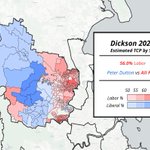
Labor winning (with the support of the Greens) while Carroll loses his seat would be such a funny outcome.
Who becomes Premier in that scenario?


Asanka Epa retweeted

"Just move to Woop Woop" is not a housing policy. How about we just build more homes where people want to live?

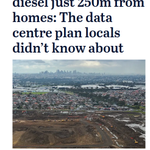
Wow the data centre will only employ hundreds of people😡
I wonder how many people the disused factory currently employs?

I don't understand people who pretend not to know that 'in my backyard' is a euphemism for one's general neighbourhood.
Do you expect anyone to believe NIMBYs are people who go to public meetings to object to their *own* backyard being developed?

Asanka Epa retweeted

More than *three quarters* of all residential land across Australian capital cities is highly restricted.
Today we @yimbymelbourne launch the Australian Zoning Atlas: the first nation-wide analysis of land use planning controls.


Asanka Epa retweeted
The ABC has published today a piece on so-called Liveable Victoria, who believe that building apartments is "anti-family policy".
They are also worried about demographic change from building, not realising that not building also causes demographic change—suburbs age and shrink.

Asanka Epa retweeted

Melbourne has 24 tram routes, spanning much of the city, but which routes overlap the most?


If a suburb is part of a built-up area extending from Sydney's CBD (or will be), but is far closer to Wollongong's CBD, which metropolitan area is it part of?
Sounds like a riddle.


The British YIMBYs claim two contradictory things;
a) That building aesthetics are *objectively* good or bad
b) That English people innately care more about aesthetics than other countries
Pick one!
Why is there such a divide between “New World” and English/“Old World” YIMBYs over design? It may just be a difference of opinion or social networks (and, eg, England’s preoccupation with design is basically a coincidence caused by a few charismatic Rasputin figures), but here are a few other factors that I have heard that seem plausible:
- England’s postwar housing is genuinely uglier and worse than America and Australia’s, because of (a) England’s larger share of council-built homes, (b) mortgage lending constraints leading to “shrinkflation” in the 1960s–70s (worksinprogress.co/issue/bri…), (c) modernism caught on more in England, partially down to fashion and partially down to the planning system.
- England’s prewar buildings are generally better than America’s and Australia’s are, so the gulf between old and new is greater (see below for some 1930s vs 1960s equivalents) and the cultural fondness for older designs is deeper-rooted.
- English YIMBYism involves a larger share of traditionalist right-wingers than American and Australian YIMBYism does, which are more dominated by people who appreciate modernist styles and a general sense of architectural novelty/progress.
- The American/Australian YIMBY strategy seems more dependent on left-wing political support to succeed and association with traditionalism will discredit them with those groups.
- It’s much sunnier in most of America and Australia than England, and ugly buildings don’t look as bad in sunshine as they do on grey, overcast days.
- Americans/Australian homeowners are less interested in “beauty” than English ones, and their complaints about design are generally insincere.
- NIMBYism is stronger in England and English YIMBYs have either adapted their views to try to work within that (ie, making concessions on design to English NIMBYs) or have been psychologically defeated and have made needless concessions to their opponents.
- American/Australian YIMBY strategy is very focused on promoting the benefits of new housing, and conceding that some / much of what gets built has serious flaws undermines that approach.
(I think the last three explain why we enjoy arguing about this so much – to the New Worlders, the English beauty enjoyers are idiotically handing big rhetorical wins to their opponents for no benefit, instead of sticking to the line that all houses are beautiful; to the English, the New Worlders are trying to polish turds for propaganda’s sake.)
I’m sure I’ve missed some other possibilities!


Asanka Epa retweeted

If you reduce the density of housing in Sydney, you reduce the quantity available for Sydneysiders. So price rises.
The only one confused is @DrCameronMurray, who thinks that the housing we allow in Tibooburra is a perfect substitute for the housing not allowed.

Everytime I read The Age comments, I'm reminded that their audience/subscriber base is mostly old people.
Old centre-left people perhaps, but still boomer-brained on urban issues.


There is a simple solution to this: The NSW government needs to declare student housing state significant projects, and take away local councils' power over them.
It is not in the interest of NSW to allow Randwick to worsen the housing crisis because of their hatred of students.


Sometimes I think Australia has it bad when it comes to housing, then I read about London.
Victoria commenced construction of ~43,000 dwellings in the first 3 quarters of 2025, while London only commenced 5,547 for the whole year!
London has 2 million more people than Victoria!


Asanka Epa retweeted

Not I know it seems to be working, a plug for the Poll Bludger's South Australian election live results system: pollbludger.net/sa2026/Resul…

