

My personal account. Tweets are not endorsements. Check out @MilOrdCDN for ministry tweets and activity.
Ontario, Canada
Joined April 2013
- Tweets18.9K
- Following223
- Followers4.2K
- Likes10K






Bishop Scott McCaig retweeted

In 1947, a young Polish priest named Karol Wojtyła traveled from Rome to the small town of San Giovanni Rotondo. He wanted to meet the Capuchin friar known as Padre Pio, go to confession, and spend time with the man who called himself “the humble friar who prays.” Wojtyła stayed nearly a week and spoke with him at length.
Fifteen years later, in 1962, Bishop Wojtyła was in Rome for the Second Vatican Council when he received troubling news. A close collaborator, Dr. Wanda Poltawska, was dying of throat cancer. The doctors held little hope. Remembering the friar he had met years earlier, Wojtyła wrote a letter in Latin asking Padre Pio to pray for her.
Padre Pio received the letter and simply said he could not refuse the request. Eleven days later, a second letter arrived from Wojtyła with astonishing news: the woman had been suddenly healed before she ever entered the operating room.
That early encounter, and the clear answer to prayer, left a lasting mark. Years later, as Pope John Paul II, Karol Wojtyła would beatify and canonize the same humble friar. Two men who once met as priest and confessor are now both honored as saints.
Sts. Padre Pio and Pope John Paul II, pray for us!

Bishop Scott McCaig retweeted

🚨 BREAKING: Islamists have attacked another Christian village in Ethiopia, slaughtering 50 innocent people.
Last week, Islamists massacred 60 Christians in a different region in Ethiopia.
Where is the outrage?
Bishop Scott McCaig retweeted

Friends, please pray for the entire Kirk family, who learned they'll wait until at least June 2028 for justice, news likely made doubly painful by remarks about Charlie this week that are beneath contempt.
On the “I’ve Had It” podcast, so-called culture commentators Jennifer Welch and Angie Sullivan laughed at the idea of digging up Charlie’s body and “doing it again.”
Then Dave Chappelle told a sold-out Madison Square Garden that “life got better” after Charlie was murdered, and that Charlie is now “looking up, laughing so hard he can’t breathe.”
I have often defended comedians, and I understand that pushing the boundaries of what's acceptable is part of the gig. But this is different.
This is laughing at the murder of a young husband and father of two small children, who was killed with a microphone in his hand, inviting those who disagreed with him into honest, respectful dialogue. Shame on you.
There have always been people in the fever swamps who cheer when someone dies. What is new is that it now comes from the main stage and is met with applause.
How did we get here?
This is what a culture looks like when it drifts away from God. Remove God, and with him any sense of the transcendent and the sacred, our objective sense of what is true and good is left in ruins.
What remains is relativism, “my truth” and “your truth,” and finally a game of power: my team against yours. In a world like that, a man's death can become a punchline.
Charlie understood this cultural disease and spent much of his life trying to heal it. It's why he went onto hostile campuses to sit with young people, many of them unmoored and unaffiliated, and make the case for God, for truth, and for a moral order beyond themselves. He listened patiently, argued charitably, and spoke openly about Jesus Christ.
It is my hope, then, that many more will take up this vital part of Charlie's work.
Bishop Scott McCaig retweeted

Pope Leo XIV to young people in Argentina:
“Pray, read the Gospels, and draw near to the Eucharist.”

Bishop Scott McCaig retweeted

"¡No se cansen de transmitir la fe! Prediquen con su vida y también con su palabra. Insistan en la oración, en el amor y en la esperanza. Aunque sus seres queridos parezcan lejos de Dios, sigan poniéndolos ante Él. Hay puertas que ustedes no pueden abrir, pero Dios sí"
~León XIV




Bishop Scott McCaig retweeted

"Come to me, all who labor and are heavy laden, and I will give you rest."
— Matthew 11:28

Bishop Scott McCaig retweeted

‘How little people know who think that holiness is dull. When one meets the real thing... it is irresistible.’
– C. S. Lewis
Quote from St. Augustine: “Take care of your body as if you were going to live forever; and take care of your soul as if you were going to die tomorrow.”
All who are in the Ottawa area, you are invited to the Mass for the Fallen to be celebrated at Notre Dame Cathedral at 8:45 am.
Lest we forget …
10
248
Bishop Scott McCaig retweeted

Today, Canada’s Fallen will be honoured and Remembered. Please join us in observing a moment of silence at 11:00 am to mark the sacrifice of those who have fallen in the service of their country.
#RemembranceDay #CanadaRemembers

Bishop Scott McCaig retweeted

Me cuesta, quizás más que en ningún otro momento desde que me convertí en vaticanista, encontrar las palabras para describir lo que vivimos esta noche.
El papa León XIV se encontró con más de un millón de jóvenes en Buenos Aires.
Escuchó a un joven que logró salir de la drogadicción después de que la Iglesia lo recibiera, le diera de comer y le ofreciera un lugar donde dormir. Escuchó a una joven que se resistió a su vocación a la vida religiosa, pero que finalmente la abrazó en libertad, descubriendo que aquello que ella había interpretado como llegar demasiado tarde era, en realidad, la historia de “un Dios que sabe esperar”.
Besó bebés. Escuchó a jóvenes argentinos cantar canciones católicas muy queridas, como “Maranatha”. Jóvenes creadores de contenido hablaron del Martín Fierro. Hubo tango contemporáneo, danzas folklóricas y Nahuel Pennisi cantó una de las grandes canciones de la cultura argentina: “¿Quién dijo que todo está perdido? Yo vengo a ofrecer mi corazón”.
Hubo velas, banderas, lágrimas, risas y un mar de jóvenes que llegaron con sus movimientos, parroquias y familias, y muchos que vinieron solos.
El papa León retomó la inolvidable invitación del papa Francisco a una Iglesia para “todos, todos, todos”, y dijo que quería inspirarse en esas palabras para hablar de “lo que significa vivir como discípulos de Jesús: todos hacia Cristo, todos con Cristo, todos como Cristo”.
Les habló a quienes crecieron cerca de la Iglesia y a quienes apenas ahora comienzan a buscar a Cristo; a quienes dejaron de rezar, se alejaron o fueron heridos por personas que deberían haberlos acompañado.
“A cada uno de ustedes quiero decirle que tiene un lugar en la Iglesia. Con sus preguntas, sus heridas, con toda su historia personal. Esta es también tu casa”, les dijo.
Me llevará tiempo expresar plenamente lo extraordinarios que han sido estos últimos días para mí. Siempre me he sentido orgullosa de ser argentina. Después de estos días, todavía más.
Pero el orgullo no puede ser el único fruto de lo que hemos vivido.
Cuando llegó, el papa León nos recordó que “ninguna generación construye la patria desde cero, sino que la recibe en herencia”. Y luego expresó un deseo que hoy se siente como una tarea encomendada a cada argentino: “Que quienes vengan después de ustedes reciban una patria unida, digna de su historia y de sus posibilidades”.
Esta noche, al menos durante unas horas, esa patria unida pareció posible.
Ahora viene la parte más difícil: llevarnos esta alegría a casa, dejar de lado el desprecio ideológico que nos ha herido durante demasiado tiempo y atrevernos a construir juntos la nación con la que decimos soñar.
O, como les dijo esta noche el papa León a los jóvenes: “Que sus vidas sean como páginas del Evangelio, escritas con la tinta de la misericordia”.
Que la Argentina sepa escribir bien la próxima página.
Bishop Scott McCaig retweeted
Friends, Pascal said that all of humanity’s problems stem from our inability to sit quietly in a room alone.
Pascal’s point was that we keep ourselves busy so that we never have to face ourselves—our restlessness, our mortality, the questions we’d rather not ask. He called it diversion.
And four centuries later, the ultimate diversion fits in our pockets. Every notification and every scroll is another moment of not being alone with the truth.
But the silence we run from is not empty. It is where the deepest questions rise up, and where God has always spoken to those willing to listen: “Be still, and know that I am God!” (Ps 46:10).

Bishop Scott McCaig retweeted

The French bishops have just demonstrated what serious Catholic opposition to euthanasia looks like. The question now is whether the bishops of Britain and Ireland are prepared to turn their own opposition into equally concrete institutional action?
On 8 November, the French Bishops' Conference issued a remarkable letter to Catholic healthcare institutions, urging them to prepare legally and administratively to resist participation in euthanasia and assisted suicide. They are calling for institutional charters, statutes and internal regulations to be revised so that Catholic hospitals and care facilities can invoke the protections available under French law. This is not simply another episcopal statement expressing sadness about the direction of modern society, it is an attempt to ensure that Catholic institutions remain capable of practising what the Church actually teaches.
The bishops explicitly invoke Pope Leo XIV's powerful intervention during his recent visit to France, when he rejected the deliberate taking of life under the guise of compassion and reminded healthcare professionals that their vocation is to care for the suffering person, not eliminate that person. I find it very encouraging in the current climate that Pope Leo has returned to the same fundamental principle during his South American journey, insisting that illness, disability, pain and the loss of independence do not diminish human dignity, and that society must accompany people until their natural death.
The significance of this consistency should not be underestimated, the Pope is confronting a deeply disturbing assumption increasingly embedded in Western culture: that when suffering becomes sufficiently severe, or independence sufficiently diminished, death can become an appropriate medical solution. Supporters of assisted dying appeal, understandably, to autonomy, compassion and the desire to prevent unbearable suffering & these arguments are reasonable & make sense, at least on the face of it. Catholic bishops need to equip the faithful with a proper understanding of the problems. Essentially Catholic moral teaching poses a question that cannot be answered simply by invoking personal choice: what happens to the moral character of medicine when intentionally bringing about death becomes one of the treatments it offers?
Once society accepts that some lives may legitimately be ended because their suffering has become intolerable, the relationship between vulnerability, dependence and human worth changes profoundly. The danger is not simply that an individual might be coerced. It is that people who already fear becoming a burden may begin to experience the availability of assisted death as an expectation they must somehow justify refusing.
France's bishops understand that opposing this development requires more than eloquent declarations. Catholic institutions must know their legal position, defend the integrity of their medical vocation, support conscientious healthcare professionals and demonstrate through excellent palliative care that compassion does not require deliberately ending a human life. The implications for Britain and Ireland are immediate. In England and Wales, the latest assisted-suicide Bill was defeated in September by just sixteen votes. Jersey has already enacted its own legislation, with implementation being prepared. Ireland has also examined proposals for assisted dying. None of these developments suggests that the moral and political questions have disappeared.
The Catholic bishops in England and Wales did speak against the legislation, and Archbishop John Sherrington deserves recognition for his interventions. But the defeat of one Bill cannot be mistaken for the end of the argument. The more demanding question is what happens between legislative battles.
Are Catholic hospitals, hospices and care homes reviewing their governing documents and conscience protections? Are dioceses equipping priests to explain the distinction between proportionate end-of-life care, the legitimate refusal of burdensome treatment and the deliberate causing of death? Are Catholic schools, healthcare professionals and parish communities being given serious intellectual and pastoral resources to understand what is at stake?
Above all, are we doing enough to ensure that people approaching death encounter excellent care, effective pain relief, companionship and the reassurance that their lives remain precious, however dependent they become? There is a profound difference between saying that the vulnerable possess dignity and constructing institutions that make that dignity visible.
The French bishops are now addressing that difference. Their example deserves serious examination throughout Britain and Ireland, because a Catholic institution cannot preserve its moral identity merely by displaying a crucifix while leaving its governing principles uncertain.
A civilisation reveals its understanding of human dignity most clearly when confronted with someone who can no longer contribute, compete or care for themselves.
The Christian answer is that such a person has lost none of their worth. The challenge for the Church is to make that conviction unmistakable, not only in what her bishops say, but in what her institutions are prepared to do.


Bishop Scott McCaig retweeted
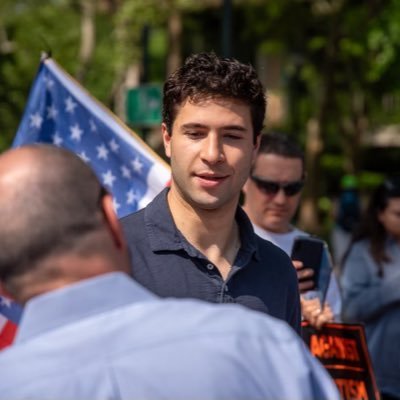
I genuinely don't get how over 100 Christians can be massacred by Islamists in the past week alone and nobody seems to care.

Bishop Scott McCaig retweeted

We need more people speaking out against the genocide of Christians in Nigeria.
Thousands have been killed for their faith - and the world keeps ignoring it.


