




Nis Donatzsky Hansen retweeted

UKRAINE, RUSSIA AND THE ELECTIONS QUESTION
Democratic legitimacy, martial law and the manufacture of political illegitimacy
1/20 - THE ACCUSATION
For years, Russian officials and their international amplifiers have questioned Volodymyr Zelenskyy's legitimacy, arguing that Ukraine's failure to hold presidential elections proves he is an unelected dictator.
The argument is now routinely repeated by American political commentators and European accounts sympathetic to Kremlin narratives.
But it rests on a fundamental omission: Ukraine's elections were postponed under wartime legislation following Russia's full-scale invasion.
Meanwhile, Russia has continued conducting elections under conditions marked by documented candidate exclusions, restrictions on opposition, state-media dominance and substantial allegations of electoral manipulation.
To evaluate these claims properly, we must examine constitutional law, electoral administration, political pluralism and the actual treatment of opposition figures in both countries.
Three questions matter:
• Is the continuation of political authority legally established?
• Can citizens participate in genuinely competitive elections?
• Are political opponents permitted to challenge those governing them?
The distinction between holding an election and conducting a genuinely democratic election is central.
Sources: Freedom House, Freedom in the World 2026.
Ukraine: freedomhouse.org/country/ukr…
Russia: freedomhouse.org/country/rus…

Nis Donatzsky Hansen retweeted

I spent 15+ years investigating Russian secret services and organized crime. I know people who served with Putin in the KGB and sat in on his deals with St. Petersburg crime bosses. So let me explain the "diesel deal" the way they would — in gangster slang. Because that's the language Putin actually thinks in.
First, the facts.
Putin just raised Russia's 2027 military budget by 27% to a record 17.1 trillion rubles — about $203 billion. Who budgets that kind of money for a war they're about to end?
The FT reported yesterday that Western intelligence has warned the heads of European defense companies that Russia is plotting to assassinate them.
Since September, Tusk, Macron and the intelligence services of Poland, Czechia, Latvia, Belgium, France and Denmark have all warned that Russian hybrid attacks — including drone and missile strikes — will intensify in the coming months.
None of this looks like a country preparing for peace.
Who actually benefits?
🇺🇸 What the US gets: Every serious analysis I've read says the announced volumes won't move American diesel prices. This is a PR move for Trump before the midterms — a story about prices that will "very, very soon" come down once his friend Vladimir's tankers reach US shores, plus the chance to claim he ended another war (I've lost count). The only US "benefit" is Trump's rating.
🇷🇺 What Russia gets: billions of dollars to keep funding its genocidal war against Ukrainians. Sanctions relief. A demonstration of power to the rest of the world. A deeper rift between the US and its European allies. And a real chance to disrupt US weapons and intelligence flowing to Ukraine.
So what is Putin's actual goal?
Trump's disapproval is at record highs and polls show his party will most likely loose midterm elections. In less than a month his power will be badly weakened. Why would Putin sign a long-term peace deal with a lame duck whose signature will soon be scrutinized at best and annulled at worst?
He wouldn't. And here's where the slang comes in.
In the eyes of Putin and his siloviki, Trump is a baryga — a greedy, unscrupulous businessman who puts profit above law and principle. Gangsters despise barygas, but they love using them. The goal is always to turn a baryga into a lokh — a mark, an outsider who doesn't understand the rules of the underworld and gets played to serve the gang's interests.
By signing the diesel deal, Putin plays two scenarios at once:
A) The deal miraculously helps his lokh keep power — great.
B) The deal changes nothing, the baryga loses the midterms — but by then it has already done its job: inflamed US political tensions and acted as arson inside the American system.
Putin knows that the majority of Americans support Ukraine. He knows that by signing, Trump draws unprecedented criticism, including from his own party. And he knows a baryga won't give up power easily, because he will have to answer for everything he did in office — this deal included. That's classic gangster/secret-service method: tie a man to your organization, make him a partner in your crimes, so he can't walk away.
Pouring more oil — diesel, in this case — onto the most explosive fault lines of American politics, raising the stakes for Trump and pushing him past the point of no return serves Putin far better than a peace deal that could be voided within months.
Remember: Putin's goal in the West is chaos, not peace.

Nis Donatzsky Hansen retweeted

Dialogue you've seen a hundred times, compressed:
"I'm anti-war." — Then you support Ukraine's defense? "No, I mean I'm against fueling the conflict." — So the invaded should stop shooting? "I just think diplomacy—" — With the party that broke every agreement it signed? "Well, both sides—" — Name Ukraine's crime. "…It's complicated."
It's not complicated. It's a home invasion with a UN seat. "Anti-war" that only ever disarms the victim has a proper name: pro-victory — for the invader.
Nis Donatzsky Hansen retweeted
How Russian propaganda works abroad, in one sentence per layer:
For the right: "Russia defends tradition." For the left: "NATO caused this." For the pacifist: "Weapons prolong war." For the cynic: "Everyone lies equally." For the tired: "It's complicated."
Five contradictory messages, one output: do nothing.
Russian propaganda doesn't need you to love Moscow. It needs you paralyzed — and it has a script for whichever ideology you brought to the table.
Whenever a take ends in "therefore, inaction," check the return address.
Nis Donatzsky Hansen retweeted

Hier eine kleine Erinnerung für alle, die die pro-russische Darstellung von der „Rache für Wildberries“ verbreiten.
Achtet auf die Daten!
Russland griff das Einkaufszentrum „Amstor“ in Kremenchuk am 27. Juni 2022 mitten am Tag mit Marschflugkörpern an, während sich bis zu 1.000 Menschen im Gebäude befanden. 21 Menschen starben, über 70 wurden verletzt.
Russland griff am 25. Mai 2024 den „Epicentr“-Hypermarkt in Charkiw an. Es war ein Wochenendnachmittag, und etwa 200 Zivilisten und Mitarbeiter befanden sich im Gebäude, um Haushaltswaren einzukaufen.
Die Explosion löste einen Brand mit hohen Temperaturen aus, bei dem Chemikalien und Baumaterialien in Flammen aufgingen. Die Ukrainer mussten DNA-Tests durchführen, um die Opfer zu identifizieren. 19 Menschen kamen ums Leben, darunter auch Kinder, und 46 wurden verletzt.
Russland griff den Zentralmarkt von Kostiantynivka und die umliegenden Geschäfte mindestens zweimal an: am 6. September 2023 und am 9. August 2024.
Beide Angriffe richteten sich gegen dicht besiedelte Einkaufsviertel, in denen sich morgens oder am frühen Nachmittag zahlreiche Kunden aufhielten.
Bei dem Angriff im September 2023 kamen 17 Menschen ums Leben und 32 wurden verletzt; bei dem Angriff auf den Eko-Markt im August 2024 starben 14 Menschen und 44 wurden verletzt.
Russland griff am 21. Oktober 2023 das Nova-Poshta-Sortierzentrum in Korotych in der Region Charkiw an. Spät in der Nacht, während Mitarbeiter zivile Post, Pakete und humanitäre Hilfsgüter entluden, trafen zwei S-300-Raketen einen Standort, an dem die Raketen schneller eintreffen, als sie erkannt werden können. Die 8 Getöteten hatten keine Chance, 15 Menschen wurden verletzt.
Die Russen griffen „Nova Poshta“ in Korotych am 13. Januar 2026 erneut an, wobei 4 Menschen getötet und 6 verletzt wurden; am 19. Juli 2026 wurden 4 Menschen getötet und 19 verletzt; und am 2. August 2026 kam ein Fahrer ums Leben. Von allen aufgeführten Angriffen ereigneten sich nur die beiden letzten nach Beginn der ukrainischen Angriffe auf Wildberries.
Russland griff am 3. Mai 2023 den ATB-Supermarkt & Retail Square in Cherson an. Durch den Angriff auf zivile Einkaufsinfrastruktur während der Tagesstunden wurden die Kunden in der brennenden Markthalle eingeschlossen.
An diesem Tag kamen in ganz Cherson 23 Menschen ums Leben: 4 im ATB-Supermarkt, 1 im Epicentr-Geschäft und weitere an nahegelegenen Haltestellen und in Geschäften.
Russland griff am 1. Oktober 2024 den zentralen Stadtmarkt von Cherson an. Gegen 9:00 Uhr morgens schlugen Artilleriegeschosse direkt in belebte Marktstände im Freien ein. 7 Menschen wurden getötet und 3 verletzt.
Schließlich griff Russland am 8. April 2022 den Hauptbahnhof von Kramatorsk an, während dort eine zivile Evakuierung im Gange war. Eine ballistische „Tochka-U“-Rakete traf die überfüllten Evakuierungsplattformen, tötete 63 Zivilisten, darunter 9 Kinder, und verletzte über 150 Menschen.
Außerdem griffen sie am 24. August 2022 den Bahnhof von Chaplyne an, wo eine „Iskander“-Rakete Personenzüge und angrenzende PKWs traf, 25 Zivilisten tötete und Personenwagen in Brand setzte.
Dies ist nur ein winziger Bruchteil der russischen Angriffe auf ukrainische Einzelhandelsketten, Märkte und zivile Verkehrsinfrastruktur während der großangelegten Invasion.
Ein winziger, klitzekleiner Bruchteil!
Wenn ihr also, ihr hirntoten Amöben, von „Rache für Wildberries“ schreibt, denkt noch einmal nach. Russland hat die Ukraine all die Jahre bombardiert, lange vor unseren Angriffen auf Wildberries, und wird damit ungeachtet dessen weitermachen.
Dank an @BohuslavskaKate
Nis Donatzsky Hansen retweeted

— Putin, why did you invade Ukraine?
— Because Ukraine doesn’t exist.
— Seriously?
— Lenin invented it.
— And that’s why you invaded it?
— Ukrainians and Russians are one people.
— So you’re saying the Ukrainian nation doesn’t exist?
— It doesn’t.
— Then who lives in Ukraine?
— Who else? Russians.
— Then why did you invade Ukraine if Russians live there?
— To denazify it.
— Denazify whom?
— Ukrainians.
— But you just said Ukrainians don’t exist.
— We wanted to protect Russian speakers.
— From whom?
— Who else? The Nazis.
— But you just said there are only Russians there!
— I don’t even know anymore. This is complete nonsense.
— So who exactly have you been fighting for almost five years?
— NATO.
— Is Ukraine a member of NATO?
— No.
— Then why do you claim you’re fighting NATO?
— Because NATO is fighting us through the Ukrainians.
— The Ukrainians who don’t exist?

Nis Donatzsky Hansen retweeted

Putin famously claimed that the collapse of the Soviet Union was the greatest geopolitical catastrophe of the 20th century. He could not be more wrong.
The fall of the USSR was actually the greatest geopolitical miracle of modern history, freeing tens of millions of people from a brutal, blood-soaked empire.
The Soviet Union was a human disaster, a totalitarian crime against humanity, and a system that put war and imperialism ahead of feeding its own people.
For decades, the world was forced to endure the myth of the USSR as a superpower dedicated to human progress. In reality, it was nothing more than an advanced, totalitarian iteration of the Russian Empire.
It was an illegitimate project built on lies, paranoia, and catastrophic human suffering. It was a war-hungry, paranoid mistake of a country that sacrificed tens of millions of lives across its republics.
The Soviet ideology was fundamentally flawed because it placed a rigid, totalizing dogma above human dignity and basic freedom. It substituted human enterprise with central planning, creating an unsustainable economy that could build nuclear missiles but failed to put bread on the tables of its citizens.
From a historical perspective, the USSR was an aggressive, imperialistic state. It helped unleash the horrors of World War II by signing a pact with Nazi Germany in 1939, agreeing to carve up Eastern Europe. The alliance only ended because Hitler turned on Stalin in 1941.
Throughout its existence, Moscow treated member republics as colonies, extracting their wealth and enforcing cultural dominance while silencing any form of dissent through the Gulag system and police state surveillance.
When the Soviet Union finally imploded, tens of millions of colonized people were freed from Moscow's grip. Look at the Baltic states today. Estonia, Latvia, and Lithuania transformed into flourishing European democracies with living standards that far exceed anything Russia has ever produced. They stand as living proof that Russian control was the single greatest obstacle to human flourishing in the region.
Modern Russia's brutal attempt to eradicate Ukraine is proof that Moscow never accepted the death of its empire. Driven by corrupt, paranoid leadership, Russia is committing genocide because it has no ideology or attractive model left to sell. It can only sell imperialism and death.
Defeating this imperial machine in Ukraine is a global imperative. If the Russian empire is not shattered in Ukraine, it will remain a permanent threat to peace and force us to confront it elsewhere later

Nis Donatzsky Hansen retweeted
‘Just stop sending weapons, and the war will end.’
Correct. It will. Let me describe the ending, since its advocates never do.
We know exactly what Russian occupation looks like, because Ukraine has liberated towns and counted. Bucha lived under Russian rule for thirty-three days: 458 bodies. Torture basements in district after district, standardized like franchises. Twenty thousand children deported for ‘reeducation.’ Mayors executed. Teachers filtered. Mass graves with bound wrists.
Now extend thirty-three days to forever, and one town to a nation of forty million.
That is the ‘peace’ this arithmetic purchases.
If Russia stops fighting, the war ends. If Ukraine stops fighting, Ukraine ends — not as a flag on a map, but family by family, basement by basement, off camera, for years.
Weapons are not prolonging this war. They are the only thing standing between an entire nation and Bucha at scale.
Pacifism that disarms the victim has a proper name: complicity with better manners.
Nis Donatzsky Hansen retweeted
The West humiliated Russia in the 1990s. This war is the consequence.’
I’ve heard this in every language, from every podium. It is history rewritten backwards.
Recall what actually happened to defeated Russia: no occupation. No reparations. No tribunal. It kept its nuclear arsenal and its UN veto. Its debts were forgiven and refinanced. It was handed IMF billions and a seat at the G8 — a club of democracies admitting a wounded autocracy out of hope.
Now recall an actually humiliated nation: Germany, 1945. Occupied. Partitioned. Cities in ash, leaders hanged, guilt taught to its children by law.
Germany became the most peaceful democracy in Europe. Russia became this.
So spare me the humiliation theory. Russia was not humiliated after the Cold War. It was indulged — and it read every kindness as weakness, every gift as tribute.
The grievance was never mistreatment. The grievance was lost dominion.
Empires do not mourn their wounds. They mourn their slaves.
Nis Donatzsky Hansen retweeted

To understand Russia, you have to think like a Russian. Analysing it through a Western lens will only take you so far.
1) Russia no longer wants this war, but it cannot simply stop it. Because…Pride.
A self-declared “great power” cannot admit defeat - especially not against a country it regards as smaller, weaker and fundamentally inferior. Withdrawal would not merely be seen as a military failure, but as a humiliation and a collapse of Russia’s entire imperial self-image.
2) Russian leadership operates like a mafia hierarchy, built around strongman culture.
If Putin retreats, it will be interpreted as weakness. He will be cannibalised by the very structure he created.
Remember - this is a man obsessed with longevity, who has directed his own daughters towards scientific research and poured enormous resources into extending his own life. He is terrified of death! He will not voluntarily choose an outcome that could threaten his personal survival.
3) Russia has already paid an enormous demographic and economic price.
More than one million Russians - including a disproportionate share of the educated, urban and technically skilled population - have left the country since 2022. Another estimated 1.4 million have been killed, wounded or permanently disabled from the war.
The economy is under severe strain. Inflation is high. Russians queue for hours - and in some cases days - for fuel. Farmers are warning that shortages of diesel and fertiliser could severely disrupt agricultural production, raising the risk of food shortages.
4) Russia is also terrified of what happens when the soldiers come home.
Sex workers in Russia have reportedly described a mass exodus from the industry because returning veterans are exceptionally violent, cruel and sadistic.
The Kremlin has been explicit that it does not want to repeat the aftermath of the Soviet war in Afghanistan, when half a million soldiers returned from a failed war to a collapsing country. Many came home traumatised, brutalised and unable to reintegrate. Organised crime, addiction and social violence surged.
Russia cannot simply stop this war.
What it can do is:
1) Continue the war of attrition and keep losing slowly to Ukraine - at an enormous cost to Ukrainians as well.
2) Intensify its cognitive and political warfare - deepen divisions within Europe, drive a wedge between the EU and the United States, and help bring more Russia-friendly governments to power. governments willing to abandon Ukraine or pressure Kyiv into accepting an unfavourable settlement.
3) Beg Trump to negotiate some form of Korean-style stalemate: a frozen front that gives Russia several years to rebuild its forces, rearm and resume the war later.
4) As an absolute last resort, escalate by attacking the NATO alliance - triggering a conventional war that they lose quickly. Then, and only then, they can say: look, we lost, but we fought the ENTIRE West.
Russia cannot win this war. But it cannot stop it either - not through any conventional or politically survivable route anyway.
P.S.: No, nukes are not an option either.
Nis Donatzsky Hansen retweeted
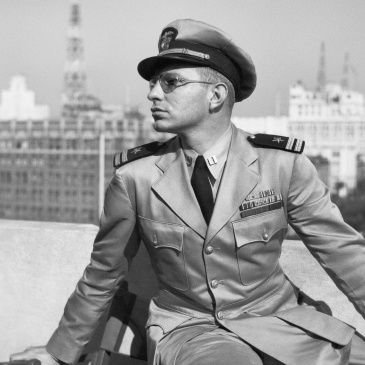
1/ Nikolai Patrushev, a key adviser to Vladimir Putin, says that Russia is fighting a pan-European neo-Nazi alliance, and advocates Russian naval action in the English Channel. He warns the Baltic states of "the end of ... peaceful, carefree life and sovereignty." ⬇️

Nis Donatzsky Hansen retweeted

Russia is not over 1,000 years old, as some claim. At most, it is 900 years old – if we count from the establishment of the first political unit in the area of Moscow. The Vladimir-Suzdal Principality, founded in 1125, is where we should begin the political history of the country now known as Russia. Before the arrival of colonizers from Kyiv, the region was mostly inhabited by Finnic tribes.
Rus’ began in Kyiv in the 9th century, which makes Ukraine its direct descendant, while Russia is more of a spin-off – a branch heavily influenced by the Golden Horde. Moscow was under Kyivan Rus’ influence for barely 100 years, but it remained under the rule of the Golden Horde and other Turkic powers for over 400 years. This raises the question: from whom did they actually inherit most of their political culture and traditions?
We don’t say that the United States began with the Kingdom of Wessex in the 6th century. We don’t say Argentina started as the Kingdom of Aragon in 1035, or that Brazil was founded in the days of the Portuguese Reconquista. You get the point. We draw a clear line between the colonizing civilization and the colony that later gained independence and went its own way.
Likewise, Russia did not begin with Kyivan Rus’. It was a remote colony, and that does not make it the heir to Kyivan heritage. In fact, prior to 1721 the country wasn’t even officially called “Russia” – its name was “Moscovia.” They renamed themselves after conquering Rus’-Ukraine, in a deliberate attempt to appropriate its history. Sadly, many people still fall for that story.
When I pass by the 1,000-year-old St. Sophia Cathedral – built while the area of Moscow was still populated mostly by bears and frogs – and then hear someone talk about “Russia’s 1,000+ year history,” I honestly shudder. That is Ukrainian history, not Moscow’s.
The trident was the coat of arms of Volodymyr the Great of Kyiv, who reigned from 978 to 1015. The double-headed eagle, often cited as Russia’s imperial symbol, wasn’t even originally Muscovite – it was appropriated from Byzantium after its fall. Tsar Ivan IV, “the Terrible,” even fabricated a story claiming he was a direct descendant of Julius Caesar. Naturally, that was fake – like so much else in their official mythology.
Author: Volodymyr Kukharenko

Nis Donatzsky Hansen retweeted
No, sweetie.
Donetsk was a city of a million roses when its own Ukrainian flag flew above it.
Back then, it was also the fastest-growing and most rapidly prospering city in Ukraine -- home to what was the finest regional airport in Eastern Europe, one of the world's best football stadiums, a state-of-the-art railway terminal, and one of the cleanest, best-maintained cities in the region.
Its elites were running Kyiv, and every time I visited Donetsk as a student, riding the famous trolleybus Route No. 2 through the city, I was amazed by how many new office buildings were appearing, how much money was flowing into the city, and how many international companies were opening their doors there.
Fifteen years ago, to us kids from Donbas, Donetsk felt like the center of the universe because it had everything one could possibly dream of. It was a young city of universities and libraries, where the overwhelming majority of boys and girls from across Donbas went to study, including those from my own small hometown an hour away by bus.
Names like Liverpool or Detroit Rock City may mean nothing to you, but our Ukrainian Donetsk was a city of great rock clubs and unforgettable concerts. We traveled there to see Western bands perform.
We bought rock merchandise at the legendary Right House store near Krytyi Market. Scorpions, Rihanna, and Beyoncé performed at the famous Donbass Arena. Schoolchildren from across Donbas were bused in to watch Shakhtar Donetsk matches. The city even had a famous monument to The Beatles.
It was a city where we sang songs on guitars in its beautifully maintained parks and along the Kalmius embankment before heading out to buy the famous "green Donetsk burgers." Our older friends moved there after graduation, formed rock bands, recorded full albums, and held wedding celebrations in the squares around Donbas Arena. We traveled there to visit the legendary Radio Market in search of films, music, and books.
And then you arrived.
And you turned the wealthiest, most prosperous Ukrainian city into a piece of shit.
You deceived many of its people with sweet promises of Russian oil-fueled prosperity broadcast from television screens, but what you brought instead was war.
You transformed a thriving city into a criminal wasteland ruled by ethnic gangs from Russia, into a kingdom of Stalinist terror straight out of the 1930s, complete with torture chambers in the infamous Izolyatsia prison camp. You turned the magnificent Donetsk Airport into lifeless gray rubble, while the vast stands of Donbas Arena have spent a second decade slowly being reclaimed by weeds instead of hosting Champions League finals and Metallica concerts.
You swept away an entire generation of the city's men through your forced mobilization and threw them against Ukrainian machine guns until there were barely enough people left to keep basic municipal services running. Because of you, prosperous Donetsk became a withered desert without reliable water, because your war destroyed the canal system that carried water from the Siverskyi Donets River into Donbas. For years now, people have lived with chronic water shortages and have been reduced shitting into plastic bags forever.
You dragged Donetsk back like seventy years in time. You turned it into a depressed backwater, devoid of hope and future. Even ten years ago, tens of thousands of people, the most active, the most talented, the most entrepreneurial, fled the city and found refuge in Kyiv and elsewhere in Ukraine. Many of them still remember our Donetsk with tears in their eyes, the Donetsk that existed before the arrival of the "Russian World."
You transformed it into something that even my pro-Russian acquaintances are shocked to see when they return after years of occupation.
It was you who trampled the million roses of our Ukrainian Donetsk into shit beneath the tracks of your tanks and the boots of your death troops, turning them into a foul swamp of death and despair.
And that stain will forever remain on the conscience of fascist Russia, which brings nothing but destruction, decay, and death wherever it goes.

Nis Donatzsky Hansen retweeted

La Crimea è Ucraina, non può sopravvivere senza l’Ucraina e la guerra iniziata nel 2022 sta paradossalmente dimostrando quanto l'annessione del 2014 sia stata incauta e di fatto insostenibile. Lo scrivo, con buona pace di Travaglio, ma soprattutto di Lucio Caracciolo, che sulla rivista Limes, continua a proporre cartine in cui si ritrova la regione illegalmente occupata puntualmente dello stesso colore della Russia, quasi a legittimare per via editoriale ciò che il diritto internazionale vieta.
In questi giorni, infatti, si parla molto - l’ho fatto io stesso - del blocco logistico che sta paralizzando i rifornimenti della penisola, legato all’abbandono del traffico ferroviario attraverso il ponte di Kerch, oltre ai colpi inferti all’Ucraina sia ai traghetti che operano nello stretto, sia ai collegamenti via terra lungo la M-14, la strada che attraversa tutte le aree occupate del sud-est dell’Ucraina. Si susseguono notizie sui razionamenti della benzina e sui social appaiono immagini di code interminabili ai distributori per accaparrarsi quel poco di carburante che non viene requisito dalle forze di occupazione per le esigenze militari. Ma ci sono almeno altre due emergenze che ora rischiano di esplodere e che ben rappresentano come la visione imperiale di Vladimir Putin sia del tutto scollegata dalle reali capacità militari e logistiche di una media potenza come la Russia.
La prima è quella energetica. La Crimea viene rifornita attraverso cavi sottomarini che operano già al massimo della capacità, anche a causa delle necessità dell’esercito e dei sistemi di difesa. L’infrastruttura è quindi estremamente fragile, dal momento che le sottostazioni elettriche sia sul lato della Crimea che su quello di Krasnodar sono esposte al fuoco ucraino e il loro danneggiamento causerebbe il collasso dell’intera rete. Per compensare il deficit, la Russia ha costruito due grandi centrali termoelettriche a ciclo combinato, Tavridska (vicino a Simferopol) e Balaklava (vicino a Sebastopoli). Questi impianti sono alimentati a gas, ma l'intero sistema di generazione di supporto (inclusi i massicci generatori diesel d'emergenza installati per proteggere i siti militari, i radar e gli ospedali) dipende appunto dalla logistica dei combustibili liquidi, che, come si è detto, è praticamente interrotta. I flussi turistici estivi rischiano di mettere a dura prova la tenuta del sistema.
La seconda e assai più grave emergenza è quella idrica. La scelta folle delle forze di occupazione russe di far saltare la diga di Kakhovka nel giugno del 2023 per ostacolare la controffensiva ucraina ha di fatto azzerato la portata del Canale Nord-Crimeano (Severo-Krymskiy Kanal), che storicamente forniva l’85% dell’acqua utilizzata dalla penisola. I bacini idrici che alimentano il sud-est e il centro della Crimea (in particolare il bacino di Belogorsk e quello di Taigan) mostrano ampie aree completamente deidratate. Il fiume Biyuk-Karasu, che dovrebbe alimentarli, è quasi in secca. Le riserve accumulate ad inizio anno, nonostante le rassicurazioni delle autorità, difficilmente sopravviveranno alla stagione estiva.
A questo si aggiungono le recenti criminali perforazioni disposte dall’amministrazione, le quali hanno causato la contaminazione delle falde con acqua salata. Dai rubinetti in molte zone della penisola esce quindi acqua salmastra, inutilizzabile sia per scopi potabili, sia per l’irrigazione, elemento questo, che sta azzerando tutte le coltivazioni intensive. Il Cremlino sta stanziando miliardi di rubli in sussidi d'emergenza per salvare almeno la viticoltura e la frutticoltura, ma gli idrologi locali concordano sul fatto che, senza una soluzione strutturale, la Crimea si avvia verso un processo di progressiva desertificazione interna.
Il paradosso vero è che le azioni criminali del Cremlino stanno ricreando artificialmente esattamente le condizioni che costrinsero l’allora leader dell’URSS Nikita Chruščëv a “donare” la Crimea all’Ucraina nel 1954. Una scelta ritenuta scellerata da Putin. Secondo la retorica del capo del Cremlino - avvalorata anche da diversi accademici nostrani, che sostengono che la penisola sia "sempre stata russa” - quella cessione fu infatti un’elargizione azzardata ed ingiusta, ma la realtà dei fatti è che fu allora una scelta non solo oculata, ma anche necessaria.
Dopo la deportazione nel ‘44 di 200.000 tatari, la popolazione turcofona indigena della penisola, accusati falsamente di collaborazione col nazismo (un evergreen della propaganda di Mosca), Stalin vi spostò decine di migliaia di russi, i quali tuttavia, a differenza dei nativi, non riuscirono a coltivare le aride terre interne con la poca acqua disponibile, facendo così crollare la produzione agricola e l’economia della regione. Fu allora progettato proprio il Canale Nord-Crimeano, che avrebbe dovuto portare acqua dal Dnipro grazie alla diga di Kakhovka, ma il fatto che la mastodontica opera dovesse essere gestita da due diverse amministrazioni (russa e ucraina) rendeva l’impresa un incubo burocratico. Chruščëv decise dunque di rendere la Crimea ucraina proprio per ragioni “idriche”, sebbene avesse presentato la cessione come un "nobile atto del popolo russo" per commemorare il 300° anniversario del Trattato di Perejaslav (1654), interpretato dalla propaganda sovietica come la "riunificazione eterna" tra Ucraina e Russia, ottenendo peraltro anche l’appoggio della potente élite politica di Kyiv.
Non ci vuole molto per capire che nella Crimea ucraina, che fino al 2014 i russi frequentavano senza restrizioni come splendido paradiso turistico, oggi quegli stessi russi si ritrovano su spiagge piene di denti di drago, con chilometri di filo spinato sulla battigia e trincee per la fanteria, per poi immergersi in un mare minato, spesso a due passi da postazioni missilistiche che rappresentano obiettivi militari, mentre mancano benzina, acqua ed energia e la situazione agricola del 2026 somiglia a quella dei primi anni ‘50. Piaccia o no ai propagandisti nostrani, il fallimento della presa di Kherson nel 2022 rende impensabile uno scenario in cui la Crimea possa sopravvivere senza l’Ucraina. La Russia d’altra parte fa, anche lì, le uniche cose che sa fare: uccidere, deportare, militarizzare, desertificare, distruggere.
#CrimeaIsUkraine
#SlavaUkraini


Nis Donatzsky Hansen retweeted

The “NATO made them do it” crowd also likes to pretend that Ukraine wanted to be in NATO, which is what the Russians invaded to prevent. Except this has the causality in reverse as well.
Let’s set aside the fact that Ukraine was never going to join NATO because of US & German vetoes (these were the most obvious ones). Instead, let’s just look at public demand for NATO membership in Ukraine.
As you can see, there was virtually no push for joining NATO before 2014 (and some rather serious opposition to it). Recall that at the time, Ukraine was legally neutral and non-aligned.
This changed after Russia’s annexation of Crimea, which showed how dangerously exposed Ukraine was on its own. Even then, the number of Ukrainians thinking NATO membership would be desirable was roughly the same as the number of people who did not want it, with many undecided.
The Russian invasion in 2022 is what utterly changed attitudes: all the undecided decided, and they decided exactly in the same way all those who had opposed it did: NATO membership would be very desirable.
The Russian invasion created the demand that it was supposedly preempting.


NATO Eastern Enlargement: Expansion without Teeth
One of the most widespread and pernicious myths that distorts understanding of the Russo-Ukrainian War is the claim that Russia was provoked by NATO enlargement.
The claim starts with the supposed promise made to the Soviets at the end of the Cold War. I have documented why this is false before, so will not dwell on that (slantchev.wordpress.com/2024…).
Here's I will ask a simpler question: what evidence there is for NATO expansion threatening Russia's security. I have documented opinions by Russian generals saying that it did not, but let's take a look at some data. The Mearsheimer/Sachs argument is that mere accession is already threatening to Russia but they never explain why. NATO is a defensive alliance -- it simply cannot be organized for aggression -- but let's set this aside as well. I will look at some hard evidence of increased threat to Russian security measured in conventional ways we normally do when we talk about things like that: military personnel and expenditures.
Figure 1 shows the military expenditures of NATO without the US, the US, and Russia (in log of constant 2023 USD) over the post Cold War period. I added indicators for major military operations by the US and Russia, as well as the years of NATO expansion.
Several things are immediately obvious: while the US did experience occasional spending hikes due to the War on Terror, its NATO allies remained essentially flat despite the expansion (meaning the addition of new members did not really add that much to overall spending). In fact, in the 2010s, NATO was REDUCING its spending right up to the point where Russia annexed Crimea.
The Russians, on the other hand, began militarizing immediately after the end of the economic crisis of the late 1990s and early 2000s. You can see the clear increasing spending from 2000, with a brief drop after 2016, and its resumption in 2021. If there was a threat represented by spending, Russia was not reacting to it. In fact, it was NATO that was not reacting to Russia's troubling increase.
Figure 2 shows the trends in total military personnel where you can see NATO's gradual disarming over time while the Russians -- who had to scale back from the outsized Soviet military -- eventually rebuilt and increased it again. Even the US was reducing from 2010 -- the small upticks at the end are all after Crimea.
Figure 3 illustrates the NATO accession even more starkly: for each of the three major expansion cohorts (1999, 2004, and 2009), I computed the total armed force for each cohort before and after joining NATO. You can clearly see the downward trend: joining NATO led to SMALLER militaries for these countries. Hard to see how this is threatening to Russia.
It's crucial to realize that these reductions were NOT offset by stationing foreign NATO troops there. In fact, just like the original inclusion of the former GDR was under the explicit agreement that there would be no foreign NATO troops there (or nukes) -- this is the actual meaning of NATO jurisdiction expanding "not one inch eastwards" -- all subsequent enlargements were done with the understanding that the same formula applied to the new members.
Figure 4 bears this out: US troop deployments in NATO members in Europe were limited to their original Cold War places in Western Europe (where they were drastically reduced), and nothing in the new members until after the Russian invasion in 2022. Even Crimea resulted in a rather tepid non-response.
1/2


Nis Donatzsky Hansen retweeted

Russia as Colonial Power
84 years ago Russian deportations started mass deportations in the Baltics
Why the Baltics are a good example why it should be a goal to restore Ukraine in it´s 1991 borders as fast as possible.
A long 🧵
1/x

Nis Donatzsky Hansen retweeted

🧵 This is already making rounds, so I will try to shed some more light on March/April 2022 Ukraine-Russia talks since the article is still far from the point, and because Poland played a much bigger role than anyone is willing to admit publicly
foreignaffairs.com/ukraine/t…

Nis Donatzsky Hansen retweeted

Westerners dont believe me about the Donbas mid-evil open trials & martial laws back in 2014-16. Banned women from wearing makeup & going to bars & excusing rape in many cases, open air torture, age of consent to 13, enslavement & public executions of POWs youtube.com/watch?v=4ijS358Q…

Nis Donatzsky Hansen retweeted

🧵FELLAS! STAY AWHILE AND LISTEN! A key component of russian propaganda and slander is that Ukraine is not a real state. Despite being demonstrably false, this lie is used as a means to cover up russia's own stolen history - which is today's topic, Russia's stolen history. 1/16
