

Note to self: Measure progress by what you learn each day not by comparison
Silicon Valley
Joined December 2015
- Tweets3.4K
- Following4.7K
- Followers613
- Likes6.4K







Kae retweeted

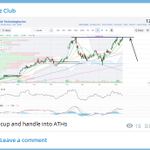
Stage 1 has a lot of failures before the real move happens.
That's why you wait for the Stage 2 breakout on big volume that's unequivocal.


Kae retweeted

One of my favorite lessons I’ve learnt from working with smart people:
Action produces information. If you’re unsure of what to do, just do anything, even if it’s the wrong thing. This will give you information about what you should actually be doing.
Sounds simple on the surface - the hard part is making it part of your every day working process.
Kae retweeted
I’ve been thinking a lot about what the net benefit of the AI platform wave is. The real question is how to empower every company out there to get more out of this platform shift and build their own AI native capabilities and enterprise value (vs inadvertently just transfer their unique value to the tech sector!!).
Bill famously said a platform is when the economic value of everybody that uses it exceeds the value of the company that creates it. That’s the essence of the positive-sum future.
Even in our somewhat zero-sum mindset industry, we can create partnerships that create value for all parties involved. Our partnership with OpenAI is a great example. Our investment helped them scale; their research accelerated our own innovation. That’s what healthy platforms and partners do—they catalyze and compound progress.
There’s no better proof than what we announced just this week. The world’s first AI superfactory was co-designed with OpenAI and informed by three generations of AI supercomputers we built for frontier model training and inference. It was also a result of working closely with Nvidia and getting better at the full stack optimization from model architecture to micro-architecture of the chip and everything between three companies!
We also did the work to bring AMD into the fleet doing inference of GPT models, which enabled them to get up to speed on their own software stack for AI.
And now all this infrastructure will scale to support every startup to enterprise doing their own training to inference.
You can see the same dynamic in coding. Thanks to AI, the category itself has expanded and may ultimately become one of the largest software categories. I don’t ever recall any analyst ever asking me about how much revenue Visual Studio makes! But now everyone is excited about AI coding tools. This is another aspect of positive sum, when the category itself is redefined and the pie becomes 10x what it was! With GitHub Copilot we compete for our share and with GitHub and Agent HQ we also provide a platform for others.
Of course, the real test of this era won’t be when another tech company breaks a valuation record. It will be when the overall economy and society themselves reach new heights.
When a pharma company uses AI in silico to bring a new therapy to market in one year instead of twelve. When a manufacturer uses AI to redesign a supply chain overnight. When a teacher personalizes lessons for every student. When a farmer predicts and prevents crop failure. That’s when we’ll know the system is working.
Let us move beyond zero-sum thinking and the winner-take-all hype and focus instead on building broad capabilities that harness the power of this technology to achieve local success in each firm, which then leads to broad economic growth and societal benefits. And every firm needs to make sure they have control of their own destiny and sovereignty vs just a press release with a Tech/AI company or worse leak all their value through what may seem like a partnership, except it's extractive in terms of value exchange in the long run.
We know that the Internet wave had tremendous positive sum impact in the world, and yet we also had some sectors that got hollowed out like local media. This time around we have the opportunity to ensure broad diffusion of this tech with choice and control that is distributed to ensure positive sum outcomes across the board.
At the end of the day, this new technological wave gives us the opportunity to dream bigger and set higher ambitions for what we can collectively achieve. Each of us will need to play our part!

Kae retweeted

today we are introducing codex.
it is a software engineering agent that runs in the cloud and does tasks for you, like writing a new feature of fixing a bug.
you can run many tasks in parallel.



Kae retweeted

TRUMP JUST NOW ON THE CHINA TRADE DEAL:
"We have the confines of a very strong deal with China. The most exciting part of the deal was the opening up of China to US businesses. I don't think I'll have to talk with Xi about the final details directly but I'm ready to do it like I did with the UK."
White House Economic Advisor Kevin Hassett said today that when Trump is back from the Middle East, he will announce his next trade deal.
If we get India or Japan soon...and then China to follow that up...
The street is going to love this & if the average tariff rate starts to come down due to the negotiations (aka the WH lowers rates in order to get more concessions), Powell will have more liberty to cut rates due to less fears around tariff inflation.
More trade deals, more investments in the US, lower rates...it could all set up the markets to gain serious momentum into the second half of the year.
Kae retweeted
Coinbase just became the first and only crypto company to join the S&P 500.
This milestone represents what the true believers, from retail investors to institutional investors to our employees and partners, knew all along.
Crypto is here to stay.

Kae retweeted

People will spend 40 years climbing a ladder just to realize they never wanted to be on the top floor.
Kae retweeted

I wrote a list of 35 pieces of advice I'd tell my younger self on how to be happy.
1. Take responsibility (the ability to respond).
This doesn’t mean that everything that has happened to you is a result of your actions. It means that you develop an ability to respond to whatever happens to you, even if you don’t control the consequences of your actions.
It means exerting maximal agency towards the things you can directly change (your behavior), and maximum acceptance towards things you can influence but not control (external circumstances, other people’s behavior).
You can blame other people, but unless you change behavior, you might have similar reoccurring results with other people / in other situations, at which point you’ll realize a common denominator is you, and it’s worth rewiring certain patterns.
2. Rewire your patterns.
The most empowering thing I’ve heard is that there is a gap between stimulus and response, and that the key to both our growth and happiness is how we use and expand that space.
Our responses typically come from patterns and scripts handed down from our parents and our pasts. We are not hostage to those patterns, we can update them. A pattern that's run through your family for generations can stop with you. Vision is bigger than baggage.
Sometimes those patterns are deeply rooted. A pattern like anxiety may have been helpful in a previous unsafe environment but is maladaptive for our current safe environment.
My friend Kanjun calls this “trauma as overfitting”, since we don’t generalize well from childhood to adulthood. Cognitive behavior therapy or Byron Katie’s work helps us get new training data by asking questions like: “are you absolutely sure that’s true? How do you react when you believe that thought? Who would you be without that thought?“ This is great for updating limiting beliefs, of which we have many that are often mostly incorrect and holding us back.
3. Develop an abundance mindset.
One pattern that’s worth rewiring is transforming from a scarcity mindset to an abundance, positive-sum mindset. This means loving people and wanting other people to flourish on their own terms, independent of what’s in it for you—even when it’s at your expense.
This is challenging because we’re not wired for abundance—when we lived in tribes, if someone took your food, or excluded you, you didn't have anywhere else to go. Which is why we instinctively feel someone else's gain as our loss. But the more you want others to succeed (and the more you help them), the more they’ll help you and want you to succeed. Genuinely see their success as your success.
What goes around comes around, less because of karma, but because of game theory. Life is an infinite game: If you cooperate, people will cooperate with you, and vice versa. To get long-term cooperators, you must suffer some defectors (“get taken advantage of”). Don’t defect. Embrace the paradoxical commandments.
4. Love is a verb.
You attract what you project. Write down a list of what you want in your relationships and the types of people you want personal and professional relationships with and then make sure you are bringing those attributes to the table too. e.g. If you want loyal friends, *be* a loyal friend. Focus on “being” rather than “having”, because you can only control the former, and by doing so you can influence the latter.
5. Learn to differentiate between needs and strategies.
A strategy is a way to meet a need. We want to get that job because we want respect, autonomy, recognition, connection. But there are thousands of ways to meet that need. Acknowledging this makes you more flexible to what life throws at you, and makes it more likely you’ll get what you actually want deep down. A lot of stress in my life came from being set on certain strategies when if I appreciated what need I was trying to meet, I could have been more flexible in switching strategies.
6. Happiness and security are skills that can be developed.
If you can’t be happy now, it’s unlikely you'll be happy later. “I’ll be happy once I hit X goal” may be motivating, but it won’t be true—you’ll just move the goalposts. If this is how you’re motivated now, it’s unlikely to last because at some point you’ll figure out that your pattern is unfulfilling and you’ll stop following it. Then you’ll need to find a new way to motivate yourself. A more durable motivation comes from genuinely enjoying the process and the contributions and the relationships that stem from it.
Similarly, get your security from liking yourself, not from external validation. If you get your happiness from other people’s approval, it’ll never be enough and you’ll be constantly chasing it. Whether it’s professionally or socially, learn to give yourself the validation, approval, forgiveness you crave from others. You can do this by acting in ways you’re proud of.
To that end, resist the urge to not do the right thing, even when doing the right thing is at your own expense. You will have so many opportunities to do the wrong thing: To gossip, to lie, to cut corners, to take short cuts. It’s never worth it, because then it makes it harder to like yourself. No amount of money or fame will make you feel good if you aren’t proud of how you’ve acted. If anything it heightens the contradictions, which is partly why famous people are often unhappy.
7. Learn to process emotions so you can move through them and they don’t negatively affect you.
Much of our anxiety results from us being in our head too much. But you can’t think your way out of emotional problems. You need to express and feel the feelings to move them through your body. You can try to repress your feelings, but they’ll likely rear their heads in other ways. Ultimately, you can’t run from yourself.
You can’t be in your body and be stuck in your brain at the same time. The way out of the brain loop is through the body. If you feel feel the feelings it might take a few minutes or hours to pass them, whereas if you repress it it might take months or years.
I was always dubious of thinking like this until I tried somatic therapy and found it grounding in ways I couldn’t articulate.
8. Internalize the regrets of the dying: The biggest determinants of your happiness are likely the quality of your relationships & living true to yourself.
If you knew that on your death bed, what mattered most would be the quality of relationships you formed in your life and to what extent you lived & expressed your true self, how would you live differently?
You’d likely optimize less for what other people want from you and more for pursuing what feels true to you and making memories with your people — you wouldn’t miss weddings, you’d call people just to check in, and you’d avoid a ton of arguments because at the end of the day what you care about is bonding with the other person, so why are you even arguing? (It’s not bringing you closer and you’re unlikely to change their mind.)
We need to constantly remind ourselves of what matters because we’re wired to survive and reproduce, not optimize for meaning and happiness. Religion or other meaning making structures help.
Go on planned trips with friends where you put your phone away. The anticipation is just as bonding as the actual trip. Keep in touch with old friends more broadly (I wish I did this better). Call them randomly, even if it’s been years. Keep track of what they care about.
Get a “life board” — meet with a crew of ~4 friends 3-4x a year to discuss big life, career, and finance decisions.
Accept all bids your people make from you. Affirm their intentions and what they mean to you, even when saying no.
9. The goal of social interaction is to strengthen relationships.
In The Sims, every person you encounter has a score over the head meant to symbolize your relationship strength with them. Stephen Covey uses the term “emotional bank account” as a metaphor for relationship quality. Good interactions (e.g. deeply understanding someone) are deposits into the account, bad interactions (e.g. judging them, breaking trust) are withdrawals.
Thinking of the goal of social time as increasing the score makes intuitive sense. Why would you spend time with someone only to weaken the relationship? Look at the behaviors that are withdrawals on the emotional bank account — the ones that trigger and bother the people you care about — and unless you believe in them despite the cost, get rid of them, even if it seems irrational that they’d bother someone.
Reduce needless friction in engaging with you. Like in a negotiation where you ask for the thing you care most about and give in on the rest, you want to hold the line on what’s important/defining to you and be deferential on the rest. “Authenticity” can excuse a lot of behaviors that, if you changed, would bring you closer to other people, and wouldn’t cost you much. Being a default contrarian is not a personality, just to name one example.
10. Don’t engage with others when you’re not your best self.
If you look back at your fights or negative interactions, they were probably when you were tired or otherwise moody. Don’t approach hard problems or get into arguments when you’re cranky or anxious and more likely to get triggered. Be able to acknowledge when you are not in a secure place, and be able to reset by working out, taking a walk, listening to music, talking with a friend, etc. Wait until the anger or trigger passes before acting. And never fight over text. And if you ever find yourself in a fight, realize you’re in one and calm down and ask yourself why you’re fighting.
Work on expanding your capacity to not get triggered by doing things like meditation, somatic therapy, nonviolent communication, etc. Develop the ability to distance your thought patterns and emotions from your actions.
If you’re having a bad experience or are in a bad mood, attribute it to a biological need (e.g. hunger, tiredness) rather than psychological one (some complex). The former provides more agency than the latter (e.g. "Oh, I just need to eat/sleep/exercise better", as opposed to "I have a deep issue that will take a long time to work through".)
Get in touch with your light, your best self. And once you are, share it with the world.
11. Self-confidence can’t be faked, it can only be earned.
Just like you have a bank account with others, you have one with yourself too, and it affects your mood and resilience.
Deposits into your own bank account look like being proud of yourself — contributing to others, gaining competence at something that matters, doing the right thing, keeping promises to yourself and others, and taking good care of yourself.
12. Deliberately study yourself and iterate.
Track what people and activities and habits make you feel better and which drain you. Track when you get triggered or or when you trigger others and see if you can identify patterns. The less you can get triggered or trigger, the less friction you'll have.
Pay attention to what you pay attention to. Journal at least weekly, and also ideally 5-10 minutes every morning. Do a weekly audit where you can look backwards and reflect on what brings you closer to yourself or and vice versa and readjust how you spend time accordingly. In the same way that athletes watch game tape of their performance and change behavior accordingly, do the same for your life. Take all the time you spend angry at other people for not changing your behavior and instead apply it to changing yours.
13. Optimize your environment (people, city, digital life etc) to help guide you towards who you want to become.
Although rewiring is worth doing, it's easier to change your environment than to change your insides. Change your environment & then let the new cues do the work.
Your environment is a one-time CapEx expense on your willpower. You fly to a new place, start working in a company or go to a campus or make this new friend. And then it just yields dividends.
If you want to, say, work out more, live near a gym and get friends who work out. Repeat for every new habit you want to start or stop.
14. Say less. Less is more.
Most interpersonal mistakes are acts of commission rather than omission. Don’t hold back in speaking your truth, but stop saying what you don’t mean. If you’re going to offend someone, do it on something you care about. Not on an off hand remark or action that didn’t mean anting to you. If you’re unsure, wait a couple days to see if you still mean it. Usually you don’t.
People remember the negatives far more than the positives, so think about having a significantly higher percentage of positive experiences than negative ones.
There is a Buddhist saying that aptly describes this ability: “Don’t just do something, stand there.”
Listen more than you speak. Make sure you understand them before trying to be understood. See people the way they want to be seen and affirm them. People are very sensitive. They don’t remember what you say as much as how you made them feel. This means you can both disproportionately make them happy by making them feel seen and special and disproportionately make them feel sad by making them feel judged or rejected.
15. Spend one day a week entirely off social media.
You are what you put into your body. If you eat crap, you’ll feel like crap. Similarly, if you spend your time watching other people’s highlight reels on Instagram or engrossed in drama on X, you’ll feel more anxious and less at peace.
Do a weekly digital sabbath where you get time in solitude more broadly. Actually, turn off as many notifications as you possibly can more generally. And certainly turn your phone off before sleeping and don’t turn it back on until you free-write or meditate in the AM. Delete Instagram, or at least the feed. Go on seven day retreats with no phone. Buy an old iPhone with barely any apps. Don’t get hooked on politics or entertainment unless it brings you closer to people you care about, because it often divides. If being alone without distractions is brutal, it means you’re not at peace with yourself, and this restlessness will seep into your relationships. Develop the ability to be okay by yourself. If you only took one actionable thing from this, make it be this paragraph. Like all good cliche advice, it’s simple, but hard.
16. Your parents will die sooner than you think.
By the time you’re in your 20s, you’ll have spent 90% of the time you’ll ever get to spend with them. By internalizing their eventual death, you’ll be able to appreciate your remaining time with them. Instead of focusing on the ways they fell short, focus on how you wouldn’t exist without them, and how they enabled (directly or indirectly) all the wonderful things in your life. Do this for everyone in your life actually.
The 90% line is true for all your longest friends, and certainly anyone you’ve ever dated. Don’t hold any grudges that you wouldn’t hold after someone is dead, because what’s the point. We’re basically almost there, and you don’t need to hold onto the grudge in order to protect yourself, it just adds more heaviness to your life. If you have anyone close to you who died, you know how important reconciliation is.
17. Forgive and remember.
Grudges are ankle weights on your soul. Resentment is drinking poison and hoping the other person dies. If you have extended anger with someone, even if they’re in the wrong, you’re both losing. Forgiving others is a gift to yourself because it frees you from the negative feelings and it gives you more agency over your emotional state.
Anytime you need someone to apologize to you or change their behavior before you can be happy, you’ve ceded your agency over your own happiness. Instead, let them and focus on what you can control.
Empathize with what needs they were trying to meet through their actions and then either reconcile with them or move on with the levity of being grudge-free. Sometimes they were acting out in an ill-attempted way to connect.
To be clear, by forgiving I just mean dropping the grudge and wishing them well; I don’t mean bringing them back into your life if you don’t want to. Hence forgive but remember (i.e. don’t forget).
If the conversation needs to be had (apologizing or forgiving), have the difficult conversation. If it doesn’t, let sleeping dogs lie.
Be okay with the idea that some people you want to like you just won’t like you as much as you’d like. Take solace in the fact that they’ve contributed to your growth, and you can be your own judge going forward so you don’t need absolution from them in order to be at peace. You can still honor them by living your best. And the same patterns will reincarnate in future relationships anyway.
18. Pain is information.
Every setback is a lesson, sometimes it’s the only way to get that lesson, to get that growth, that increased resiliency and capacity. So every time you experience a setback, you should almost be excited for the corresponding growth.
The question to ask over any struggle is “What is this teaching”?
But make sure you don’t learn the wrong lesson. The lesson should be one that increases your capacity to love, not one that decreases it.
And make sure you listen when a lesson is being taught. Humble yourself before life humbles you.
19. Everyone is fighting a battle you know nothing about.
Internalizing this is helpful not only because it encourages you to be easy on others, but also because it helps you be easy on yourself. After all, you’re not the only one struggling.
If something about other people triggers you, learn to accept it about them and see it as an emerging property of circumstances. Instead of saying that person's good or bad, look at what caused them to do X or Y.
Our judgments about other people are often reflections of our own insecurities. For example, maybe when you’re judging someone for showing off, you’re struggling with your own desire to be seen.
Try other tactics to get curious about other people instead of righteous. If you look at their childhood photos it’s hard to be mad at them. If you have your hands on your heart it’s hard to be angry at them. If you’re hugging your partner it’s harder to fight with them.
20. Develop a thick skin and a short memory.
Don’t take slights or insults or rejections personally. Expand your capacity to not get offended. Just like you judging people has more to do with you than them, the converse is true as well.
Only listen to what people are needing, not what they’re judging. They have short memory too.
One self-connection exercise when triggered is:
- How do you feel? (vent)
- How does that feel on the inside? (connect with deeper feeling)
- What do you want? (suggest strategy, get action oriented)
- What would that give you? (connect with deeper need)
21. Your language influences your reality, adjust it.
You want to maximize your ability to change your patterns, and minimize your ability to be negatively influenced by others. Have your language reflect this.
Use language that emphasizes the fact that people can change: Use verbs over adjectives and observations instead of judgments. For example, instead of saying, “X is always late”, say “X has been late the last three times.”
This dynamic, verb-based language, also known as nonviolent communication, will both avoid a ton of fights and also help create space for you and others to change.
The stories you tell about yourself become self-fulfilling prophecies. That’s another reason to use verbs instead of passive adjectives in your language — so that way you can change them.
22. You attract whatever you project, expect, and repress.
Your fears become self-fulfilling too. If you’re scared of being abandoned, for example, you will subconsciously look for signs that you could be abandoned and act in ways that make it more likely for someone to abandon you.
Conversely, the more you look for good in people (and yourself), the more good you will see, and the better you will last towards them, soliciting. It’s a positive flywheel.
It’s better to face/feel the fear and let it move through you rather than repress it and subconsciously will it into existence
Assume the best in good people. Whatever you anticipate, you’ll be more likely to find.
23. Choose being happy over being right/winning.
Don’t use language that implies badness. People are central characters in their own stories so they won’t respond well to insinuations that they’ve done wrong. If your goal is to connect with others or influence them, it’s better to see things from their side than try to overpower them with guilt.
Anytime you see yourself judging, lean into curiosity. Labels, comparisons, and diagnoses are all forms of judgment. Cultivate that sense of empathy and wonder about how people work, instead of moralizing.
If you are secure and full of love, you won’t do any of these things naturally, so cultivate practices that make you feel secure.
Don’t bring work mode to relationships and vice versa. For work, you want to be efficient, outcome oriented, and prioritize winning above all. With people, you want to be effective, process oriented, and prioritize connection above all. For work you want to be right (accurate), for relationships you want to be happy (connected).
24. Life isn’t fair, so don’t get hung up on fairness.
Don’t keep score, your patience will run out. And equality doesn’t matter. On your death bed you won’t wish things were more fair, but you’ll regret that your insistence on fairness prevented you from connecting with an open heart.
25. Before changing the world, try changing your world.
The way to change the world is in your heart, head, and hands and work outwards from there.
For most people, it is more noble to give yourself completely to one individual than to labor diligently for the salvation of the masses.
To be sure, these aren’t mutually exclusive and you can try to have micro and macro impact, but very few people will have meaningfully positive macro impact (and many people’s impact (e.g. activism) might be negative), whereas everyone has a micro impact on their families, friends, and local communities and we don’t pay enough attention to making it great.
Since all you can control is your own behavior, it doesn’t make sense to focus so much on what others are doing. Use things like politics, sports, social media etc as ways to meet or get closer to other people, but don’t use it as something to make you angry or further from others.
26. Be enjoyably useful.
Get really good at something rare and valuable and start helping other people with it; give it away.
Worry less about finding your passion and more about following your contribution. Do what you’re meant to do. It usually looks easy for you but hard for others, or is something you can’t not do.
Cultivate what makes you unique. The more distinct your path is, the less competition you’ll have, and the less you’ll compare yourself to others because you’re running your own race.
Sometimes you don’t have to figure out *exactly* what you want to do, you just need to know what *not* to do. Many people wind up going against their instincts, and it makes them miserable.
27. Have close friends who’d love you just as much if you lost your job, and vice versa.
Life’s too short to spend with people who you already know you don’t want to spend a lot of your life with.
You have all the answers inside you but only when you're in touch with yourself. Most of the time you have a million distractions, so have people you can share your whole self with and who appreciate you for who you are and who you want to be.
Commit to rituals with them — weekly dinners, annual trips, whatever. Introduce them to each other—bringing friends from different parts of your lives together will make you even happier than you think it will.

I turn 41 this month and was inspired to write some simple thoughts on what it’s like to get a little older for all the younger people out there on the same journey I took…
You stay younger for longer than you think. 41 sounds old to people in their 20s. But somehow it’s not. My peers are still energetic and smart and dreaming about the future. It feels good.
This is not cope! This is not a nice story I’m telling myself. I would not want to go back, given it comes with being so much less wise, secure, and content.
Staying young is a decision. I know many people my age who are far older than me. That’s OK. But I will choose youth, for as long as it is compatible with my age.
You’re less mature that you think. In the best way. It’s OK. Just know that you have so much to grow still, even in your 20s, 30s, and I presume, in your 40s, and beyond. Own it, be open to that idea and what you can learn still.
Getting older, at least for me, meant liking myself a lot more. This gave way to tremendous comfort with being more of my authentic self. Authenticity is the secret to truly great leadership.
There are real changes that will present themselves as you get a little older. You’ll be far less able to run around, partying, working on 4 hours sleep, and otherwise not being very disciplined. Thankfully I’ve found I mostly don’t want to do those things as much anymore. Your interests will evolve.
Real health challenges will present. Pretty much for everyone. For most, they will be small, to start with. But learning healthy living practices now is not a bad idea, and will make you far happier and more productive in the near term.
Please don’t take this time for granted. In our world, we’re always building towards something better. We’re always making great sacrifices today for rewards tomorrow. Except tomorrow is usually 10 years away, if not a lot more, and your 20s and 30s life will fade.
The thing you’re building is so crucially important. It’s so wonderful to have a purpose, to contribute to the world, and to better your life. But just as valuable are the friends you’ll make along the way. Do please make time for them.
If there was really just one message I’d want to impart to sum this up, it would be: Your best days are very much ahead. And, your best days are now, too. Yes, work your fucking ass off, and enjoy it. But live a little. Fall in love, have adventures, and be irresponsible often. 41 year old you will be grateful.


Kae retweeted

Kubernetes Periodic Table
A comprehensive visual guide that demystifies the key building blocks of this powerful container orchestration platform.
This Kubernetes Periodic Table sheds light on the 120 crucial components that make up the Kubernetes ecosystem.
Whether you're a developer, system administrator, or cloud enthusiast, this handy resource will help you navigate the complex Kubernetes landscape.
–
Subscribe to our weekly newsletter to get a Free System Design PDF (158 pages): bit.ly/bbg-social

Kae retweeted

This weekend falling deeper into the rabbit hole of contaminants exposure in daily life...
I am a bit surprised how weak the U.S. regulations are compared to other countries around industrial chemical use. E.g. the lab @plasticlistorg recommended for testing had this infographic on their website. There are thousands of pesticides, herbicides and various synthetic chemicals banned in other countries that are ok for use in the U.S.
It doesn't help to know that you should be eating organic kale when the one you bought shows "disturbing" levels of known toxic chemicals. It doesn't help to eat a Sweetgreen Chicken Pesto Parm Salad when it randomly tests in the 99th percentile of DEHP. Or dark chocolate apparently steeped in heavy metals.
The other thing is that there are known good mitigations for many of the risks if you do some research. E.g. in water treatment you want a Reverse Osmosis system at home. For air there are some pretty good HEPA air filters on the market. For clothing you want natural materials (cotton, wool, linen, hemp etc.) instead of synthetic fibers that you inevitable breathe in. You have to know to avoid plastics everywhere (esp warm) and including in secret locations you wouldn't expect them in (e.g. lined *inside* aluminum containers). You have to know about PFAS in your cosmetics. You have to know that you want a stainless steel or cast iron pan. You have to know how to read food packaging ingredients because some brands give you the thing you want, while some brands add 50 other things - emulsifiers, preservatives, "natural and artificial flavors" stuff like Yellow 5 (gross!), "fragnances", high fructose corn syrup, cellulose, artificial sweeteners. You have to stumble by the BobbyApproved app for help. Food is the big wild card that will probably take a while to sort through.
A lot of the burden of wanting to live a simple, natural, uncontaminated life turns out to fall on the consumer, and it also seems hard to spend a marginal dollar to decrease your risk exposure without having to run a full research program.
But it's okay, I'll run mine and I'll try to write something up when it reaches some maturity.


Kae retweeted

Massive News from Chatbot Arena🔥
@GoogleDeepMind's latest Gemini (Exp 1114), tested with 6K+ community votes over the past week, now ranks joint #1 overall with an impressive 40+ score leap — matching 4o-latest in and surpassing o1-preview! It also claims #1 on Vision leaderboard.
Gemini-Exp-1114 excels across technical and creative domains:
- Overall #3 -> #1
- Math: #3 -> #1
- Hard Prompts: #4 -> #1
- Creative Writing #2 -> #1
- Vision: #2 -> #1
- Coding: #5 -> #3
- Overall (StyleCtrl): #4 -> #4
Huge congrats to @GoogleDeepMind on this remarkable milestone!
Come try the new Gemini and share your feedback!


gemini-exp-1114…. available in Google AI Studio right now, enjoy : )
aistudio.google.com
Kae retweeted

Solana applications just flipped Ethereum applications in total revenue generated.
Total application revenue is one the strongest indicators of value creation in an ecosystem, and Solana is now in the lead.

Kae retweeted
Saylor actually did it.
$MSTR MicroStrategy is now trading above its March 2000 dot-com bubble highs.
From $333 to $0.42 and back again.
Absolutely incredible. 😵

Kae retweeted

I spent $50,000 last month alone testing foods for heavy metals, toxins and nutritional density and can confirm what Chamath is saying: the American food supply is egregiously unhealthy.
It took us (Blueprint) 18 months to build out an entire food supply chain, vetting every vendor and testing every ingredient. All third party lab results are shared publicly. It's such a relief to have knowledge of what I'm putting into my body.
It's worth noting that we've been testing "healthy" ingredients, not even fast food or junk food which I'm guessing is a lot worse.

I am fortunate to be able to spend 6-8weeks in Italy every summer. I work in Milan for 4-6 weeks and then take my summer vacation for 2-3 weeks.
More importantly, I get to eat non American food sources for an extended period every year. And I always lose weight! Usually maintaining muscle mass, losing fat.
This summer, as usual, I ate pasta, bread, drank wine, ate gelato and got moderate exercise by walking around most days. I lost 5lbs and came back from Europe 164lb.
After 2.5 months back in the US, I’ve gained back 2.5lbs. I work out more. Drink less. Eat the same or better…but I can’t seem to outrun the American food supply no matter what I do.
If I can’t outrun an American food supply with the resources I have access to, how are most other Americans expected to do so?
Is it any wonder, then, that 1/3 of all kids are obese/near obese?
Make America Healthy Again