

Gene regulation community. #chromatin #nucleosome #TFbinding #CTCF #cancer #epigenetics. Personal views do not represent @TeifLab. Mostly moved to 🦋 and 🐘
London, UK
Joined January 2013
- Tweets11.5K
- Following5.7K
- Followers13.8K
- Likes14.2K







Gene Regulation retweeted

Check out our new Review on "Modeling gene regulation across cellular contexts with deep learning"
This Review covers the next stage of seq2fun evolution:
cell state models + seq2fun -> context-aware seq2fun models
It's open access on Genomics x AI Blog!
genomicsxai.github.io/blogs/…

Gene Regulation retweeted

Please re-tweet. 🚨 🧬 💻 We're looking for a motivated postdoctoral associate in computational biology to join our lab at Weill Cornell Medicine in New York City and study chromatin remodeling and 3D genome organization. To apply:
barisiclab.weill.cornell.edu…
Latest research from the lab:
nature.com/articles/s41586-0…
Gene Regulation retweeted

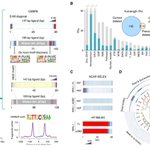
How transcription factors (TFs) selectively recognize their genomic targets among numerous sites containing similar DNA motifs remains an open question. (1/n)
Gene Regulation retweeted

REVIEW: Architectural logic of the 3D genome: mechanisms of dysregulation and emerging cancer therapeutics
By Smith et al. and Yu (Sunny) Liu
➡️ genesdev.cshlp.org/content/4…
@YuLiu_Sunny @CeiFccc @FoxChaseCancer @FCCCAcademics
#cancer #epigenetics #chromatin

Gene Regulation retweeted
Beyond thrilled that the first paper from our lab is out today in @nature! We show that SWI/SNF loss results in gain-of-function for CTCF and cohesin, reshaping the 3D genome, and an unexpected switch between chromatin remodeling complexes.
nature.com/articles/s41586-0…
1/n

Gene Regulation retweeted

Glad to share our latest publication in @naturemethods: Nondisruptive 3D profiling of combinations of epigenetic marks in single cells.
Epigenetic states and 3D chromatin folding are critical regulators of many genomic functions. While these mechanisms are known to be closely interlinked, studying their relationship remains challenging due to technical limitations. Sequencing-based single-cell or spatial histone modification profiling techniques often suffer from low sequencing read count per cell or per spatial spot, limiting gene-locus-specific analyses at the single-cell level. A recent imaging-based method termed epigenomic MERFISH (Cell 2022) enabled single-cell in situ histone modification profiling in a locus-specific manner with high genomic resolution (~2 kb). However, epigenomic MERFISH is limited to profiling only one epigenetic mark at a time, performs poorly when profiling repressive mark, and as we show in this work, disrupts the 3D genome thus prohibiting 3D genome co-profiling.
To address these limitations, we developed Epigenetic Proximity Hybridization Reaction (Epi-PHR), an imaging-based technology that represents the first epigenetic profiling method that:
🧬1) can simultaneously profile more than one histone modification and chromatin associated protein at numerous genomic loci with high genomic resolution,
🧬2) is non-disruptive and retains 3D chromatin architecture, and
🧬3) inherently provides single-cell, single-copy and in situ information.
We first demonstrated Epi-PHR's sensitivity at small genomic targets of 2 kb. We further showcased multiplexed Epi-PHR to profile combinations of epigenetic marks (including both active and repressive marks) at 200 genes in the same single cells in culture and tissue. Finally, we developed allelic Epi-PHR and combined it with fine-scale chromatin tracing to simultaneously profile epigenetic state and chromatin folding at the same genomic target with parent-of-origin specificity, generating the first single-cell phased examination of histone mark deposition and 3D genome architecture at an imprinted locus by any technique.
In the study of the imprinted locus, surprisingly we found among the maternal copies of this locus, the relationship between the histone mark and a chromatin domain boundary is opposite to what one would expect. This insight cannot be derived from existing bulk allele-specific CUT&RUN and Hi-C approaches. Our unexpected finding was uniquely enabled by allelic Epi-PHR combined with chromatin tracing.
We expect Epi-PHR will find broad application in diverse biomedical contexts. This work was co-led by Dr. Yanbo Chen, Dr. Jonathan Radda, and Dr. Myles Alderman III, and was done in collaboration with my @YaleGenetics colleague Professor Andrew Xiao. Thank you all my co-authors for your contributions to this work!
Link to paper: doi.org/10.1038/s41592-026-0…

Gene Regulation retweeted

1/4 One DNA sequence, many chromatin states.
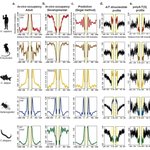
Excited to share SMFNet, a diffusion model predicting single-molecule chromatin accessibility. Explainer video below!
With co-first author Till (his thread: bsky.app/profile/tschwammle.…), Yuliya, Roze, @anshulkundaje & Arnaud Krebs.
Gene Regulation retweeted

Our new paper @CellReports, led by @katsu_s_minami et al.! 🎉🧬🔬
cell.com/cell-reports/fullte…
Machine learning-assisted Repli-Histo labeling and single-nucleosome imaging reveal distinct transcription-dependent chromatin constraints across euchromatin and heterochromatin. Congrats!

Gene Regulation retweeted

MACS 3.1.0 is released with a jaw-dropping 40-60x improvement in speed, thanks to @jmschreiber91's auto-optimize work! AI achieved in one weekend what I've been hoping for years! Now peak calling that once took minutes can be completed in seconds! github.com/macs3-project/MAC… 1/2

Gene Regulation retweeted

How open is “open” chromatin? Our new Nature Genetics paper uses nucleosome-resolution modeling to reveal condensed euchromatin domains with short, accessible regulatory regions at the surface. nature.com/articles/s41588-0…

Gene Regulation retweeted

Excited to share our new preprint! ChromE-seq reads 3D chromatin and gene expression in one cell. Across ~400,000 human primary cells, B lineage has the fewest chromatin loops and is most perturbed in trisomy 21, driving the B-cell block in Down syndrome.
biorxiv.org/content/10.64898…

Gene Regulation retweeted

Are weak TF motifs important? @ZeitlingerLab use deep learning to systematically map low-affinity pioneer binding sites in mESCs and show that they cooperate with strong motifs to open chromatin. Preview w/ @gracecbower: cell.com/cell-genomics/fullt… Paper: cell.com/cell-genomics/fullt…

Gene Regulation retweeted

Excited to share a preprint on the structural mechanism of transcriptional activation by human Mediator, studied using integrative structural modeling.
Many thanks to Lacra Bintu @BintuLacra for helpful discussions!
biorxiv.org/content/10.64898…
@generegulation @MED_COMPLEX

Gene Regulation retweeted

After a long wait, tangermeme is out @naturemethods!
tangermeme implements the primitives of genomic sequence-to-function modeling with efficient, tested, and composable functions.
I use it every day in my work, and I hope you find it useful too.
nature.com/articles/s41592-0…

Gene Regulation retweeted

1/13
The human body runs on one genome—but every cell reads it differently. How?
To find out, we need to know both gene expression and chromatin accessibility in the same nucleus.
So we did, across 21 adult tissues and nearly half a million nuclei. 🧵
🔗 biorxiv.org/content/10.64898…


Gene Regulation retweeted

Our @Nature Research Briefing is now out 📝
Chromatin accessibility reveals disease risk that gene expression misses, because constrained genes buffer effects before they reach it 🛡
📝 Briefing: nature.com/articles/d41586-0…
📄 Paper: nature.com/articles/s41586-0…
teapaw.org/masakanai/status/21053…


Our single-nucleus immune multiome atlas is now out in @Nature! 🧬
10M PBMCs from 1,108 @FinnGen_FI donors recruited by @FRCBSresearch, profiled at @broadinstitute KCO with chromatin accessibility and gene expression in the same nuclei, to trace how disease variants act 🧵👇

Gene Regulation retweeted
🧬 Highly related @NatureGenet paper from @binzmit group, using nucleosome-resolution chromatin modeling: Euchromatin forms condensed domains with short active regions on the surface
nature.com/articles/s41588-0…
Congratulations! 🎉

Is euchromatin really “open”? 🧬 Using super-resolution imaging🔬 our new study @NatureGenet reveals: Euchromatin forms condensed domains in live cells. Cohesin constrains them and prevents domain mixing for proper transcriptional insulation🚧 🔗nature.com/articles/s41588-0… (1/2)
Gene Regulation retweeted

🧵 Excited to share our new preprint on how evolution may coordinate TF–TF interactions with the genomic arrangement of their binding sites.
This project was also heavily agentic from beginning to end.
Preprint:
biorxiv.org/content/10.64898…
Gene Regulation retweeted

Grateful to @CellReports for featuring our article tinyurl.com/n3uyuns8 Emergent #3Dgenome reorganization and graded #gene control through the stepwise assembly of #transcriptional #condensates on their cover tinyurl.com/3nvws23p @Pha_Tran_Papers @4DNucleome @generegulation
