
Peds Heme Onc Fellow @Stanford/@LPCH | Formerly @UCSFPediatrics | MD/PhD @StanfordMed @mbarnalab | @PDSoros | Physician-Scientist | Gene regulation, RNA bio
@geraldctiu.bsky.social
Joined February 2018
- Tweets765
- Following582
- Followers400
- Likes3.4K
Gerald Tiu retweeted

Excited to share our latest preprint with @JShendure, led by Aidan Keith. We wanted to know which, where and how TFs open chromatin when they are newly expressed in a given cell state, using CRISPRa and single cell multiome. 1/7 biorxiv.org/content/10.64898…

Gerald Tiu retweeted

Today in AI science:
* Generalized Riemann Hypothesis: alpo.ge/remark.pdf
* unforced euler cims.nyu.edu/~tristanb/cc.pd…
* unforced Navier-Stokes blowup github.com/tristanbuckmaster…
Gerald Tiu retweeted

About 90% of RNA molecules in our cells are tRNAs. To date, we have mostly been blind to their abundance and regulation in single-cell sequencing. Today, I’m excited to share a new manuscript from my MD/PhD work
biorxiv.org/content/10.64898…

Gerald Tiu retweeted

Excited to share the second piece of my postdoctoral work with @JShendure. We solved the last remaining "tangle" -- the nucleolar organizer region (NOR) -- in the telomere-to-telomere assembly of the human genome with gene editing. (1/n)
biorxiv.org/content/10.64898…
Gerald Tiu retweeted

Our latest preprint:
• Improved split-pool Perturb-seq method
• Gene programs in hiPSC-endothelial differentiation
• New role for Hippo pathway in vitro and in vivo
• Strategy for improving differentiation by faking cell density
biorxiv.org/content/10.64898…
1/

Gerald Tiu retweeted

Can we selectively eliminate cancer cells using RNA sensing technologies such as RADAR? Toward this goal, we present ORCA (Oncogenic RNA-triggered Cancer Ablation) in our preprint: biorxiv.org/content/10.64898…

Gerald Tiu retweeted

I know today, of all days, everyone is looking for scientific content on Twitter. Our preprint: biorxiv.org/content/10.64898… Keep an eye out for exciting work coming from @BowenLi_Lab too!
Gerald Tiu retweeted

Many of you don't understand how serious this is, so let me break it down.
In computer science there is a famous kind of puzzle called 3-SAT. You are given a long list of yes-or-no switches and a set of rules about how they must be arranged, and you have to find a combination that satisfies every rule. The obvious way to solve it is to try every combination, but each new switch doubles the number of possibilities, so a puzzle with a few hundred switches would take longer than the age of the universe to brute force.
For decades, the smartest people in the field found clever tricks that made this a little faster, but every trick still hit the same wall: the time required kept exploding as the puzzle grew.
About 25 years ago, two computer scientists, Russell Impagliazzo and Ramamohan Paturi, working with Francis Zane, turned that wall into a formal idea.
They proposed the Exponential Time Hypothesis, which says this explosion is not a failure of human cleverness but a law of nature. No algorithm, however brilliant, will ever solve 3-SAT without the time blowing up exponentially. Nobody could prove it, but almost everyone believed it, and it became one of the foundations of modern computer science.
Researchers used it as a measuring stick. If you could show that solving some other problem quickly would also crack 3-SAT quickly, you had shown that problem was hopelessly hard too. Hundreds of papers, across scheduling, graphs, logic and much more, rest on this one assumption.
Now an internal AI model at OpenAI claims to have broken it. It says it found an algorithm that solves these puzzles meaningfully faster than the hypothesis allows, and it has checked the proof in a computer verification system called Lean.
And here is the remarkable part: the very people who proposed the hypothesis, Impagliazzo and Paturi, along with MIT's Ryan Williams, are now leading the public review of whether a machine has disproved their own idea.
So what happens next? If the disproof holds, a large part of theoretical computer science has to be revisited.
Every result that said "this problem cannot be solved faster, assuming ETH" loses its foundation, and researchers will have to work out which of those walls were real and which were simply where we stopped looking. It does not mean everything becomes easy. The new algorithm is still slow in absolute terms and this is not the famous P versus NP problem being solved.
But it means our map of what is possible was wrong in a place we were very confident about, and it was an AI that redrew it. If the disproof fails, the hypothesis survives and the field breathes out, but we will still have watched an AI produce serious, checkable work on one of the deepest questions in the discipline, closely enough that the founders of the idea had to take it seriously. Either way, something has shifted.

Gerald Tiu retweeted

Thrilled to share my freshly "baked" Baker lab paper. We took a bottom-up approach to designing transcriptional regulators. Instead of relying on natural activation domains, we designed compact proteins that recruit specific cofactors. Activators for now, repressors to come!
Gerald Tiu retweeted

Ever wonder if tRNAs can regulate the identity of a cancer cell?
@HsiehLab @FredHutch postdoc @yeonsookim_phd did and discovered a single tRNA that can control lineage dependency and drug sensitivity in prostate cancer published today @Nature: nature.com/articles/s41586-0…

Gerald Tiu retweeted

BREAKING NEWS
The 2026 #NobelPrize in Physiology or Medicine has been awarded to Karl Deisseroth, Peter Hegemann and Georg Nagel “for their discoveries concerning light-gated ion channels and optogenetics.”

Gerald Tiu retweeted

Inspired by Gibson cloning, we describe prime assembly, now published, for in cellulo targeted integration of gene-sized DNA fragments using prime editing. nature.com/articles/s41586-0…

Gerald Tiu retweeted

Cell–cell interactions are key to all biological processes, but there hasn't been a good way to perform inter-cellular screens for genetic regulators of these interactions in vivo.
We developed match-seq (multiplexed associative tagging of cell interaction histories) - using engineered virus-like particles to transfer barcoded mRNAs from 'sender' to neighboring 'receiver' cells, so you can reconstruct cellular interactions with sequencing alone, no imaging required.
We coupled match-seq with CRISPR + scRNA-seq in cancer, revealing cancer-immune interaction neighborhoods at scale, and new cancer genes that can be targeted for tumor rejection via immune cell interactions.
Led by the brilliant @peterdu_ with Bassik lab!
biorxiv.org/content/10.64898…


Gerald Tiu retweeted

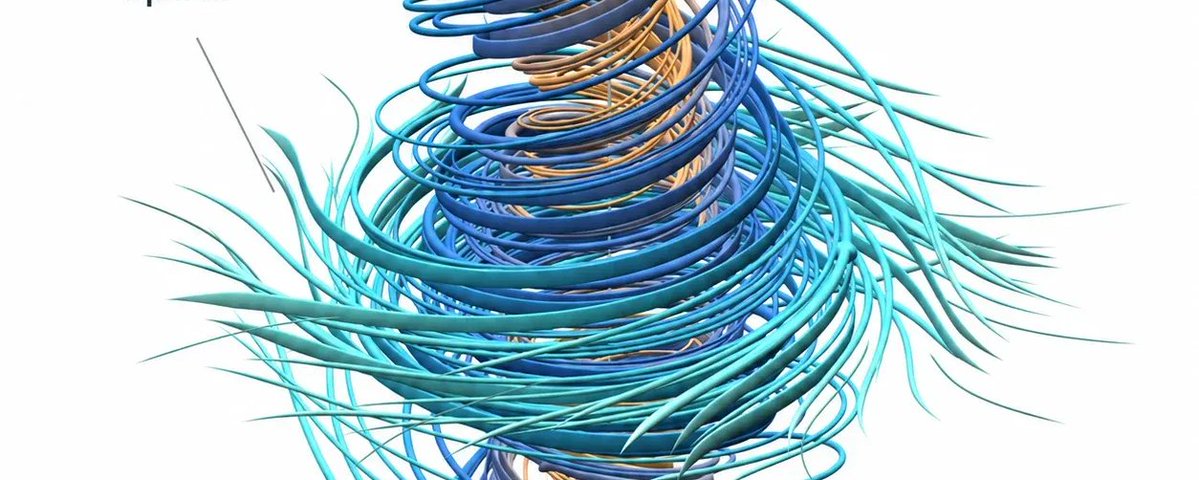
As usual, Zvi has the best take on the Navier-Stokes proof, Theres a lot of fog and confusion, but the real story here is that it didn’t even take OpenAI two weeks to train a model that’s a step change above Astra, at least when it comes to math capability.

Gerald Tiu retweeted

🧬🧪🔬Why are enhancers transcribed? How does it impact gene regulation? I’m excited to share our new paper in @ScienceMagazine showing that ncRNAs control the timing of gene activation in embryos. w/Mike Levine #ScienceResearch #RNA
A few highlights 🧵👇
science.org/doi/10.1126/scie…

Gerald Tiu retweeted

We’re sharing a solution to the Navier-Stokes Millennium Prize Problem, one of the deepest problems at the frontier of mathematics.
The proof was produced by a group of agents, using an OpenAI next-generation model significantly more capable than GPT-6 Astra.
The problem concerns whether the description of smooth three-dimensional fluid motion modeled by the Navier-Stokes equations can break down. It has remained unresolved for roughly 90 years.

Gerald Tiu retweeted

Out now in @CellCellPress our approach for cellular-self reporting: live-cell transcriptomics with engineered virus-like particles in collab w/ @LindaGGriffith1 lab @MIT @broadinstitute cell.com/cell/fulltext/S0092…

Gerald Tiu retweeted

Very cool and natural direction for genetics. @KroganLab identified binders of 100 ASD genes and tested missense variants for their effects on protein-protein interactions. A diversity of mechanisms can emerge from this.
Very impressive.
science.org/doi/10.1126/scie…

Gerald Tiu retweeted

Excited to share my PhD work, now on @bioRxiv! 🎓🦠Viruses are packed with small ORFs with unknown function. At @JswLab w/ collaborators, we built a pan-viral microprotein atlas that uncovered the oncogenic activity of BNLF2b, an EBV gene linked to cancer.
biorxiv.org/content/10.64898…

Gerald Tiu retweeted

1/2 Garcia Lab preprints out now - "Functional Pairing of TCR-pMHC Interactomes by Single-cell Clonal Expansion" led by @LiuDaisyLiu. Super cool tech!
