

Political scientist studying international security as Senior Fellow in Defence Strategy & Industrial Policy at the International Institute of Strategic Studies
Washington, DC
Joined March 2010
- Tweets3.3K
- Following1.9K
- Followers3.8K
- Likes1.5K




Jonathan Caverley retweeted
Cheap missiles, #drones and uncrewed vessels are making sea denial accessible to states and non-state actors. Naval power can defeat attacks but cannot guarantee commercial confidence. Freedom now depends on resilient routes and markets: Jonathan D. Caverley & José Alberto González Aranda or-f.org/40599 #MaritimeSecurity

Jonathan Caverley retweeted

What happens to global trade when its most critical sea lanes are blocked at once?
From a 76% plunge in vessel traffic through the Strait of Hormuz to drone and missile threats in the #RedSea shipping is shifting from efficiency to survival.
At #Sagarmanthan2026, David Loosley (@BIMCONews), Juras Taminskas (@LRsusisiekimas), Suliman Almazroua (@MawaniKSA), @AblaAlatif, Shubhransh Srivastav (@DP_World), @jcaverley discuss. Moderated by & @MalikAshok
Watch. youtu.be/soOogYOW66s?si=a-9e…
#MaritimeSecurity

Jonathan Caverley retweeted

Good morning! As a periodic reminder, for those who don't know and may be interested, I put out a semi-regular (i.e., when I feel like it) "Daily-Ish Update" covering the US-China military balance / competition.
You can subscribe for free and read it here:
thomasshugart.substack.com

Jonathan Caverley retweeted

Cheap missiles, #drones and uncrewed vessels are making sea denial accessible to states and non-state actors. Naval power can defeat attacks but cannot guarantee commercial confidence. Freedom now depends on resilient routes and markets: Jonathan D. Caverley & José Alberto González Aranda or-f.org/40599 #MaritimeSecurity
Jonathan Caverley retweeted

Thanks @tshugart3 for engaging with my argument. For me, the below is the key point, though I also don't think any amount of dispersion makes a FIC posture survivable or wise for the United States. In part, this i because of how I define U.S. interests. But, it is also a difference between U.S. in how we see the lessons of the war in Iran and the limits of what more dispersion can accomplish.

Jonathan Caverley retweeted

US use of shipbuilding, in which China holds overwhelming advantages, as a tool in trade wars with allies will further entrench Chinese market power.
@jcaverley and Peter Dombrowski on America’s fraught quest for maritime dominance.
FREE TO READ | go.iiss.org/4ryk3XQ

Jonathan Caverley retweeted

US use of shipbuilding, in which China holds overwhelming advantages, as a tool in trade wars with allies will further entrench Chinese market power.
@jcaverley and Peter Dombrowski on America’s fraught quest for maritime dominance.
FREE TO READ | go.iiss.org/4ryk3XQ

Jonathan Caverley retweeted

E.g. how come S Korea sustains a navy ~twice as big from an economy ~half the size (while also fielding a huge land army)? Ditto a Japanese economy of ~about the same size? Why can the smaller French/Italian economies sustain slightly bigger fleets* with much better availability?
Jonathan Caverley retweeted
I have an article on the US Govt’s latest salvo in its (erstwhile?) allies’ direction in the @spectator this week…
BLUF: it’s true that the Western ‘middle powers’ are a disparate bunch. But the more the US coerces them, the more it incentivises them to align away.

Jonathan Caverley retweeted

I personally believe it would have made an enormous difference, as I argued in the piece below. Ukraine needed modern weapons to better match Russia’s capabilities, especially at the start of the war, before China, North Korea and Iran got involved.
reader.foreignaffairs.com/20…


Jonathan Caverley retweeted

Sounds familiar


Jonathan Caverley retweeted
Diverging defence priorities, coupled with European rearmament, are reducing the free-rider problem that has long strained the relationship between the United States and European NATO | Analysis by @jcaverley and Ethan B. Kapstein | FREE TO READ | go.iiss.org/4poJitA

Jonathan Caverley retweeted
Diverging defence priorities, coupled with European rearmament, are reducing the free-rider problem that has long strained the relationship between the United States and European NATO | Analysis by @jcaverley and Ethan B. Kapstein | FREE TO READ | go.iiss.org/4poJitA

Jonathan Caverley retweeted
Diverging defence priorities, coupled with European rearmament, are reducing the free-rider problem that has long strained the relationship between the United States and European NATO | Analysis by @jcaverley and Ethan B. Kapstein | FREE TO READ | go.iiss.org/4poJitA

Jonathan Caverley retweeted

Come join the @CatoInstitute on November 6th at 11:00 am for a forum discussion on the Indo-Pacific!
Panelists will include @evanbmontgomery and @jcaverley, with @CatoFP's Evan Sankey serving as the event's moderator.
Register below:
cato.org/events/military-bal…

Jonathan Caverley retweeted

Honestly never seen anything like this- a campaign advertisement for Gen. Thomas Bussiere to be Chief of Staff of the Air FOrce.
This Post is from an account that no longer exists. Learn more
Jonathan Caverley retweeted

In our latest podcast, Jon Caverley (@jcaverley) discusses how there are ways the US military can help Taiwan defend itself without undermining US capabilities for a wider and lengthier conflict.

Jonathan Caverley retweeted
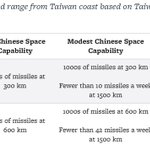
Jonathan Caverley (@jcaverley) uses a "kill chain" model to compare the potential effect of Chinese military capabilities, with and without Taiwan, on the contested zone where U.S. and allied forces would operate.
tnsr.org/2025/06/so-what-rea…

