

And you shall remember the Lord your God, for it is He who gives you power to get wealth, that He may establish his covenant -- Deut 8: 18
Hevenly places.
Joined August 2022
- Tweets1.2K
- Following474
- Followers100
- Likes695




Defi Trillioniare retweeted

I recently said that I thought the July $58k bottom would hold. I was wrong, for 6 hours we broke it and briefly touched $55k. Now back above $58k at $60k. Technically this low qualifies as a throw over, and we could be forming a double bottom. Of course true correlation of 1 event would void that. I think Fed blinks first.
Defi Trillioniare retweeted

I now attach a 0% probability that the Fed will raise rates by 50 basis points in December. But they are still loudly declaring that they must raise at least one more time in order to "regain credibility." Which they will do on Dec 9th. This will ultimately prove to be a policy error, though, and they will immediately pause from raising any further, and I firmly believe they will be lowering rates again in 2027. Depending on how deeply the markets sell off and if it affects credit markets, they may be doing QE, too. Those who have been investing for a while have seen this movie before.
Defi Trillioniare retweeted

BREAKING: The Nasdaq Composite officially turns negative for 2026, erasing a gain of +19%.


Defi Trillioniare retweeted

Why this dump?
This looks like a full leverage flush. Most of the selling comes from people closing their long positions, with many being forced out through liquidations.
Big players are pushing the market down, triggering liquidations and shaking out leveraged traders.
Once they've cleared out enough positions, the market can quickly move back up.

Defi Trillioniare retweeted

threadcast ep 13: alon, founder of @pumpdotfun
3:00 what is pump fun?
5:35 the moment pump fun took off
7:30 how did you push pump fun over the edge?
10:20 why did no one build pump fun first?
13:30 memecoins are a distraction
20:00 pump fun evolved the market
23:50 memecoin supercycle
31:20 has pump fun made the learning curve more difficult?
34:30 how has pump fun evolved attention cycles on memecoins?
39:30 pump fun immortalizes memes
43:30 how to cheat coin launches?
48:45 building in memecoins is stigmatized
50:45 the future of pump fun?
53:30 where to draw the line with controversial content?
57:00 culture can’t progress without pushing boundaries
1:02:01 is pump fun social fi?
1:08:06 a VIRAL memecoin idea
1:10:53 stigma around launching memecoins
1:17:53 pump fun ruined crypto
1:21:43 celebrities on pump fun
1:25:28 gambling is the best crypto use case
1:33:03 will solana forever dominate?
1:35:22 how crazy can this cycle get?
1:36:18 special bonus
Defi Trillioniare retweeted

Alon reveals he cold DMed 3,000 people to get PumpFun off the ground without spending a single dollar on marketing
“What really got us over the edge was literally door-to-door salesmanship. Like literally DMing people and having conversations with them truthfully”
“I messaged 3,000 people and that's how I kind of tried to get PumpFun off the ground alongside my cofounder as well who also messaged a whole bunch of people”
“We actually messaged thousands of people to try to make this happen. We went after people that we saw are kind of into memecoins and the rest is history”

Defi Trillioniare retweeted

This is crazy. Someone is willing to pay me $390 to agree to buy $NVDA at $150, about 20% below where it trades today.
It's called a cash-secured put, and here's how it works:
Nvidia is trading around $188. You sell the $150 put expiring January 15, 2027 and collect $3.90 per share, or $390 for one contract.
In exchange, you agree to buy 100 shares at $150 if NVDA closes below that price at expiration. You set aside $15,000 in cash to cover it, which is why it's called "cash-secured."
The buyer is paying for the right to sell you shares at $150. The $390 is yours to keep no matter what happens.
One of two things happens:
1. NVDA stays above $150 and the put expires worthless. You keep $390 on $15,000 of capital, a 2.6% return in 70 days, or about 13.6% annualized.
2. NVDA closes below $150 and you get assigned. You buy 100 shares at $150, but after the premium your real cost basis is $146.10, about 22% below today's price.
Nvidia reports earnings after the close on November 17, before this put expires, so a big move in either direction is on the table.
The risk is real. If NVDA fell to $130, you'd be down about $1,610 on paper. Someone who bought 100 shares today would be down about $5,850.
Not financial advice. I share these for education.




Defi Trillioniare retweeted

The mainnet Bunny Pass allowlist is open 🐰
200 Passes are reserved for Early Bunnies : the top 100 verified testnet users on the Bunnypad leaderboard.
bunnypad.fun/allowlist
⏳ Snapshot Nov 7, 23:59 UTC

0xa3882d42ed12b57c10c85e8ec8febd0774600000
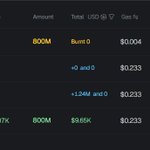
$alt has burnt less than 3% of supply
@altdotfun
@perpmefun has bunt over 13% as of the last time I checked
0xcc643a9b6cb14e7d5ff9bd81abcd5103eceb0999
2
492

Defi Trillioniare retweeted

# Black October
For anyone who knows me even somewhat well, it's clear that I am a 99th percentile tech optimist. However, the vibes have shifted for me quite a bit in the last 18 hours, and I feel a moral imperative to share what I'm thinking and feeling with my circles so that everyone can understand, and hopefully take seriously, what's happening right now. I think October 2026 will have many chapters written about it in the history books.
You know those scenes in financial movies like Margin Call where someone realizes that they're all fucked, and no one else sees it yet? And that person feels like they're crazy, and then suddenly everyone is pulling an all-nighter in a boardroom and freaking out? Yeah, that's kind of how this is feeling right now in the SF/Bay Area/AI circles.
We're 48 hours into what is being called Black October. In the last 2 days there have been several dozen cyber attacks which, in isolation, would each have been the worst to happen in an entire calendar year. Every sector from government to education to big tech and banks is being massively affected, and people are starting to freak out.
In a nutshell, what's happened is that frontier AI models have gotten to a point where they are as advanced as the most sophisticated programmers, with one critical difference: they can work 24/7, and you can spin up 10,000 of them with a single command and they'll work together tirelessly until they accomplish their task. The most advanced models today are from companies like Anthropic and OpenAI, whose current best technology is so good that they haven't been able to roll it out to everyone yet because of the national security risks it poses.
Meanwhile, the best open source models (where anyone can just download the model weights and do whatever they want with them, uncensored) are slightly behind the frontier but still 90-95% as capable. These models, developed primarily in China, are being used by black hat hackers to wreak havoc on the Western capitalist structure. Presumably, this has been part of China's plan the entire time, and we're seeing its implications fall out in real time.
In red-pilled AI circles, we've been sharing and reading papers called things like "Situational Awareness" and "AI 2027" for the last year or so, which at the time felt a bit like near-term speculative fiction. They laid out the case for why Artificial General Intelligence (AI smarter than any human at any knowledge task) and Recursive Self-Improvement (models that are able to use themselves to get better) weren't half-baked future ideas anymore, but instead an inevitable outcome of the linear progress that's happening.
These papers would then talk about things like "takeoff scenarios," trying to envision how that moment would come to be and what it would be like when it happened. It would either be a "slow takeoff" that would play out over the course of months and quarters, happening subtly and only obvious to a few. Or, it would be a "fast takeoff" where it would pretty much happen instantly, like a bit flipping from 0 to 1.
From everything that I can see and am feeling, we are currently experiencing the fast takeoff scenario. Beyond the crazy security vulnerabilities that have come out recently, there have also been massive breakthroughs in life sciences, fundamental computer science, materials science, and pure mathematics that have all landed in the same time frame. While I still firmly believe that AI will be a net positive for humanity, it's more clear to me than ever that the societal and individual risk is very real, and is playing out NOW.
For as much conviction as I have that this is happening, the thing that's caused me to lose sleep is that I don't really know what to do about it, or more importantly, what to tell you, reader, to do about it. So, the best I can do is make a few suggestions that have always been a good idea but are more timely now than ever:
Set up 2-factor authentication for everything. I use Duo.
Use a password manager across your devices. I use 1Password.
Get an identity protection app set up. I use Alta.
Move your IoT devices to their own network. Claude helped me do this.
And last, but certainly not least, if you've been avoiding leaning into AI, see this as a catalyst to wake up and start using it. Don't just use the chat mode version of ChatGPT/Claude; click that Code/Work button and see how easily you can have AI write code to help you with your job. One of the biggest vulnerabilities was in a massively popular programming language called PHP, and the prompt that set it off was literally, "Find vulnerabilities in php."
This is an unprecedented time for humanity, but as we've done with many things before, we will prevail so long as we are kind, loving, and open-minded to the world.
Much love.
Defi Trillioniare retweeted

The Audit Of The Memecoin Casino
Since late August we have recorded every trade on every pump fun and Stonk launch on Solana. Not a sample. All of it: 384 million swaps from 7.7 million wallets across more than a million pools, every bonding curve and every pool that follows it. That is over 56 GB of data and 820 million rows of market history, and it grows by 18 to 25 million trades, up to a million wallets and more than 60,000 new launches every day.
We measured each coin minute by minute. We scored every entry by what the coin did next. We trained neural nets on the result, then went wallet by wallet looking for the people who actually win.
The question was simple: can anyone see the big move coming before it happens?
The short answer is no. The long answer is worse than no, because the data does not just fail to find an edge for you. It shows, in detail, who holds the edge, how they use it, and what they do with you.
Start with a coin that has actually caught a bid: real volume, real buyers, the kind of thing that shows up on your screener. From any given moment, about one in ten of those doubles within the next 24 hours. The rest bleed, and the bleeding is not gentle.
Now take a wallet's first buy into a live coin. Every first buy, 22.8 million of them over a two-week window. In 17% of those entries the coin doubles before it drops 40%. Trade that mechanically, double or stop, and you lose about 19% per attempt after costs.
Call that the house hold. A slot machine keeps 5 to 10%. This keeps 19%, per pull, before any skill or selection is applied.
The reason is the shape of the payoff. A 2× pays you 100%. The failures do not cost you 10%; they cost you 50%, 80%, 95%. To break even you have to be right far more often than the game allows.
The cabal is real, and we can see it
CT calls it the cabal. The data calls it a cluster: a set of wallets whose first buys land within a minute of each other, on the same brand-new coins, over and over. We do not find them by name or PFP. They fall out of the trade stream all on their own.
They are there. Swarms of 450, 1,400 and 2,000 wallets that hit hundreds of launches a week, moving in within the first minute or two of a coin's life. Smaller, tighter groups of 7 to 50 wallets that pick their spots. Across daily refreshes the count has run from 9 groups to 33, with members rotating in and out as wallets burn and fresh ones take their place.
They are not guessing. The coins the big swarms pile into double 28 to 46% of the time, three to four times the base rate. Their own entries, across every coin they touch, run 50 to 60% to a 2× before a 40% drop, against 17% for everyone else.
That is what an edge looks like in this market. It belongs to a few hundred wallets, and it is applied to tens of thousands of launches with industrial regularity.
Copying them loses too
The obvious retort: find the cabal, copy the cabal. We did exactly that. A machine watches every launch every minute and flags the moment a known group piles in. Then we traded every flag the way a fast human could: in two minutes behind the group, double or stop out at −40%, out after a day.
Following the big swarms lost 41% per coin across 93 coins. The median result was −95%. Not because they were wrong; their coins doubled 28% of the time. Two minutes behind them is simply already the top of the move. They bought at launch. You bought the candle they are selling into.
Following only the groups with a positive track record still lost 11% per coin. Following one good wallet on its own lost 20% per trade in our back-tests. The single pocket that came out ahead, a handful of small, tight groups, made about 10% per coin over 16 coins. That is a few days of trades and nothing anyone should bet a bankroll on.
The cabal's edge is not information you can borrow. It is position. By the time their trade is visible on-chain, the thing that made it profitable is gone.
The best model we could build still loses
We also tried the honest version: no cabal, just prediction. Dozens of signals per coin every minute, price, flow, liquidity, holder behaviour, bot share, fed into neural nets trained on our own history and tested on days they had never seen.
It works, in the sense a quant would recognize. The top of its ranking doubles 26% of the time against a 10% base rate. Two and a half times better than chance.
It also loses money every single day. 771 picks over eight days; every day negative; −11% per pick on the same double-or-stop rule; the median pick down 45%; 55% stopped out within 24 hours.
The ranking is real and the P&L is still red. The losers are deeper than the winners are tall, and nothing observable at the five-minute mark separates the coin that keeps going from the one that reverses. That is the part worth meditating on: a model 2.5× better than chance odds is still a losing model.
Why nobody sees it coming
The reason is simple, and it should change how you look at every chart. A meme coin moves because a few people decide to move it: the operator holding the supply, the caller with an audience, the wallet group with the bankroll. That decision is made off-chain. The chain only shows you its execution, the swaps, the volume, the new holders, and by then the first leg is done.
Everything a trader looks at, from a screener to a chart to a wallet tracker, is a photograph of a decision that has already been made. The data is enormous and almost all of it is the crowd reacting. The informative part, a few hundred wallets' intent, is visible only at the instant it executes, and the people executing it are the ones selling to you a few minutes later.
Add 60,000 launches a day, and the future 100× at minute one is indistinguishable from the 59,999 that die. The casino does not need to hide the cards because it deals them faster than anyone can read and analyze them.
Conclusion
After spending thousands of dollars in API credits, VPS costs, Claude credits, etc the goal was simple: find alpha - if it exists - in order to be able to monetize it.
Instead, all we were able to prove is what we all have suspected all along - the meme coin casino is almost entirely cabal driven.
🫡 From the depths —
The White Whale 🐋


Defi Trillioniare retweeted

I wish I had kept my 1,700 BTC @ $0.06 instead of selling them at $0.30, now that they're $8.00! #bitcoin