Author: Rust for C++ Developers Senior Principal Engineer @ Treyarch. Opinions do not represent my employer and probably not anyone else either.
Santa Monica
Joined June 2011
- Tweets15.8K
- Following226
- Followers3.4K
- Likes6.1K









Dan Olson retweeted

This is Pele, my new rendering library for diagrams and charts, compatible with the latest Mermaid syntax.
- 100-500× faster than mermaid.js
- 6× smaller bundle
- No dependencies
- Easy to theme
- Responsive to device width
In pursuit of making Obsidian insanely fast and cohesively designed, I always found the Mermaid library to be too big, too slow, and too hard to theme. Pele will be the new renderer in the next version of Obsidian, but you can start using it now.
Pele [ˈpɛlɛ] is named after the goddess of volcanoes and fire. It's open source under the MIT license. Try the playground!


Dan Olson retweeted

The Curse of the Allflame enters its third month, which means it’s time to share the timeline for our next Path of Exile 1 expansion!
🗓️ 3.30 Reveal - ExileCon 2026 | Nov 6 PST
🗓️ 3.30 Launch - Nov 13 PST


Dan Olson retweeted

Not ignored: examined, & rejected.
Because the premise, “the best language is the one that provides fast feedback,” is false.

Dan Olson retweeted

🔜 My Minecraft City.
Drops Wednesday - 9/30/26
Subscribe now:
youtube.com/@miket757
Dan Olson retweeted

I’ve put a ton of tokens through Jev now, and...I have thoughts.
1. The big labs lost the script
TypeSafe’s intro video says, “We’re building prod, not God” — and can I just say? Hell yeah. @typesafeai built something for engineers like me, so I can build products for people like your mom (she says hi btw). They’re not trying to create “Machines of Loving Grace”; they’re trying to build things that let OTHER HUMAN BEINGS create new types of products.
The proof is in the pudding. When ChatGPT shipped, we were all blown away by…ChatGPT. When Jev shipped, we were all blown away by what everyone was making with it.
I cannot tell you how refreshing this is. It takes a sincere form of humility to believe that you, the creator of a technology, will not be the best at deploying the technology into the marketplace. The big labs, especially Anthropic, have proven not to have this humility…and now everyone hates AI. Thanks, Dario.
I guess what I’m saying is: Diogo for president.
2. Ultra-smart classifiers were genuinely a missing primitive.
I don’t know how this got missed. Diogo calls it “machine-native intelligence,” and that’s really what it is. I cannot tell you how much bending and twisting I've had to do with LLMs to get them to act like a classifier when they just weren’t. I’m absolutely shocked this is the first time this “type” of model has come to market.
These models will unlock AI utility for entire industries: robotics, trucking, aviation, meteorology, finance, defense, retail…even your smart coffee mug is going to use this.
3. It’s still too expensive
Jev is really, really cheap compared to LLMs. But you don’t use it like an LLM. In my full self-driving example, or any robotics example, you’ll be making decisions several times per second continuously. The #1 value proposition of a model like this is speed and cost.
To be clear, at current pricing, the model will still be successful and well integrated. It will be able to replace a number of tasks that were already being performed (poorly) by LLMs. However, to unlock industrial-scale demand (Jevons paradox), I believe it needs to be roughly 10x cheaper.
Currently, Jev is $0.042/M input, which is actually 7x more expensive than a cache read on DeepSeek V4.1 Flash ($0.006). If our industrial application requires decisions at 10 Hz and we provide only 10k of context, that would cost $0.0042/second to operate, or $15/hour, $600/week, etc.
The good news is Diogo said on a recent AMA that they have substantial margin at their current pricing and have already considered dropping the cost further. I hope it's a lot further.
4. Latency is a real limiter
I really hope TypeSafe AI works with an edge network provider to improve the co-location of models and reduce network latency. Ultimately, these models really need to run on-device. I would even be willing to pay some kind of recurring license fee to have a great closed model running on my own hardware, just so I can reduce the TTD (Time To Decision) as much as possible. Imagine running a model like this at 60 Hz, or even 120 Hz.
At that point, we’re looking at a new kind of logic gate — we can’t even imagine what that will be like.
In summary, this one really is a game changer for everyone building AI products, and, assuming cost and latency are further improved…it’ll be a game changer for everyone doing anything.
Dan Olson retweeted

I ran some real, live evals on Jev vs DiffusionGemma-as-Jev (my patch for vLLM!)
DiffusionGemma comes out as the winner, I think.
Headlines:
Is Jev faster than DiffusionGemma? No ❌ (API vs DGX Spark)
Is Jev smarter than DiffusionGemma? No ❌ (they're roughly tied!)

Dan Olson retweeted

The Arizona Cardinals beat Chicago 23-16 in tonight’s preseason match up.
Cardinals rookie QB Matt Leinart went 15-21 for 144 yards in the win.
The Cardinals will host the Bears week 6 and should have a good idea of who they are after tonight’s game.

Dan Olson retweeted

I stopped following the “learn everything from basics first” approach a long time ago. Most of the time, it just gives you the dopamine of progress without actually pushing you.
Put yourself directly into advanced, hard things. Struggle. Get stuck. Break things.
Then DFS + backtrack whenever you realize there’s a fundamental you’re missing. Learn that piece, then move forward again.
This has worked every single time for me.
You don’t need to know everything before starting hard things. Hard things will tell you exactly what you need to learn.

Don't start inference engineering before knowing these OS pre-reqs
> Virtual memory
> Pages & page tables
> Memory allocation & fragmentation
> Processes vs threads
> Inter-process communication (IPC)
> Shared memory & message queues
> Workers & worker pools
> Scheduling & queues
> Distributed systems: rank & world size
> Memory pools
> Free-block queues
> Dynamic memory allocation
Dan Olson retweeted

Today, we open sourced Mojo 🔥.
Announced just now during the ModCon keynote, effective immediately, Apache 2.0 License.
Thank you to our community for waiting patiently and building alongside us.
#ModCon2026
Full blog: modular.com/blog/mojo-open-s…

Dan Olson retweeted

The Spirit Mastery has arrived!👻
Command life and death to summon spirits, cast haunting spells, and experience a new way to play Titan Quest II.
Also included: the first Crafting update, allowing you to salvage and enhance your gear.
Dan Olson retweeted

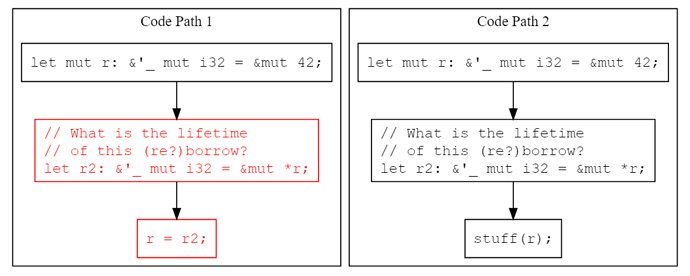
Wrote a blog on how I implemented Rust's borrow checker in SQL
xitter.cf/ElijahKurien/status/20…

Dan Olson retweeted

I rewrote Tree-sitter’s C core in Rust with AI
The result:
- Raw parsing: 29.74% faster
- Tree traversal: 10.16% faster
- Generated parsers remain compatible
But the complete ast-grep initially became slower. Here is what happened. 🧵
astgrep.com/blog/tree-sitter…

Dan Olson retweeted

The wait is over! Grim Dawn - Fangs of Asterkarn is out NOW on Steam & GOG!
Thank you for taking this ride with us for the last decade! Now venture into a harsh new realm, master the Berserker, conquer Ascendant Mode and do so much more!
Your next chapter in Cairn begins today!


Dan Olson retweeted

I appreciate that Dean Ball, Head of Strategic Futures at OpenAI and former Senior Policy Advisor to the White House, is just directly saying, under his legal name, that the purpose of introducing nonsensical regulations is to hurt open source and favor incumbent corporations


Some observations on Kimi:
1. It's a very good model! I don't think its performance can be explained away by distillation or anything like that. In agentic coding sessions, it seems pretty much on par with the best public models of Q1 2026. In my fairly limited use, it also seemed very token hungry. It's not obvious to me that this model is actually that cheap to run.
2. I am personally surprised the Chinese state continues to allow the open sourcing of models this good, given potential risks. To be clear, I *myself* might be fine with models presenting this level of marginal risk being open weight, but I am surprised that China is fine with it. I suspect the reason they are is 75% explained by strategic blindness/lack of AGI-pilledness (the CCP is very Yann Lecun-y in its views of AI). The other 25% or so is their lack of compute for customer inference (making China's open-weight strategy an unintended byproduct of US export controls) and the normal Chinese strategy of aggressive exports. For the companies, as opposed to the government, the decision to open source is partially ideological and partially because they are behind, and they know that very few people would pay for sub-frontier models from China.
3. Open-weight models are inherently decelerationist, and I'm continually surprised to see the so-called "accelerationists" so excited about open-weight models. I suspect the reason they are is that they know open-weight models are effectively ungovernable, and they simply like the overall cloak of ungovernability open-weight models create over the whole of AI. It's not a bad strategy; it reminds me of James Scott's recounting of the hill people in "the art of not being governed." Still, in the end, open-weight models deter further AI capex.
4. One probable outcome of an open-weight-model-dominant world is full AI communism, which is precisely what China proposes: rather than a market product, AI is a "public good" which will ultimately be provided by the state as a kind of "digital public infrastructure." This future strikes me as a dystopian hellscape, but I've never met an open-weight models advocate who doesn't ultimately concede this is where things end. You'd be surprised how many 'accelerationists' lobbied me, while I was in government, to support an eleven or twelve-figure federally funded data center so that startups could train models at a subsidy and then give them away for free. There was no other way for AI to progress, they said. Perhaps this is the logical end state of things. Nonetheless, I find myself surprised to see supposed accelerationists excited about such an outcome. I think many of them just don't know what they're doing. Many accelerationists do not view the creation and serving of frontier models as a legitimate business.
5. I would guess that the Trump Administration will at some point realize that their best strategy here would be to create large amounts of regulatory risk around the use of open-weight Chinese models. You don't need to "ban open source" (one of the dumber motifs of AI policy discussion). You just need to direct every agency to issue soft law that creates FUD. "A Federal Reserve Advisory Bulletin found that there may be backdoors in Chinese AI models." It needn't be that well justified. You just create enough regulatory risk that every regulated enterprise backs off. You probably don't want to create so much regulatory risk that you scare off the hyperscalers from serving Chinese models; this will just drive startups to sketchier providers. There's a happy middle ground here. I'd assume they will do some version of this.
6. It's probably true that open-weight models of this capability make the world a bit more dangerous, but not so much more that you'll really notice. At some point the models will be capable enough that you will notice. "A nonliving, invisible, dangerous, and infinitely self-replicating agent escaped from a Chinese lab," you say? Color me shocked.
Dan Olson retweeted

I am excited to announce that we are officially writing a new version of Postgres. In Rust - and creating the LLVM of databases in the process.
In the span of a year, we have rewritten SQLite. Keeping the compatibility, increasing its feature set. MVCC, Types, (Live) Materialized Views, among other things. In the process of doing that, we have realized: At the end of the day, what makes SQLite special is that it compiles SQL to a database-specific bytecode. So why can't we compile *Postgres* to the same bytecode?
Turns out we can. I ran an experiment called pgmicro as a way to prove this hypothesis, and it works very well. It is time to make this official, and put the weight of Turso behind it. We shall give the world a modern take on Postgres. Wire compatible, but built on a new architecture.
We have already heard of others wanting to extend this. MySQL? Redis? the sky is the limit. What can we do if we do for databases what LLVM did for compilers? To prove how powerful the SQLite bytecode is, we are actually running DOOM compiled to the unmodified SQLite instruction set. And because Turso runs natively in the browser, you can play the game in your browser. With the database executing it.
Read the full story below! 👇
Dan Olson retweeted

I do wish Rust/Cargo builds would use up an order of magnitude less disk space.
I was unable to contribute on the Windows side of React Native WebView because its builds used up 8 GB, filling up my 256 GB work laptop. I can't imagine needing 300 GB spare to contribute to Zed!