
김 재석 retweeted

Chinese researchers have developed the best shortest-path algorithm in 41 years.
Dijkstra’s Algorithm has been the undefeated king of the shortest path for over 40 years.
Whether you’re using Google Maps, booking a flight, or routing internet packets, Dijkstra is the engine running in the background.
Since 1984, textbooks have taught that its efficiency was hit by a “sorting barrier.”
To find the shortest path, you have to sort the points by distance. And sorting has a mathematical floor you can’t cross.
Until now.
A research team from Tsinghua University just published a paper that shatters the 41-year-old record.
They proved that Dijkstra is not optimal.
By combining the logic of the Bellman-Ford algorithm with a revolutionary “recursive partial ordering” method, they figured out how to find the path without fully sorting the nodes.
The results are a massive shift in theoretical computer science:
- the first deterministic improvement to the Single-Source Shortest Path (SSSP) problem since 1984
- a new time complexity of O(m log^(2/3) n), officially beating the long-standing O(m + n log n) limit
- on massive sparse graphs (like the web or global logistics), this means finding the best route significantly faster than previously thought possible
For four decades, the greatest minds in algorithms believed this limit was absolute.
Last year, even the legendary Robert Tarjan won an award proving Dijkstra was “optimally efficient” at sorting distances.
Tsinghua’s answer? Stop sorting.
The world’s most settled problem is suddenly wide open again.
If we can break a 40-year-old law in basic graph theory, what other “impossible” speed limits are waiting to be crushed?
김 재석 retweeted

Sir @demishassabis has a mind for synthesis. His favorite book is about a grand theory of everything. His preferred philosophers are seen by some as opposites. His life's work ranges from board games to Nobel-winning science.
We're grateful to have hosted Demis and his @GoogleDeepMind team at @sequoia AI Ascent last week for a fireside chat. He kindly gave us permission to share this, and you can watch the full video here:
00:00 Intro
00:38 The Common Thread
01:29 Games as AI Training
02:59 Startup Advice 1.0
04:39 Founding DeepMind
07:25 DeepMind and AGI
08:52 AI for Science
10:37 Biology Breakthroughs and Isomorphic
12:42 New Sciences
20:29 Philosophy
김 재석 retweeted

Today's a special day for me! We released Nemotron-Personas-Korea, the 1st Korean persona dataset🇰🇷💚 Built the largest persona PGM ever from 62 census data, capturing up to 10^46 states to closely simulate Korea. Already trending Top5 on 🤗 plz hit like❤️huggingface.co/datasets/nvid…

김 재석 retweeted

Arrêtez de payer pour Claude IA.
L'IA de Mc Donald's est gratuite et répond à toutes les questions, même si elles ne sont pas sur le BIG MAC.
:-)
De rien.

김 재석 retweeted

We've uploaded a fruit fly. We took the @FlyWireNews connectome of the fruit fly brain, applied a simple neuron model (@Philip_Shiu Nature 2024) and used it to control a MuJoCo physics-simulated body, closing the loop from neural activation to action.
A few things I want to say about what this means and where we're going at @eonsys. 🧵
김 재석 retweeted

Stanford scientists may have just killed the $65B knee and hip replacement industry.
They made a breakthrough that could regrow aging cartilage and reverse arthritis.
Here's the breakdown:


김 재석 retweeted

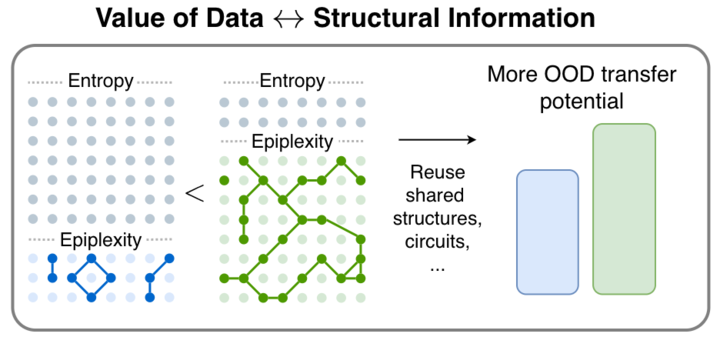
Information theory often gives unintuitive conclusions when it comes to data. Many of these inconsistencies can be resolved elegantly if we limit the amount of computation the observers can use. Very happy to finally introduce our work on epiplexity! 1/🧵

1/🧵 We are very excited to release our new paper! From Entropy to Epiplexity: Rethinking Information for Computationally Bounded Intelligence
arxiv.org/abs/2601.03220
with amazing team @ShikaiQiu @yidingjiang @Pavel_Izmailov @zicokolter @andrewgwils
김 재석 retweeted

1/🧵 We are very excited to release our new paper! From Entropy to Epiplexity: Rethinking Information for Computationally Bounded Intelligence
arxiv.org/abs/2601.03220
with amazing team @ShikaiQiu @yidingjiang @Pavel_Izmailov @zicokolter @andrewgwils
김 재석 retweeted

Happy New Year! As of January 1, 2026, all ACM publications and related artifacts in the ACM Digital Library are now open access, making computing research more accessible, discoverable, and reusable worldwide.
“This is a truly monumental milestone,” said ACM President Yannis Ioannidis, marking a new era for the global computing community.
Explore ACM’s open access journey:
👉 acm.org/publications/openacc…
#OpenAccess #ACM #OpenScience #ComputingResearch


김 재석 retweeted

This is one of the more unusual flying robots I have seen.
Researchers at the University of Tokyo built DRAGON, a transformable aerial robot that can change its shape while flying.
Instead of a rigid frame, it is made of four linked segments.
Each segment has two ducted rotors mounted on gimbals, so every link can redirect thrust independently.
• The robot controls its full pose in SE(3) while reshaping mid-air
• It can form different geometries to stabilize itself or interact with objects
• The navigation stack computes the most efficient shape for the current task
• It lifts over 3 kg, which is unusually high for this class of system
This effectively turns a drone into a flying manipulator. Not a gripper bolted on top, but the airframe itself becomes the manipulator.
The authors also mention an interesting idea for range extension: letting the robot walk on the ground when flying is not required.
Paper
ieeexplore.ieee.org/document…
—-
Weekly robotics and AI insights.
Subscribe free: scalingdeep.tech


김 재석 retweeted

Microsoft has set a goal to “eliminate every line of C and C++ from Microsoft by 2030.”
What are they going to try to replace that C & C++ code with?
You guessed it. Rust.
And they’re going to use AI to do the “Rust re-write” at an insane speed.
“Our strategy is to combine AI *and* Algorithms to rewrite Microsoft’s largest codebases. Our North Star is “1 engineer, 1 month, 1 million lines of code”.
You read that right.
One million lines of code, per engineer, per month.
Pure insanity. This kind of decision making is common among those with a deeply held, delusional faith in the Cult of Rust.
Take battle tested code, and re-write it (without a clear benefit to the end user) at a recklessly rapid rate. Then force others to adopt that rewritten code before it is ready or properly tested.
All while holding a delusional belief that your new Rust code is superior in all ways, and is inherently bug free thanks to the divine nature of Rust.
We learned this from a post by Galen Hunt, Distinguished Engineer at Microsoft Research.
linkedin.com/posts/galenh_pr…

김 재석 retweeted

Major preprint just out!
We compare how humans and LLMs form judgments across seven epistemological stages.
We highlight seven fault lines, points at which humans and LLMs fundamentally diverge:
The Grounding fault: Humans anchor judgment in perceptual, embodied, and social experience, whereas LLMs begin from text alone, reconstructing meaning indirectly from symbols.
The Parsing fault: Humans parse situations through integrated perceptual and conceptual processes; LLMs perform mechanical tokenization that yields a structurally convenient but semantically thin representation.
The Experience fault: Humans rely on episodic memory, intuitive physics and psychology, and learned concepts; LLMs rely solely on statistical associations encoded in embeddings.
The Motivation fault: Human judgment is guided by emotions, goals, values, and evolutionarily shaped motivations; LLMs have no intrinsic preferences, aims, or affective significance.
The Causality fault: Humans reason using causal models, counterfactuals, and principled evaluation; LLMs integrate textual context without constructing causal explanations, depending instead on surface correlations.
The Metacognitive fault: Humans monitor uncertainty, detect errors, and can suspend judgment; LLMs lack metacognition and must always produce an output, making hallucinations structurally unavoidable.
The Value fault: Human judgments reflect identity, morality, and real-world stakes; LLM "judgments" are probabilistic next-token predictions without intrinsic valuation or accountability.
Despite these fault lines, humans systematically over-believe LLM outputs, because fluent and confident language produce a credibility bias.
We argue that this creates a structural condition, Epistemia:
linguistic plausibility substitutes for epistemic evaluation, producing the feeling of knowing without actually knowing.
To address Epistemia, we propose three complementary strategies: epistemic evaluation, epistemic governance, and epistemic literacy.
Full paper in the first reply.
Joint with @Walter4C & @matjazperc


