

PR Advisor @AntGroup @JohnsHopkins MA & @Mizzou J-school alumn Ex @Baidu_Inc @BitFuFuOfficial @SyncedTech Opinions are my own
Sunnyvale, CA
Joined January 2014
- Tweets5.2K
- Following2.8K
- Followers1.7K
- Likes5.7K



Pinned Tweet
Just redesigned the China AI Index site with a brand-new visual identity (and a DARK MODE). Hope you like the new version!
chinaidb.com/


Tony Peng retweeted

I’m confused on two fronts by this tweet. First, why does this in any way discount the reporting the NY Times did? They broke a massive story. This doesn’t change that. Second, their job is not to get the guy fired, it’s to find the truth and report the news. They did that exceptionally well.
This is the kind of take that makes people distrust reporters and actually makes it harder for good reporters to do good work.

my heart goes out to the intrepid team at the @nytimes who did absolutely generational reporting on the Nvidia scandal
I know the feeling of trying to do accountability journalism in a culture that simply does not care about accountability. Incredibly disheartening.
Tony Peng retweeted

Ant Group shipped 3 models in one day
It's only Monday!
Ling 3.2 air:
huggingface.co/inclusionAI/L…


Tony Peng retweeted

NVIDIA Board reinstates Jensen Huang as President, CEO and Board Director.
Read the release: nvidianews.nvidia.com/news/n…

Tony Peng retweeted
Ant Group just released 2 open medical models 👀
One focuses on deep medical reasoning, the other on visual understanding
✨ LingSante 3.1-flash
- 560B/A25B
- 1M context
- Focused on complex medical reasoning and clinical research
✨ LingSante 3.1-air-VL
- 124B/A5.5B
- 256K context
- Focused on medical imaging, visual diagnosis, and multimodal agents
Both released under the MIT license 🫶


Tony Peng retweeted

At Ant Group, we believe AI has the power to transform healthcare accessibility — bringing professional-grade medical knowledge and personalized health management to everyone, everywhere, at scale. Now, our AI health app Afu (@AQ_AIhealth) serves 150 million users and handles nearly 20 million health consultations every day.
Today, we're opening the technology behind it. We open-sourced LingSante, the medical and health AI model family powering Afu, with weights available on Hugging Face in phases. The family spans the full spectrum of medical AI, from multimodal understanding and complex clinical reasoning to disease risk prediction, safety guardrails and agentic interaction. Two core models are live now:
LingSante-3.1-air-VL — a lightweight, native multimodal model (124B total / 5.5B active params) that reads text, images and video, covering medical imaging, skin analysis, diet assessment and report interpretation. It runs on workstation-class hardware, bringing specialist-grade medical AI within reach of small clinics and research teams worldwide.
LingSante-3.1-flash — a professional-grade deep-reasoning model (560B total / ~25B active params) built for complex clinical tasks, evidence-based retrieval and long-horizon medical workflows.
We're also bringing these capabilities directly to users through a major Afu upgrade:
Real-time AI video consultations — over video, Afu can visually assess symptoms, examine physical conditions, review medicines and reports, and even estimate heart and breathing rate from facial blood-flow changes. Users can bring a real online doctor into the call for professional review, across 16 medical specialties.
A stronger AI Health Manager — going beyond answering questions to act as a weight-loss coach, nutritionist and parenting assistant, with tailored plans built from personal health profiles and connectivity to smart health devices across 8 categories, including our newly launched AI health band and AI health ring.
Tony Peng retweeted

I actually think journalists who break stories will have increased value. There will always be a thirst for new information about the world. Humans who can gather info from other humans are still marketable

Tony Peng retweeted

inclusionAI releases the LingSante-3.1 family, covering medical reasoning, multimodal healthcare understanding, and physiological signal encoding under the MIT license.
🤖 modelscope.ai/collections/in…
🏆 LingSante-3.1-flash (560B-A25B). A medical MoE with 1M context. It surpasses GPT-6 Astra, Claude Opus 5.5, and Gemini 4 Argon on HealthBench Professional, tool-enabled text-only HLE, and BrowseComp with context in the team's evaluation.
🩻 LingSante-3.1-air-VL (124B-A5.5B). A native multimodal MoE with 256K context for medical imaging, health assessment, evidence retrieval, and medical GUI workflows.
💓 LingSante-Pulse-1.0 (16.7M). A compact physiological signal encoder for downstream research applications.
⚡ Flash is available in FP8 and MXFP4, with the family designed for healthcare research and evaluation under qualified human review.


Introducing our medical AI model LingSante!
Santé means "health" in French. It is commonly used as a toast meaning "cheers" or "to your health."
Être en bonne santé!
Today, we release LingSante-3.1-flash, an open-weight MoE model with 560B total parameters and 25B activations per token. It unifies diverse medical capabilities while retaining general capabilities, including complex medical reasoning, long-horizon workflow execution, and professional behavior alignment.
LingSante-3.1-flash moves beyond medical QA toward real-world healthcare problem. The model leads on HealthBench Professional (65.72), HLE (text-only, with tools: 72.22) and BrowseComp (with context: 94.10), outperforming GPT-6 Astra, Claude Opus 5.5 and Gemini 4 Argon on all three. LingSante-3.1-flash also performs well on professional long-horizon medical workflows, such as PhysicianBench (57) and EHR-Complex (74.40).
Together, these results establish LingSante-3.1-flash as the leading open-weight models for healthcare.
The weights are available. Explore LingSante and build with it.
More below ↓

1
2
121
Tony Peng retweeted

Oh my god, I'm so tired of this 'if China wins', the world will be less safe argument. I propose that we change it to: if the U.S. and China don't effectively coordinate on the management of frontier AI risks, work toward setting a common red line above which they both need to move with much greater caution, and lift each other up on AI safety knowhow, then we'll collectively be in a worse place @TheEconomist. Imagine this but for safety: teapaw.org/kristy_loke/status/212…. The future is bright if you let it be

The closer to the frontier China gets, the harder it will be for America to slow down AI research, making it more likely that the technology brings about disasters. So far, America’s efforts have been chaotic and confused economist.com/leaders/2026/1…

Tony Peng retweeted

I seriously think US open-weight models wouldn't be this good without Chinese open-weight models and vice versa.
And proprietary models wouldn't be this good (and cheap) without open-weight models.
Competition is a good thing.

Tony Peng retweeted
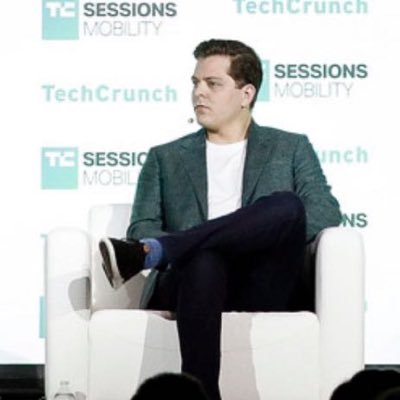
It’s really important to tell Shenzhen’s story to the world, because it is still so unknown. Though an unconventional roll for an investor, I helped with this video and other material for APEC. I hope this is an effective intro to Shenzhen.


Tony Peng retweeted

📢 Meet Qwen4-Max, your new AI teammate for work, creativity, and discovery!
Qwen4-Max is built on a new MoE architecture with native vision and a 1M-token context window.
Highlights:
- Outperforms Qwen3.8-Max with up to ~50% fewer tokens, while average cost per task drops over 60% in our internal evaluation.
- Advances real-world productivity through greater proficiency with professional tools, stronger long-horizon execution, and higher-quality deliverables.
- Handles real tasks, including 3D modeling, game development, manufacturing, finance, law, healthcare, and frontier scientific discovery.
- $1.5/M tokens for input, $4.5/M tokens for output, and $0.075/M tokens for implicit caching — all lower than Qwen3.8-Max, with implicit caching down by 70%.
The API is live on QwenCloud. You can also try Qwen4-Max on Qwen Studio, QwenWork and Qoder.
Start building today! 🚀
- Blog: qwen.ai/blog?id=qwen4-max
- API: qwencloud.com/models/qwen4-m…
- Token Plan: qwencloud.com/pricing/token-…
More to come! The open weights of smaller Qwen4 models will be released. Stay tuned. 👀

Tony Peng retweeted

Four months after we launched Manus, I was invited to a dinner with President Macron. I ended up seated directly across from Jensen Huang.
He was half an hour late, and Macron asked him to give a toast. Jensen picked up his wine glass and turned it into a fully improvised speech — in front of a table of European politicians and founders. It was electric. The charisma of a top founder, on full display.
I typed the whole thing into my Notes that night. Still one of the sharpest takes I’ve heard on software, AI and Europe.
What a pity. What a loss.


“There are decades where nothing happens. And then there are weeks where decades happen.” Love this opening.


1
122
Tony Peng retweeted

News: The US intel community is still working to understand the relationship between a Chinese businesswoman who had an affair with Nvidia CEO Jensen Huang and the Chinese government, with multiple sources telling CNN that the intelligence collected on her to date does not prove that she was acting as a spy for Beijing.
cnn.com/2026/11/12/politics/…


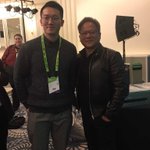
The photo was taken in 2019 at a Nvidia GTC press conference in San Jose.
As a then tech reporter, I asked Jensen Huang two questions: How would Nvidia deal with its GPU stockpile? And was Nvidia worried about other AI chip competitors?
Looking back from 2026, it’s almost surreal. Nvidia’s chips have become probably the most sought-after product in the world. And the company remains the leading player in AI chips.
Yet the biggest change is that the man behind all this just resigned.
I remember reading an article in 2024 (or 25) describing Jensen as Silicon Valley’s new poster child. He was different from the typical tech billionaire: humorous, humble, friendly. He loved street food, hanging out with people, and eating fried chicken with Korean business leaders. And he (seemingly) loved his wife.
I work in PR, so I know how a public image like this can be orchestrated. But still I believed Jensen was different.
For many Asians, Jensen was also a huge inspiration. His story made you believe that anything was possible.
That’s why all the saga, allegations in the past week have been so disappointing. Not just because a billionaire made mistakes, but because so many people held him in such high regard. Turns out he isn’t different after all.
He should resign. I imagine even Jensen wouldn’t want the Nvidia’s brand to be forever entangled with a personal scandal.
But Nvidia would unquestionably be losing an huge asset, an enormous advantage. It was Jensen’s prescient bet on accelerated computing that helped make today’s AI boom possible. I’m not sure any successor could replicate that success. Just look at what happened to Apple after Steve Jobs was ousted.
And imagine what would happen if Jensen joined another AI company, another chipmaker, or started a new venture of his own.
As someone who closely follows China’s AI industry, there’s also a lot for me to process.
Jensen has been one of the most prominent voices supporting open models and speaking highly of Chinese AI labs. Whatever business interests motivated those positions, he was willing to say things publicly. Losing that voice and support would matter. It could also mean a more challenging geopolitical environment for Chinese AI labs. There are a lot of unknowns ahead.
(Above are my own opinions)
1
204
Tony Peng retweeted
NVIDIA announces CEO transition. Read the release: nvidianews.nvidia.com/news/n…

Tony Peng retweeted

Stronger general-purpose models can still leave robots short of the capabilities they need most. Zhihu contributor 沈宇军 (YuJun Shen), whose team develops LingBot-Touch @AntLingAGI, argues that progress in Claude Fable 5.2 and GPT-6 Astra should sharpen a different question: what capabilities should a robot’s model be built around?
His answer starts with physical sensing, interaction feedback and continuous adaptation. A model may have more software engineering capability than a robot needs while lacking the physical understanding required for precise manipulation. The goal is the right mix of capabilities, not a particular parameter count.
Similar movements can produce different outcomes
When a robot twists a bottle cap, successfully opening it and letting its fingers slip can involve very similar hand trajectories. The contact forces differ. Visual motion and language descriptions alone can miss the distinction, so the robot must use physical feedback to adjust its actions.
Sensing is imperfect, and the world keeps moving
Distance and touch measurements contain errors. Models need to interpret those imperfect signals, particularly where sensors are still immature. The author presents LingBot-Depth and LingBot-Touch as work toward better physical perception.
Robots must also keep receiving information and revising actions while they operate. The author argues that simultaneous speaking and reasoning in language systems does not yet solve continuous, real-time processing across the physical modalities robots need.
Decide what to record before scaling the data
More training data cannot recover information that was never captured. Does the input preserve what is needed to interpret sensing errors? Can the output represent fine physical interactions? Do task recordings capture changes that require the robot to adapt?
Shen sees suitable data formats and standards as unresolved questions for both general-model developers and robotics companies.
His team therefore favors models designed around physical tasks from the outset, while drawing on general-purpose models where useful. He leaves open which route will ultimately work better: adapting increasingly capable general models or building specifically around robotics. Both must solve the same physical constraints.


