

Product Designer • UX Design @nyuniversity @IdmNyu 🥷
Brooklyn, NY
Joined June 2013
- Tweets20.2K
- Following4.5K
- Followers518
- Likes13.7K




Will Hsu retweeted

design isn’t a profession or outcome, but a process and a way of being
i’ve never felt fear as a designer re: being automated away. why should i? machines are not flesh. they have not my lived experiences nor my embodied wisdom
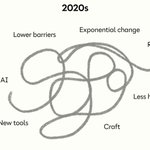
burstiness, passion, brownian paths appear random, but give way to dots connecting in hindsight. unconventionality breeds edge
i’m here to craft systems, not one-offs. i’m married to no process in particular, nor any tool or way of doing things
live, learn, teach, then move on. design is not the artifact; i am here to develop a posture that repeatedly gives way to insight
Will Hsu retweeted

It's actually shocking how good Figma's MCP is and how virtually no one is talking about it.
Like bro, you can design literally anything you can dream up in Figma and have Claude build it pixel-perfect in under 5 minutes.
Designers are so caught up in playing developer that they're overlooking the very thing they've spent their entire careers wishing was possible.

Will Hsu retweeted

Stageshow: a skill that helps your agent make better faux UI stills, animations, bento grids, and more.
npx skills add benjitaylor/skills --skill stageshow
Will Hsu retweeted

This is the correct take. Tools are tools, you use them and your own thinking as needed. Mix and match.
Each tool can have advantages but the advantages don’t matter if your work is poor. What matters if you can produce good work, and if you’re able to tell the work is good

it’s wild to me how people are still debating which design tool to use. should we drop Figma? design in Codex? Paper? whatever the latest hot agentic tool is?
honey, it simply doesn’t matter. you can do shitty work in any of them.
most products around us are poorly made. and i bet the teams behind them spent hours discussing processes, tools, and best practices.
just loosen up and enjoy the ride. you'll thank me later.
Will Hsu retweeted

Building software with agents has made me appreciate the design process so much more, not less.
A couple friends asked about my current workflow and how design fits into it, so I wrote it up.
@paper has been a game changer, giving design a proper place in an increasingly code-centric process.
atifaz.am/writing/the-softwa…

Will Hsu retweeted
The story of tech and design:
In 1976, Apple figured out that design, taste, and quality make better products.
Ever since, everyone in tech has wanted to be like Apple and “do design,” while remaining completely oblivious to what design, quality and taste actually means

“designing much faster than the others” — this so daft and makes it clear they don’t understand design at all. “Designing fast” (or slow) is just not a thing. If you conflate “producing ui by piecing together stuff” and “design” then the former (which is a form of assembly-line practice) can surely be fast or slow.
What makes the practice of design challenging is not how to put a ui or poster together, it’s what the pieces are, what the message is, what is being communicated, how it all works together.
So many of today’s “design” AI tools focus almost exclusively on the production part, on putting stuff together. I’d love to see an AI design tool that forms a deep understanding of a problem over the course of days or months and works like a creative partner. Call me on my bullshit, thinks about the whole, isn’t concerned really about the final arrangement of elements as much as it would understand the story and the message.

Will Hsu retweeted

This might be the most important essay of 2026.
My conversations with Nick over the past few months about his research have given me great hope for the future. I'm so happy he is sharing these findings with the world.
AI presents extremely difficult problems. We can all assume these problems are intractable and that we are doomed, or we can try and solve for a positive future.
Personally, I choose optimism. There are many challenges ahead... let us build the tools to face them head on.

interpretability might be the most important scientific problem in the world right now, as I don't think we can solve alignment if we don't know what we're building. I think I have good news about it. I co-authored early work in mechanistic interpretability at OpenAI and came away pessimistic, because neural networks appeared to fold into arbitrary tangled knots. years later, I started openai's first large-scale automated interpretability project, finding about 2% of neurons legible with the primitive tools we had
with modern agentic tools and a much closer look, the picture looks totally different. the vast majority in models up to trillions of parameters are legible, and their circuits beautiful. many famous examples of tangled neurons turned out to be misunderstood. The roadblocks I expected mostly aren't there. I now think ambitious interpretability will be solved by the time we need it most, and possibly quite soon, as automated scientists keep improving. it may be a bitter lesson for interpretability: the simple thing, at absurd scale, works
already-clean.goodfire.com/

🥹😭
"If we only use AI to make the things we already made faster, we are definitely missing out on the most interesting part." Katie Dill

Saved it a while ago and finally had time to watch, even it's short, it's one of the best AI design talks I've seen. "Don't just lift the floor, lift the ceiling too"🙌
How to scale intent, quality, and artistry with Al | Katie Dill (Stripe) youtu.be/GLvFTMtw4Jk?si=KFiN… via @YouTube


Will Hsu retweeted

.@karelvuong's list of goated designers:
- @evilrabbit_ (Vercel)
- @benjitaylor (X, SpaceXSI)
- @joshpuckett (Iteration, Graphical)
- @ryolu_
- @jennywen (Cursor, Grok Bot)
- @emilkowalski
- @matthewyuart
- @floguo (Ramp)
- @chloepark (MagicPath)
cosign.co/lists/karelvuong/g…

Will Hsu retweeted
Designers spent decades wishing they could turn their Figma files into real, working products.
Now that we finally can, half of us can't even be bothered to open Figma.
The ability to build isn't an excuse to stop designing.
If anything, it's a reason to care about design more than ever.

Will Hsu retweeted

Updated my personal website to give it more character and flexibility in how I share my work · nickpyl.space
Will Hsu retweeted

New portfolio is live (!!) 15 years in design in New York, compressed into 8 chapters. Less a collection of case studies, more a career told as lived experience.
You're looking at the eight things that shaped the space between who I am and what I like, make, and care about. They just happen to be represented with gummies instead of company logos.
Honestly, this site is just an excuse to share a collection of personal stories because I enjoy writing. Each chapter breaks down into what I expected, what I found, what followed (The Premise, The Reality, The Plot).
It's equal parts reflection, advice, and a look at some things built along the way.
Will Hsu retweeted

It's the Super IC era. I put together some thoughts to help you navigate it:
gabrielvaldivia.com/notes/in…

Will Hsu retweeted

“Is this worth my time? Does this bring me productivity, joy, or calm? I think these are the questions design has always helped answer.”
Thank you to @joellewenstein and the @AnthropicAI design team for opening up about how you work, the challenges you face, and how you see the role of design evolving on product teams.
Our latest AI in Design case study with Anthropic below!
00:00 Design at AI speed
01:43 The precursor to Claude Design
03:28 From user researcher to builder
05:09 Treating code as clay
08:09 A new rhythm for collaboration
09:22 What’s worth building
Will Hsu retweeted
I’ve tried rebuilding my website about 5 times since coding models came out. Design always was bad and nothing felt as simple as my old setup.
Finally Codex built it, along with a small tool to add my writing and deploy the static site to S3.
so enjoy karrisaarinen.com

Will Hsu retweeted
convergence to the mean
when everyone looks at everyone else to decide what to make, we eventually stop making anything of our own.
we copy what works. borrow the language, the aesthetic, the features. we call it learning from the market, following best practices, staying competitive. together, everything starts to feel familiar. polished, interchangeable. nothing wrong. nothing alive.
the mean isn’t necessarily bad. it’s where everything lands when we remove the reasons for it to be different.
numbers are easier to compare than feelings, so we make things that produce numbers. we study what gets attention, then shape ourselves around it. eventually the feedback stops informing the work and starts authoring it. we’re no longer asking what we want to say. we’re asking what will be rewarded for saying.
ai makes this loop frictionless. it can draw from more references than we could see in a lifetime. but access to every perspective isn’t the same as having one. it hasn’t lived a particular life that makes one detail unbearable and another beautiful. when we ask it to choose for us without bringing any intention of our own, we get something plausible, easy to approve.
then we ship it, measure it, copy it, and feed it back into the next round. a tidal wave of mid.
this changes not just the work, but the people making it.
we describe ourselves in categories platforms can distribute and markets understand. designer. founder. creator. pick a niche. build a brand. be consistent. the parts that don’t fit become inconvenient, even when those contradictions might produce our most interesting work. we become easier to classify and harder to tell apart.
i think we need to approach making things more like artists.
an artist develops a perspective through the work. making, noticing, choosing, failing, returning. learning what matters even when nobody else cares. craft gives that perspective a form precise enough for someone else to experience.
the life outside the work matters too. the places you’ve lived, the people you’ve loved, the things you’re embarrassed to care about. these aren’t distractions from having something to say. they’re how you come to have something to say.
we understand this with music, paintings, photographs, movies. we expect a person to be present in the choices. we want to experience something we wouldn’t have encountered without them.
software can do this too.
a piece of software expresses beliefs about how life should feel. what deserves your attention. what you should be free to change. whether a task should feel like paperwork or play. even a small interaction can carry someone’s care, humor, or curiosity.
but we rarely talk about software as a medium. we talk about it as an industry. markets to capture, workflows to optimize, competitors to catch up with. we add a feature because someone else has it, without asking whether it belongs. products accumulate the same parts and lose what made them worth choosing.
underneath the branding, it’s all the same thing.
artists learn from others too. the question is whether you’re absorbing those influences into a point of view, or using them to avoid developing one.
what are you trying to let someone feel, understand, or do? why this particular shape? what have you noticed that the existing tools don’t seem to notice?
those questions don’t have answers you can borrow from a competitor’s roadmap.
if we can make almost anything, deciding what deserves to exist becomes more important, not less. speed gives us more chances to exercise judgment. it doesn’t remove the responsibility.
i don’t want a world where every person becomes a more efficient distributor of the same ideas. i want people to use these tools to go further into what they actually care about. to make things specific enough that we can feel someone behind them.
what is the point of everyone being able to make something, if we all end up making the same thing?