

Shanghai Institute of Immunity and Infection (Former Institut Pasteur of Shanghai), CAS
Shanghai, China
Joined April 2015
- Tweets240
- Following230
- Followers89
- Likes637



Pinned Tweet
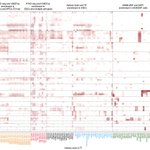
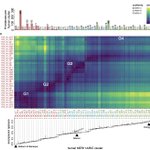
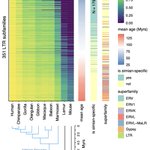
Super excited to share our latest #preprint on the TE classification/annotation and regulatory evolution from our lab @guilbourque at @Ashbi_KyotoU. Check it out here! 🧵
Cryptic endogenous retrovirus subfamilies in the primate lineage
doi.org/10.1101/2023.12.07.5…
Xun Chen retweeted

New preprint from our lab! Why is not everyone working on Transposons?
Loss of H3K9me3 maintenance in human neural progenitor cells leads to transcriptional activation of L1 retrotransposons
biorxiv.org/content/10.1101/…

Xun Chen retweeted

Capturing cell-type-specific activities of cis-regulatory elements from peak-based single-cell ATAC-seq dlvr.it/TJW2bx

Xun Chen retweeted

Why don't humans have tails?
A genetics study finds that a mobile genetic sequence inserted into a gene for tail development contributed to tail loss as early apes evolved. go.nature.com/3Te8t4C
Xun Chen retweeted
Locus-level L1 DNA methylation profiling reveals the epigenetic and transcriptional interplay between L1s and their integration sites dlvr.it/T2DH8X

Xun Chen retweeted

Our paper on the ancestral genome-assisted TE annotation method/resource is out in @CellGenomics! Enhanced annotation is now available for multiple species, including human and mouse, with ~70% increase in ancient TEs.
cell.com/cell-genomics/fullt…
Xun Chen retweeted

#Pangenome graphs improve the analysis of SVs for rare genetic diseases. Our new study is out!
Great collaboration with the lab of Tomi Pastinen and congrats to @groza_cristian for the amazing work!
nature.com/articles/s41467-0…

Xun Chen retweeted

I've gotten several requests recently for permission to use the notes from my computational biology class:
github.com/pachterlab/BI-BE-…
A reminder that they're licensed under CC BY 4.0: you're free to share and adapt, just give appropriate credit and indicate if changes were made.

Xun Chen retweeted

[News release] ASHBi researchers identify and selectively manipulate the neural circuits underlying the balance of risk vs. reward decision-making using optogenetics in primates.
➡️Article
science.org/doi/10.1126/scie…
➡️Press Release
ashbi.kyoto-u.ac.jp/news/202…
@ScienceMagazine

Xun Chen retweeted
Genome-wide classification of epigenetic activity reveals regions of enriched heritability in immune-related traits dlvr.it/T0htWb

Xun Chen retweeted

🔥🔥How does the LINE-1 retrotransposon jump around in the human genome? Super excited to present my postdoctoral work answering this published today @Nature
together with twitterless Kathy Collins's lab and @NogalesLab @UCBerkeley
nature.com/articles/s41586-0…
A 🧵

Xun Chen retweeted

Check out our latest review | LINE-1 retrotransposition and its deregulation in cancers: implications for therapeutic opportunities by @CarlosMendezPhD.
Our thanks to @GenesDev.
genesdev.cshlp.org/content/e…

Xun Chen retweeted

“Transposable elements contribute to nearly 80% of human-specific candidate cis-regulatory elements in cortical cells” 🧠 …🤯 literally! Amazing dataset 🔥 Congrats to all involved!
nature.com/articles/s41586-0…
Xun Chen retweeted

Very happy to share our new paper on how SOX2 instructs pluripotency program transition in vivo in mouse E3.5-E7.5 embryos. Spearheaded by our super team: Lijia Li, Fangnong Lai, Xiaoyu Hu and Bofeng Liu. Wonderful collaboration with Amy Ralston. (1/n)
science.org/doi/10.1126/scie…

Xun Chen retweeted
Multi-ancestry genetic analysis of gene regulation in coronary arteries prioritizes disease risk loci dlvr.it/T0D5Tk

Xun Chen retweeted
💥 New preprint! Really excited about this work brilliantly led by Manu @manvendr7 & Sabrina Leddy in collab with @TheNixonLab - check it out and let us know what you think!

🎈🎆Beyond thrilled to drop new preprint exploring how #transposons (TEs) contribute to natural resistance to HIV in “Elite Controllers” (ECs)
biorxiv.org/content/10.1101/…
a work from @TheNixonLab and @CedricFeschotte Lab
Please see 🧵till end, it gets better with each 🧵
1/12

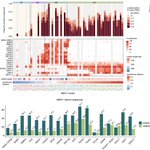
We found a high epigenetic heterogeneity per subfamily which was well rearranged by the rooted tree and phyletic groups. And the reconstituted MER11 phyletic groups display a more consistent epigenetic profile compared to the original subfamily annotations.

1
1
183
Focusing on the youngest phyletic group “MER11_G4”, we revealed the gain of SOX-related motif in this phyletic group was due to a single-nucleotide deletion and occurred in humans and chimpanzees but not in macaques. It also significantly increased their regulatory potential.


1
1
134

