

📱Product Designer @sap 🎛 @iclinz 🎓 人大 RUC 🚲 @BromptonBicycle rider 🤹♀️ Amateur Juggler
Munich
Joined February 2009
- Tweets7.3K
- Following4.2K
- Followers994
- Likes7K







need to dig down on this😍

HOLY F*CK, motion studio in 20 repos.
20 open-source skills for Opus 5.5.
Animation. Physics. 3D. Sound. Delivery.
01 Remotion → React video engine github.com/remotion-dev/remo…
02 HyperFrames → HTML-to-video renderer github.com/heygen-com/hyperf…
03 Anime.js → Timeline choreography github.com/juliangarnier/ani…
04 React Spring → Spring animation github.com/pmndrs/react-spri…
05 PixiJS → GPU-powered 2D graphics github.com/pixijs/pixijs
06 p5.js → Generative visuals github.com/processing/p5.js
07 Paper.js → Vector paths
github.com/paperjs/paper.js
08 Matter.js → 2D physics
github.com/liabru/matter-js
09 Three.js → 3D scenes
github.com/mrdoob/three.js
10 Rapier → 3D collisions
github.com/dimforge/rapier
11 OGL → Custom shaders
github.com/oframe/ogl
12 tsParticles → Particle effects github.com/tsparticles/tspar…
13 glTF Transform → 3D asset optimization github.com/donmccurdy/glTF-T…
14 GL Transitions → Shader transitions
github.com/gl-transitions/gl…
15 OBS Studio → Screen capture github.com/obsproject/obs-st…
16 Chatterbox → Voiceovers
github.com/resemble-ai/chatt…
17 Tone.js → Synths and sound effects github.com/Tonejs/Tone.js
18 faster-whisper → Caption transcription github.com/SYSTRAN/faster-wh…
19 OpenCut → Timeline editing
github.com/OpenCut-app/OpenC…
20 FFmpeg → Encoding and delivery github.com/FFmpeg/FFmpeg
Brief → prototype → animate → render → ship.
Bookmark this. Go build something worth watching ↓
Protecting the Thinking Behind Great Design | Inside Linear's Design Team youtu.be/8wqZXOhuJUM?si=Dr0i… via @YouTube
Nathan Guo retweeted

I made a skill that turns your app into a demo in HTML.
So they stay sharp at any size, loop, scrub, jump to any step and stand still for reduced motion.
I open-sourced it as a skill:
fil.design/skills/html-demo


look even more sleek

Opus 5.5 is great for motion design but...
/colorfigures skill will turn Claude into a premier illustration studio
• hand-inked isometric figures from a photo or a name
• every part works: lids open, disks go in, screens boot
• one HTML file with colour swatches & wobble slider
send the skill to your Claude:
> april-zhu.com/colorfigures
Nathan Guo retweeted

Hardware looks scary until you break it down into small steps. So I built an app that takes you through Arduino one circuit at a time.
Made with Opus 5.5
learn-arduino-red.vercel.app
Nathan Guo retweeted

Hi, it's Darshita. I am a designer.
And I'm pitching myself in public 'cause I'm done with a year full of anxiety.
Everyone says design is dead and AI killed it. But the real parasite was hiding in plain sight.
So here's my film, DESIGN IS DEAD. She's bold, fearless and very PINK 💖
Hiring? My DMs are open.
Best AI exhibition I saw so far. Artificial Intelligence Pavilion - German Design Award german-design-award.com/gale…


Nathan Guo retweeted

these are fun!

made 3 new brushes
1 - nyc subway lines
2 - little figures from architecture drawings
3 - gunpla components
spruced up the ui too so you can try many brushes at once btw, go crazy here: kool-brushez.vercel.app/
Nathan Guo retweeted

After co-inventing ChatGPT, I kept asking myself: why have superhuman chat models not led to AGI?
I’ve spent the last 2 years in stealth building a new way to train models (RLCD), and a new type of frontier AI model that we are releasing today: Jev
• 20-200x faster
• 40-400x cheaper (w/ output tokens free)
• Frontier composable intelligence optimized for decisions
AFAICT the shortest path to AI-based economic revolution
Nathan Guo retweeted

The Invisible Side of Design Engineering
jakub.kr/writing/the-invisib…

Nathan Guo retweeted

A few gems I’ve found in the past couple of weeks:
aicss.dev → UI blocks for AI agent interactions
ui.halaska.com → UI components for AI products
bencho.dev → UI blocks for interactive AI experiences
builtbydesigners.com → showcase of products built by designers
torph.lochie.me → text morphing library with zero dependencies
typehug.aliszu.com → typography utility for keeping text together
Nathan Guo retweeted

Today, we're sharing new research on Solaris, our first Interface World Model.
Solaris is a new kind of operating system that generates interactive interfaces frame by frame, in real time, with no code. We find that Solaris outperforms frontier LLMs when generating new interfaces, across structural similarity and information retention. Read more and request early access at the link below.
Nathan Guo retweeted
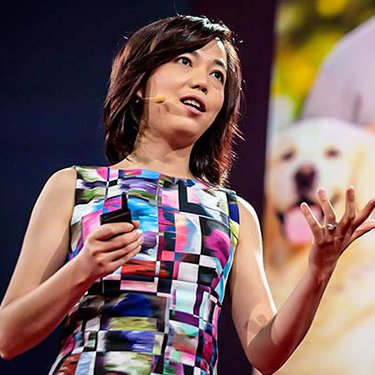
Next view prediction is the key to Atlas, enabling us to unify pixel-level generation and reconstruction. @jcjohnss @BenMildenhall @martin_casado and I had a deeper discussion on some of the most exciting technical innovations of Atlas, our newly released world model for spatial intelligence!

World Labs co-founders Fei-Fei Li, Justin Johnson, Ben Mildenhall, and a16z's Martin Casado on Atlas, a world model for spatial intelligence:
LLMs are built on next token prediction. Video models are built on next frame prediction. Atlas is built on new view prediction, and it's the first model to unify pixel generation and pixel reconstruction, two problems computer vision has kept in separate tracks for half a century.
The practical result is a 50 to 100x reduction in what it takes to digitally capture a 3D representation of a space. Previously, you needed 100 to 300 photos of a single room. Atlas can work from just three.
In this conversation, they get into the slow motion shot from The Matrix that took hundreds of cameras and now takes three iPhones, the overnight Slack message that made them bet the company in five seconds, why robotics is bottlenecked on data rather than chips, and the case that new view prediction is AI-complete.
00:00 Intro
01:50 The Matrix slow motion scene now takes three iPhones
02:48 Why new view prediction is the primitive
07:10 Unifying generation and reconstruction
11:15 Gaussian splats became the bottleneck
14:17 Dense capture used to mean 300 photos
17:30 Why reconstruction needs generation to fill the gaps
18:44 The LLM lesson image models missed
23:39 The video that made them go all in
28:04 3D design is 95% revisions
30:50 The problem in robotics is data, not chips
32:48 Why a robot policy can't be trained like an image model
34:44 When the simulator becomes the planner
36:45 Frozen time required footage full of movement
40:57 Why new view prediction is AI-complete
42:43 Nature gave animals eyes but not trees
YouTube: youtube.com/watch?v=qn1QDDBn…
@drfeifei @jcjohnss @BenMildenhall @theworldlabs @martin_casado
Sting - Sounds Like Art - Rijksmuseum, Amsterdam - ARTE Concert youtu.be/t9UsFbCuM7I?si=SJQR…
Nathan Guo retweeted
I'm so excited that our @theworldlabs team has achieved a major milestone today! Introducing Atlas - a first of its kind multimodal world model trained from scratch! 🚀
Atlas is capable of generating frames with pixel-perfect camera control, reconstructing large scenes from as few as one single input image, simulating space-time by reframing videos, natively outputting 3D spaces from one or more input images, composing multiple posed images into a consistent 3d world, and more! This is the best camera conditioned world model ever, opening doors to many possible use cases from VFX to robotics. I'm so so so proud of our team!♥️

Nathan Guo retweeted

To craft for conversation, timing is everything. Natural conversation is a social dance, and timing matters just as much as tone and delivery.
Most voice AI doesn't do this well yet.
So we built TurnBench: an open benchmark that measures whether voice AI knows when your turn is really over, and when an "mm-hmm" is agreement, not an interruption.
Learn more about how we built this on our blog.
sesame.com/blog/turnbench

strategy to learn AI. from Designer's toolkit for Claude Code youtu.be/HcLz3ikw-n0?si=ZHxY… via @YouTube @kylezantos