

Get the facts—stupid is a choice. Canada was built by immigrants in the empty wilderness lands of North America.
Main Office, Western Universe
Joined December 2022
- Tweets34.5K
- Following1.6K
- Followers1.2K
- Likes1.3K


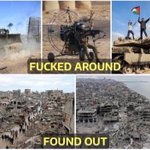
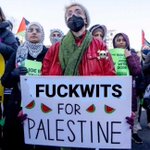


What color is yours?


The University of Toronto has let down Canadian Muslim, Arab, Palestinian students, staff, and faculty.
MCRO was at Queen's Park today with advocates calling for fair treatment and adoption of the new report that makes it clear that systemic racism and discrimination must be addressed.
1
36


Just the dumbest and even more dumbest pretending anyone gives a flying rats ass about their climate delusions and fear mongering hysterical outbursts
Two past tense, washed up, embarrassing Canadians who are now just oddball historical weirdos
1
22
Billy McOracle retweeted

Honda suspends the big EV plan. Stellantis sells Brampton and moves production. GM closes CAMI. Steel mills cut hundreds of jobs. Battery projects delayed or bankrupt. Yet somehow the Liberals stay popular with enough people that this continues. How? While factories close and our kids can’t find work in the industries that built this country, the same crowd keeps getting the votes. If this is ‘building Canada strong,’ average working families aren’t seeing it. #cdnpoli

🇺🇸🇨🇦 CANADA’S INDUSTRIAL COLLAPSE under @MarkJCarney
— Updated with new receipts 🧾
📍 Honda Alliston, ON → $15B EV/battery plan INDEFINITELY SUSPENDED; now $867M retool (govt-backed) for hybrids/gas only, keeping ~4,000 existing jobs
📍 Stellantis Brampton, ON → SOLD to defence firm Roshel (undisclosed price, closes end-2026). Jeep Compass already moved to Illinois; >3,000 auto jobs gone. Unifor calls it betrayal. Ottawa took hundreds of millions in support tied to keeping production here — clawbacks still empty theatre.
📍 Stellantis Windsor battery → stake sold for ~$100; NextStar continues under LG
📍 Stellantis Windsor Assembly → repeated idles
📍 GM CAMI Ingersoll, ON → CLOSED (BrightDrop ended)
📍 Ford Oakville, ON → EV plan dropped; retooled for Super Duty
📍 Northvolt Quebec → BANKRUPT
📍 Umicore Loyalist, ON → SUSPENDED
📍 Stelco Hamilton/Nanticoke, ON → up to ~500 layoffs proceeding despite Investment Canada Act commitments and Joly’s ultimatums/legal threats
📍 Algoma Sault Ste. Marie, ON → integrated steelmaking ending, >1,000 layoffs
📍 ArcelorMittal Hamilton, ON → wire mill closed
📍 PowerCo St. Thomas, ON → delayed to 2029
Pierre Poilievre is now demanding Carney fire Industry Minister Mélanie Joly over the recent Stellantis and Stelco failures.
Ottawa’s response remains the same: press releases, photo ops, threats, then more layoffs and plant sales.
This is managed decline with a price tag.
🇨🇦 #CdnPoli #AutoIndustry #Steel #Ontario #Manufacturing #MarkCarney #Canada
Billy McOracle retweeted

Um den rechtsradikalen Attentäter in Krakau ist es ruhig geworden, seit wir wissen, dass er ein Linksextremer war!
This is not a joke or someone AI slop
This is actually happening at @UBC
This is actually funded by BC taxpayers
This is why BC is in debt up to its eyeballs
This is why @LDoerkson needs to fully audit public expenditures
@GlobalBC @CTVVancouver @CBCVancouver

32
Oh dear god how did you get to be so ignorant?
Wildfires are in decline. In Canada and globally
Extreme weather is in decline
The only thing getting worse is your dumbass climate hysteria fear mongering bullshit
@CBCNews @globalnews @CTVNews @ctvqp


Lack of climate action is especially worrying given recent report by ECCC scientists showing that Canadians already have to prepare for increasingly more severe wildfires, more extreme heat, rising seas...To avoid worst impacts, need to act now.
climateinstitute.ca/news/can…

25

Billy McOracle retweeted

Ah yes, the typical “Dust Bowl” dismissal.
Climate alarmists love to ignore the “Dust Bowl.” And that's because they don't actually understand what it was. They just talk out of their ass, which is what you are doing here.
The term “Dust Bowl” does not refer to the decade-long drought that spanned North America during the 1930s. It also does not refer to the record-shattering heatwaves that impacted the U.S. and Canada in the 1930s, particularly in the spring and summer of 1930, 1933, 1934, 1936, and autumn of 1939.
Rather, the “Dust Bowl” refers to a [relatively] small geographical area that was affected by the most severe dust storms during the 1930s. Specifically, the areas affected were the Texas and Oklahoma panhandles, southwestern Kansas, and southeastern Colorado (Lee & Gill, 2015, see the first image).
🔗sciencedirect.com/science/ar…
While farming practices (specifically, the plowing of deep-rooted perennial prairie grasses and replacing them with shallow-rooted annual crops like wheat) likely contributed to the incidence of dust storms, the drought and heatwaves were naturally forced, mainly by anomalous tropical Pacific and North Atlantic sea surface temperatures (i.e., La Niña and the +AMO). Only ~30% of the Great Plains land area had been plowed for farming by 1930 (Cunfer, 2005); farmers generally adapted to the Plains landscape rather than changed it. In other words, farmers did not cause the drought or extreme heat in the 1930s, and therefore, it cannot be dismissed as an anomaly.
🔗tamupress.com/book/978158544…
Tree ring-based proxy reconstructions also indicate that 1930s-like droughts have occurred in the Great Plains once or twice per century, on average, for at least the last 10,000 years (Herweijer et al., 2007; Miao et al., 2007). The second image shows some of these past droughts that I identified looking through the North American Drought Atlas.
🔗journals.ametsoc.org/view/jo…
🔗eas2.unl.edu/~dloope/pdf/Mia…
Many of these historic Plains droughts, including two during the 19th century alone (circa 1818–25 and the 1854–65 “Civil War Drought”), exceed the 1930s in terms of both spatial extent and magnitude, and were comparable in duration (e.g., Muhs & Holliday, 1995; Burnette & Stahle, 2012). Early settlers described the region as a de-facto desert with blowing sand.
🔗sciencedirect.com/science/ar…
🔗link.springer.com/article/10…
In 1855, U.S. Army Lieutenant Gouverneur Kembel Warren (known as G. K. Warren), who would later become a general during the American Civil War and crowned the “Hero of Little Round Top,” described the Nebraska Sand Hills as,
🗨️ “The Sand Hills (les Buttes de Sable) present their most characteristic appearance just north of the Calamus river, spread out in every direction to the extreme verge of the horizon. The sand is nearly white, or lightish yellow, and is about three-fourths covered with coarse grass and other plants... The scenery is exceedingly solitary, silent, and desolate, and depressing to one’s spirits.”
More accounts suggest that there were similar heat extremes to the 1930s in the Great Plains during the 1820s. James (1823) recounts Stephen Long's journey through southwestern Nebraska’s Imperial and Lincoln counties in June 1820; he noted “extensive districts covered entirely with loose and fine sand” south of the South Platte River. Long also noted that,
🗨️ “The intense reflection of light and heat from the surface of naked sand... added much to the fatigue and suffering of our journey.”
🔗archive.org/details/accounta…
Army Fort data from NOAA NCEI's archive also show that many summers during the 1850s and 1860s may have been similar to those of the 1930s. I attached daily weather observations from Manhattan, Kansas from July 1860 in the third image attached below. The high temperature of 115°F recorded on July 9, 1860, is only eclipsed by 116°F measured on August 13, 1936. If you look at the handwritten paper forms for stations across the country in 1860, you'll find many of them reaching 100°F+ multiple times. Richmond, Virginia did. So did Chicago, Illinois (and it's much rarer there).
Drought conditions in the 1930s were undoubtedly amplified by positive land surface feedbacks, but those feedbacks were mostly a response to natural devegetation of the landscape from persistent rainfall deficits in the 1920s and 1930s, not mechanized agriculture. The occurrence of similar, if not worse droughts in the Great Plains in past centuries which predate mechanized agriculture only further supports the idea that the 1930s drought was natural, and by extension, the heatwaves, too.
Regardless, even if you remove the 1930s from the dataset, the occurrence of extremely hot days in the U.S. and the number of heatwaves have still declined since the 1890s.
🔗link.springer.com/article/10…
As for other regions of the globe, there aren't enough data points to reliably reconstruct the same dataset globally back to the 1890s. That's why U.S. data are important, despite the U.S. being a small fraction of global land area. It's because the U.S. has the best climate data record in the world, and the rest is just a guessing game. Throw a dart.


Billy McOracle retweeted

African Tippu Tip owned roughly 10,000 slaves in the 1890s. That was decades after the American Civil War, the Emancipation Proclamation, and the 13th Amendment.
While white European societies had already abolished the slave trade and then slavery itself this man was still marching deep into Central Africa, burning villages, chaining captives, and selling them.
Tippu Tip became a famous slave and ivory trader of the East African interior. He led armed caravans of thousands of men hundreds of miles inland, raiding villages at dawn, killing the weak or elderly on the spot, and marching the rest in coffles to the coast. Roughly one-third of the captives often died on the journey.
The survivors were sold for Zanzibar’s clove plantations, for domestic service, and for export to the Arabian Peninsula and the Gulf. Women and girls were routinely taken as sex slaves and concubines—standard practice in the Arab trade for centuries.
By 1895 he controlled seven plantations worked by about 10,000 slaves. He built a personal commercial and political domain in the eastern Congo, confirmed or replaced local chiefs, monopolized the ivory trade, and became one of the richest men of his era.
He assisted European explorers when it suited him, then watched from comfortable retirement in Zanzibar as European powers finished suppressing the trade he had helped expand. He died in 1905.
This photograph of him seated in turban and robes, staff in hand, is the classic image of the merchant who got rich selling other Africans.
You can earn a degree in African American studies and never hear Tippu Tip’s name, or the names of the African kings and Arab traders who actually captured and sold Africans who crossed the Atlantic or the Indian. Today’s universities treat the Arab and Swahili caravan Slave traders as footnotes or ignored entirely.
This is not an accident. Acknowledging that African elites and Middle Eastern buyers ran the supply side for centuries undercuts the simple narrative that frames slavery as a uniquely white-European or American invention.
British whites abolished the slave trade in 1807 and slavery in its colonies in 1833, then spent decades and enormous resources on naval patrols to stop the trade. The United States followed in 1865. These white societies were among the first large-scale institutional and systematic bans on slavery in history.
Slavery and the open slave trade continued in Africa and the Islamic world long afterward. Legal chattel slavery was abolished in Saudi Arabia only in 1962; Mauritania was the last country to ban it on paper, in 1981. Tippu Tip’s operation in the 1880s and 1890s was not a dying remnant; it was still large, profitable, and expanding under Arab-Swahili leadership.
The peak slave population in the United States in 1860 was about 3.95 million. Modern estimates of people in forced labor, forced marriage, and other forms of modern slavery put the global total near 50 million TODAY!!!.
Africa alone accounts for millions of slaves TODAY; the Arab states also show some of the highest prevalence rates in the world TODAY. Absolute numbers of people in modern slavery in Africa and the Middle East today exceed the peak historical figure for the United States. Definitions differ—historical chattel slavery is not identical to every form of forced marriage or debt bondage—but the scale of ongoing exploitation is not small.
Tippu Tip was certainly not the only African slave trader. Arab and Swahili traders from Zanzibar and the Omani sphere ran the East African trade for generations, selling captives north into the Middle East for labor, military service.
European societies were among the first to abolish slavery and enforce the ban. That fact is routinely omitted from the version of history taught in American universities. The men who owned ten thousand slaves in the 1890s while marching deep into the African interior should not be ignored. -RJ

Tried to block the comments Miss Piggy?
Why?
Dead Political Career Walking

I am thrilled to announce, on behalf of Housing & Infrastructure Minister @gregorrobertson, that the City of Petrolia is receiving $2,329,880 million through the Build Communities Strong Fund and Ontario’s Development Charge Reduction Program (DCRP), to help reduce taxes... 1/2
Billy McOracle retweeted

Fifteen facts about the former Kamloops Indian Residential School @tkemlups:
1. There is NO EVIDENCE that the old apple orchard is an abandoned cemetery. There is a cemetery on the reserve across from the Catholic Church with many graves that are now "unmarked" because the markers have deteriorated. Chris Champion speculated in June 2021 about the possibility of there being a cemetery at the former school (dorchesterreview.ca/blogs/ne…), as this would need to be ruled out in the case of burials being substantiated, but this was before Sarah Beaulieu's presentation and research into this subject being initiated.
2. The band built a tourist attraction next to the orchard in the 1990s, which indicates that they did not believe it was a "crime scene" or an abandoned cemetery in the 1990s.
3. Not one parent has said that their child never came home from the Kamloops Indian Residential School.
4. Chief Rosanne Casimir, AFN Grand Chief RoseAnne Archibald, UBC Residential School History and Dialogue Centre Director Mary Ellen Turpel-Lafond, and Manitoba Chief David Monias said that the orchard was a "crime scene" that should be criminally investigated. Casimir said that the RCMP and the Coroner had been contacted to help with the investigation. The RCMP also accepted that the matter should be investigated, but out of "cultural sensitivity", it maintained that @Tkemlups should take the lead. On October 18, 2021, three months after it was known that no remains had been found, the "13 family heads" submitted a petition to Prime Minister Trudeau with the following words: "In May of 2021, evidence of a horrific act of genocide was laid bare to the world, with the confirmation of at least 215 unmarked graves of little ones who attended the Kamloops Indian Residential School".
5. The band received $3.2 million (out of a total of 12.1 million) for forensics and DNA analysis to be done between 2021 and 2023. The application for 9 million dollars to the federal government in July 2021 had in its title "Kamloops Indian Residential School Ancestral Remains Excavation" (the Kamloops Indian Band refers to "The 215" as their "ancestors"). Excavation, which is required before any forensics and DNA analysis can proceed, was never done.
6. The NCTR had 51 names on its registry of children who died who are associated with KIRS. Two of the names were replications and so there were actually 49. Two children actually died at the school (from accidents); the others died in hospital or in their home communities. A good picture of 35 out of 49 deaths is known, and the remaining 14 can be investigated more fully if the families apply to Vital Statistics for the records. For an analysis of this see Jacques Rouillard's article - dorchesterreview.ca/blogs/ne…
7. George Nicholas was in charge of the Simon Fraser University archaeological dig where 15 of the "remains" were confirmed by @tkemlups. When Nina Green contacted Nicholas in July 2021 (after Sarah Beaulieu's presentation), he said that the lawyer for the Band had told the archeology department not to talk about the Kamloops case (i.e. a gag order was placed on this publicly funded academic department).
8. Many people attended a reunion for the Kamloops Indian Residential School in 1977 to talk about the good old days. One of the people attending was Chief Harvey McLeod, who testified in January 2022 that he recalled talk of children being secretly being buried in the apple orchard and children being forced to help bury the dead (including babies) and at least one account involving a baby and a furnace.
9. The RCMP did a comprehensive investigation of residential schools in the 1990s and no one said anything about clandestine burials. This was in spite of the fact that Charlene Belleau was acting as the liaison to convince people to come forward and talk to the police.
10. The Royal Commission on Aboriginal Peoples held a hearing in 1993 in the building of the former Kamloops Indian Residential School. No one said anything about clandestine burials.
11. Agnes Jack interviewed several people in her book Behind Closed Doors, which came out in 2000, and no one said anything about clandestine burials. Ron Ignace was one of the people interviewed in the book. After the 2021 Kamloops Indian Band announcement, he talked about knowing about clandestine burials for years.
12. Clarence Jules, the father of Manny Jules, never said anything about clandestine burials in David Neel's book Our Chiefs and Elders: Words and Photographs of Native Leaders (1992), pp. 72-3. Manny Jules, after the @tkemlups announcement about the 215 remains, said that he had been hearing his parents talk about these burials for years.
13. Jeanette Jules testified at the TRC hearing in 2013 in Kamloops. She never mentioned anything about clandestine burials. In May 2022, Jeanette Jules made a speech saying that children were buried on the former Kamloops Indian Residential School grounds and "in the mountains".
14. When testifying before the Senate in March 2026, Rosanne Casimir was not able to state the name of one child who she believed made up Le Escwiwey ("The missing"/"The 215") buried in the apple orchard in spite of years of archival research.
15. In October 2026, Kathy Manuel said that her husband, Ken Manuel, had spoken about the bodies buried at the Kamloops Indian Residential School for 40 years. Ken Manuel was the last administrator for the school. In 1978, he never mentioned anything about burials. Instead, he was positive about the school and stated that "at one time there was no other alternative (for Indian children) if they wanted education...Indian youngsters would attend the school and residence if they lived deeply in the backwoods and no school was close enough to commute to daily. Others would attend because of other special problems such as being handicapped, having nomadic parents, or parents with a drug or alcohol problem".

Absolutely terrific by the Jays not pandering to the Islamo Hamas terrorist ass lickers and antisemitic cheerleading mobs.
Never forget Oct 7

Ya, pointing out the truth is somehow “dehumanizing”
You know what is actually dehumanizing?
Hamas
Oct 7
unavailable
You are stuffing free speech, defending Islamists and slandering a decent man simply pointing out IslamoRealism
By the way, how are all your Hamas friends doing these days?
There has been a failure of leadership at the Blue Jays.
They have not condemned the Islamophobic nature of the posts.
Nor have they made it clear that they uphold zero tolerance for hate against anyone, including Muslims. This points to a systemic problem that will require real commitments from this organization or risk letting down many of their fans.
From @_shireenahmed_ in @cbcsports
cbc.ca/sports/baseball/blue-…

2
40

Billy McOracle retweeted

The completely economic ignorant Trump gov who just got politically punished is on track to oversee 1 million net new jobs created in 2026 with annual GDP growth forecasted to increase to 3.6-3.8%.
Meanwhile the universally proclaimed economic genius, Carney has presided over 46,000 net job losses this year & a declining annual GDP forecast now predicted to be 0.7-0.9% growth. He has never been more popular!
A tale of two countries!


Hey @BlueJays
The relentless piles of “Islamophobia” bullshit spewed by morons like this goomer are endless.
But Santander simply described reality, described IslamRealism.
Santander for the Big Win


This quoted post is unavailable.
1
61
