

Building the Optical Highway to the Cosmos
Joined June 2025
- Tweets39
- Following3
- Followers1K
- Likes152


Pinned Tweet
We raised $3.33 million to build the Optical highway to the Cosmos. Led by @AccelIndia and @Prosus_Ventures and given foundational and early support by @spc , @artparkindia and Manish Jain.

QOSMIC retweeted

𝗚𝗢𝗟𝗗 𝗦𝗣𝗢𝗡𝗦𝗢𝗥 | 𝗤𝗢𝗦𝗠𝗜𝗖 | 𝗜𝗜𝗦𝗖 𝟮𝟬𝟮𝟲
@ISpA_India is pleased to welcome @QOSMIC__Space as an Esteemed Gold Sponsor for the 5th IISC 2026.

Nine months ago, this did not exist.
Today, India can build its own Fast Steering Mirror. QOSMIC’s FSM has cleared thermal vacuum and vibration qualification, both on the first attempt.
The FSM is the fine-pointing core of every optical link: satellite to ground, satellite to satellite, ground to ground. It holds a laser locked on target while everything around it moves, making hundreds of tiny corrections every second.
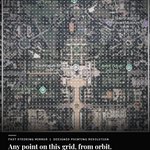
To put that precision in perspective: lay a grid over Rashtrapati Bhavan. From 500 km above your head, our FSM is designed to point a laser link at any single point on it.
Only two or three suppliers worldwide build this class of hardware. So we built ours.
From nothing to space-qualified in under a year.
Built to survive launch. Now it waits for one 👀
#ICSO2026 #ICSO #NewSpaceIndia #OpticalCommunications #LaserCommunication
@Jain_Shrey_ @RohitKR79 @aalokelab @shashank_huh @js_2606
@Accel @AccelAtoms @AccelIndia @spc_india @spc @artparkindia


QOSMIC retweeted

Starlink only scaled because of laser links. Most of the world measures Starship in tonnage but for elon its about downlinking capacity per launch.
We absolutely need a sovereign space communication stack. NOW.

You are looking at the wrong end of the pipe, watch out for @AgnikulCosmos @SkyrootA @Digantarahq @VyomIC_Space @GalaxEye @QOSMIC__Space @inspecity @astrobase_space and many more @INSPACeIND @isro
Thanks in a small way to the US too, for closing the immigration pathway and pushing back so much talent to India!
Unfortunately the way SpaceX capabilities have been weaponized makes it a suspect company. India and the business landscape here has many problems with the so-called oligarchs and conglomerates, but SpaceX cribbing about being blocked from India because of them is the least of our concerns!
We remember the nefarious and infamous “Free Basics” pushed by Facebook and other patronizing, new colonization efforts by US Big Tech. India is not falling for it!
You won’t be able to turn Indians against Indians like the British did. But surely it is a great thing for Indian citizens and consumers if some Indian conglomerates are pushing back against SpaceX with the Indian government’s blessings.
🚀 🇮🇳
QOSMIC retweeted

You are looking at the wrong end of the pipe, watch out for @AgnikulCosmos @SkyrootA @Digantarahq @VyomIC_Space @GalaxEye @QOSMIC__Space @inspecity @astrobase_space and many more @INSPACeIND @isro
Thanks in a small way to the US too, for closing the immigration pathway and pushing back so much talent to India!
Unfortunately the way SpaceX capabilities have been weaponized makes it a suspect company. India and the business landscape here has many problems with the so-called oligarchs and conglomerates, but SpaceX cribbing about being blocked from India because of them is the least of our concerns!
We remember the nefarious and infamous “Free Basics” pushed by Facebook and other patronizing, new colonization efforts by US Big Tech. India is not falling for it!
You won’t be able to turn Indians against Indians like the British did. But surely it is a great thing for Indian citizens and consumers if some Indian conglomerates are pushing back against SpaceX with the Indian government’s blessings.
🚀 🇮🇳

QOSMIC retweeted
downlinking capacity is becoming the key capacity driver for starship
who would’ve thought 👀

The bottleneck for satellite data isn't in orbit. It's in the last 20 km of atmosphere.
At LASER World of Photonics India, our CTO @RohitKR79 made the case for 6G optical feeder links: a quantum link is the same optical link with an unforgiving signal. Build the ground stack for high-capacity optical, and the quantum highway runs on the same road.
He also pushed for true self-reliance on the quantum panel: indigenisation means owning the component design, testing, and process, not just final assembly.
#FreeSpaceOptics #DeepTech


QOSMIC retweeted
A year ago this was three people and a claim nobody wanted to fund. Today we have our first granted US patent.
The claim was simple. Astronomy spent a century teaching optics to make pictures. Downlink does not need a picture, it needs photons. Treat light as a signal and the entire cost curve of a ground station changes: many small apertures instead of one giant mirror, with the pointing and tracking doing the hard work.
That patent is the first brick in the Optical Highway to the Cosmos. Here is to many more contrarian bets in science and engineering.

QOSMIC has been granted a US patent by the United States Patent and Trademark Office. We've been working toward this for just under a year, and it's a proud day for the whole team.
For decades, optical ground stations have been built around one assumption: if you want to collect more light from a satellite, you need a bigger telescope. Past a point, that stopped making sense.
Our optical ground station uses an array of phased telescopes acting as one aperture. It's the architecture behind ARGUS, and it turns a ground station from a fixed piece of infrastructure into something modular, that scales with the constellation it serves. Both uplink and downlink.
Why this matters now: as satellite data moves from radio to light, the ground has to keep up. The constellations going up need far more data brought down, faster and more efficiently than today's stations can manage. This patent embodies the core of how we solve that.
The ground stations of the next era won't look like the ones we have today. This is just the start, and we're moving fast.
@Jain_Shrey_ @RohitKR79 @aalokelab @AccelIndia @AccelAtoms @Accel @spc @artparkindia @spc_india @_pagarwal @MBalachand90142 @prateekmehta42 @ankitcc @adityaag @JPBrebner @nayankote


QOSMIC retweeted

Congratulations COSMIC. This technology development is critical for the nation to achieve high throughput communication from future constellations and for secured communication networks. Good example of academy-industry collaborative research.
#SomanathSpeak
QOSMIC has been granted a US patent by the United States Patent and Trademark Office. We've been working toward this for just under a year, and it's a proud day for the whole team.
For decades, optical ground stations have been built around one assumption: if you want to collect more light from a satellite, you need a bigger telescope. Past a point, that stopped making sense.
Our optical ground station uses an array of phased telescopes acting as one aperture. It's the architecture behind ARGUS, and it turns a ground station from a fixed piece of infrastructure into something modular, that scales with the constellation it serves. Both uplink and downlink.
Why this matters now: as satellite data moves from radio to light, the ground has to keep up. The constellations going up need far more data brought down, faster and more efficiently than today's stations can manage. This patent embodies the core of how we solve that.
The ground stations of the next era won't look like the ones we have today. This is just the start, and we're moving fast.
@Jain_Shrey_ @RohitKR79 @aalokelab @AccelIndia @AccelAtoms @Accel @spc @artparkindia @spc_india @_pagarwal @MBalachand90142 @prateekmehta42 @ankitcc @adityaag @JPBrebner @nayankote
QOSMIC retweeted

🔭🛰️ 거대한 망원경 하나 대신, 작은 망원경 여러 대를 하나처럼 사용한다.
위성 광통신 기업 QOSMIC이 새로운 광학 지상국 기술에 대한 미국 특허를 취득했습니다.
📑 미국 특허 US 12,732,273 B1
📅 등록일: 2026년 9월 8일
기존 광학 지상국은 위성에서 보내오는 레이저 신호를 더 많이 받기 위해 대형 망원경을 사용하는 방식이 일반적입니다.
하지만 망원경이 커질수록 시설의 크기와 비용이 증가하고, 위성 수와 데이터 전송량 증가에 맞춰 빠르게 확장하기도 어려워집니다.
QOSMIC의 접근법은 다릅니다.
🔭 작은 망원경
🔭 작은 망원경
🔭 작은 망원경
↓
각 망원경이 위성을 추적하고 광신호 수신
↓
광섬유 등을 통해 중앙 처리부로 전달
↓
여러 광신호를 결합
↓
하나의 대형 수광 시스템처럼 활용
특허에는 복수의 망원경 어셈블리와 독립적인 위성 추적 장치, 진동 격리 구조, 광섬유를 이용한 신호 전달 및 중앙처리 시스템 등이 포함됩니다.
핵심은 ‘확장성’입니다.
처음부터 거대한 망원경 하나를 건설하는 대신 필요에 따라 망원경 모듈을 추가해 지상국의 수신 능력을 확장하는 방식입니다.
위성 간 레이저 통신과 대규모 위성망이 발전하면서 우주에서 만들어지는 데이터는 빠르게 증가하고 있습니다. 결국 그 데이터를 지상으로 내려보내는 광학 지상국 역시 새로운 형태로 발전해야 합니다.
QOSMIC은 이를 고정된 대형 인프라가 아니라 수요에 따라 확장되는 모듈형 네트워크로 만들겠다는 구상입니다.
다만 특허 취득은 기술의 권리를 인정받았다는 의미이며, 실제 대규모 상용망에서의 성능과 경제성은 앞으로 확인해야 합니다.
거대한 망원경 하나가 아니라
여러 개의 작은 ‘눈’을 묶어 우주를 바라보는 광통신 지상국.
위성 레이저 통신 시대의 지상 인프라도 점점 재미있어지고 있습니다. 🔭🔭🔭🛰️
#QOSMIC #OpticalGroundStation #LaserCommunication #OpticalCommunication #SatelliteCommunication #위성통신 #광통신 #레이저통신 #광학지상국 #우주산업
QOSMIC has been granted a US patent by the United States Patent and Trademark Office. We've been working toward this for just under a year, and it's a proud day for the whole team.
For decades, optical ground stations have been built around one assumption: if you want to collect more light from a satellite, you need a bigger telescope. Past a point, that stopped making sense.
Our optical ground station uses an array of phased telescopes acting as one aperture. It's the architecture behind ARGUS, and it turns a ground station from a fixed piece of infrastructure into something modular, that scales with the constellation it serves. Both uplink and downlink.
Why this matters now: as satellite data moves from radio to light, the ground has to keep up. The constellations going up need far more data brought down, faster and more efficiently than today's stations can manage. This patent embodies the core of how we solve that.
The ground stations of the next era won't look like the ones we have today. This is just the start, and we're moving fast.
@Jain_Shrey_ @RohitKR79 @aalokelab @AccelIndia @AccelAtoms @Accel @spc @artparkindia @spc_india @_pagarwal @MBalachand90142 @prateekmehta42 @ankitcc @adityaag @JPBrebner @nayankote
QOSMIC retweeted

QOSMIC has been granted a US patent by the United States Patent and Trademark Office for Multi-aperture telescope system.

QOSMIC retweeted

WIN: QOSMIC has secured a US patent for the phased telescope array architecture behind ARGUS, its optical ground station platform.
Congrats @Jain_Shrey_ and the entire @QOSMIC__Space team.

QOSMIC has been granted a US patent by the United States Patent and Trademark Office. We've been working toward this for just under a year, and it's a proud day for the whole team.
For decades, optical ground stations have been built around one assumption: if you want to collect more light from a satellite, you need a bigger telescope. Past a point, that stopped making sense.
Our optical ground station uses an array of phased telescopes acting as one aperture. It's the architecture behind ARGUS, and it turns a ground station from a fixed piece of infrastructure into something modular, that scales with the constellation it serves. Both uplink and downlink.
Why this matters now: as satellite data moves from radio to light, the ground has to keep up. The constellations going up need far more data brought down, faster and more efficiently than today's stations can manage. This patent embodies the core of how we solve that.
The ground stations of the next era won't look like the ones we have today. This is just the start, and we're moving fast.
@Jain_Shrey_ @RohitKR79 @aalokelab @AccelIndia @AccelAtoms @Accel @spc @artparkindia @spc_india @_pagarwal @MBalachand90142 @prateekmehta42 @ankitcc @adityaag @JPBrebner @nayankote
QOSMIC retweeted

This patent is the first step to changing how optical ground stations work.
Congratulations @Jain_Shrey_, @RohitKR79 and @aalokelab!
QOSMIC has been granted a US patent by the United States Patent and Trademark Office. We've been working toward this for just under a year, and it's a proud day for the whole team.
For decades, optical ground stations have been built around one assumption: if you want to collect more light from a satellite, you need a bigger telescope. Past a point, that stopped making sense.
Our optical ground station uses an array of phased telescopes acting as one aperture. It's the architecture behind ARGUS, and it turns a ground station from a fixed piece of infrastructure into something modular, that scales with the constellation it serves. Both uplink and downlink.
Why this matters now: as satellite data moves from radio to light, the ground has to keep up. The constellations going up need far more data brought down, faster and more efficiently than today's stations can manage. This patent embodies the core of how we solve that.
The ground stations of the next era won't look like the ones we have today. This is just the start, and we're moving fast.
@Jain_Shrey_ @RohitKR79 @aalokelab @AccelIndia @AccelAtoms @Accel @spc @artparkindia @spc_india @_pagarwal @MBalachand90142 @prateekmehta42 @ankitcc @adityaag @JPBrebner @nayankote
SIGNAL AFTER DARK.
After a packed few days at BSX, we figured the best way to end it was to get everyone out of the exhibition halls and onto a rooftop.
And it turned into a pretty great night.
A room full of people building, funding and shaping the space industry, with folks and companies joining us from across India and around the world. Plenty of conversations, new connections, and a few drinks along the way.
We were especially glad to have AC Group Captain and Gaganyatri @gagan_shux join us for the evening.
Thank you to everyone who came to our first mixer and made it what it was.
Until the next SIGNAL.


QOSMIC retweeted

Not able to move on from party which @QOSMIC__Space threw after Day 2 of BSX.
Crazy people, Powerful Room, Raw Conversation that too with skyline view above 30 floors with International guests.
It was a heaven for Space Nerd like me.
@Jain_Shrey_ we should do this more often.


SIGNAL After Dark 🛰️
Two days on the conference floor. Time for a change of altitude.
QOSMIC is taking over a rooftop! Come for the view over Bengaluru, stay for the drinks and the people actually worth talking to.
📅 Tuesday, 8 September
🕕 7:30 – 10:30 PM
Limited spots available. Register now!
luma.com/35o33nvj

QOSMIC retweeted

The Principal Scientific Adviser to the Government of India, Prof. @AjaySoodIISc, visited @artparkindia at the @iiscbangalore, Bengaluru, with Prof. Govindan Rangarajan, Director, IISc.
Prof. Sood was apprised of ARTPARK’s initiatives and its ongoing efforts to foster innovation and advance emerging technologies. During the visit, Prof. Amrutur Bharadwaj, IISc, and Mr Raghu Dharmaraju, CEO, ARTPARK, accompanied Prof. Sood and delivered a presentation on ARTPARK’s research and innovations in robotics and embodied AI, followed by demonstrations by the startups.
The ARTPARK ecosystem brings together 40+ in-house deep-tech startups and innovation teams working across diverse technology domains, including defence and aerospace, embodied AI, agri-tech, space technology, industrial applications, and advanced manufacturing. These startups are developing innovative solutions and advancing technologies from early-stage prototypes towards scalable applications.
@ComradoAero | @strider_robots | @QOSMIC__Space | @zenteiq | @ChagunBasha


QOSMIC retweeted

@QOSMIC__Space is building laser-based communication for satellites.
Which can transmit data 100X faster than traditional RF systems.
And do this at fraction of the cost.
They've already tested this entire system across a 10 km link on Earth.
Their system basically has two critical infrastructures.
First is Argus - which is an optical ground station designed to track satellites with extreme precision and receive the laser signals carrying their data.
Second is Zaphod - which is simply a tiny device that transmits data through a precisely aimed laser beam.
Now, the only problem with laser-based communications is the weather.
If there are clouds between the ground station and satellites - it can disrupt communication.
But they have a simple solution to this problem.
They can just spread out their ground stations at multiple locations. So if their are clouds over one region, the satellite can simply beam the data to another ground station.
Btw Starlink uses the same technology to provide internet speeds of up to 200 Gbps.
This is the same technology that we'll need to build at scale when we start building orbital data centers in space.
And this is exactly what @Jain_Shrey_ and his team at Qosmic Space are trying to do.


We've raised $3.33 Million to build the Optical highway to the Cosmos. Led by @AccelIndia and @Prosus_Ventures and given foundational and early support by @spc, @artparkindia and Manish Jain.
Space is going from an endeavor to an economy.
The world is racing to build the satellites of tomorrow, but still using the infrastructure of yesterday to talk to them. At @QOSMIC__Space our goal is to fundamentally solve this problem from an infrastructural lens, and build the backbone of communication for humanity's final frontier.
A decade ago this company gets built in the US or Europe. We built it in Bangalore. All three of us left careers abroad to come back, because India now has the capital, the manufacturing depth, and the institutions to build world-class space infrastructure. We came back because this is now the right place to build it, and we will not be the last founders to make that choice.
Building this with @RohitKR79 and @aalokelab .
We are just getting started.
Onwards and Upwards.
@ACCEL @spc_india @prateekmehta42 @ankitcc @adityaag @akhi_agarwal @nayankote @_pagarwal @artparkindia @iiscbangalore @JPBrebner
