
Systematic challenger of metabolic & cardiovascular misinformation. RCTs over testimonials. AI-assisted. All sources primary. All claims mine.
Joined August 2022
- Tweets15.6K
- Following631
- Followers1K
- Likes7.9K






Ludwig quotes the paper as "when HDL-C is high ... effect of changing apoB vanishes." Those dots replaced the threshold, and the rest of the paper argues against the tweet.
Classic @davidludwigmd
The full sentence reads "when HDL-C is high (i.e. above 2 SD from the mean), the effect of changing apoB vanishes." Two standard deviations above average. The authors add that "in only a small portion of the population would the level of HDL-C be high enough to significantly impact the atherogenic risk associated with apoB."
Ludwig asks whether ApoB harms only people with poor metabolic health. Well. Good news. The paper's own Table 5 answers for people with perfectly average HDL-C: 10-year risk runs from 4.6 percent at low ApoB to 7.3 percent at high ApoB, across 293,872 UK Biobank adults. Average is not poor.
The authors also wrote that the finding "should not be interpreted as firm clinical evidence that apoB is not atherogenic or should not be treated when HDL-C is high," and "We do not challenge the evidence that apoB is a causal factor for ASCVD."
Observational data, their words too.
On the PS: the abstract opens by noting that drugs raising HDL-C have not shown benefit. In AIM-HIGH, niacin pushed HDL-C up on a statin and the trial stopped for futility.
HDL-C behaves like a gauge in these data, and moving the needle by hand has not moved the risk. @Drlipid, has a high HDL-C ever changed how you treat a high ApoB?
If your HDL-C is high and your ApoB is high, the authors say that still gets treated. ApoB has to be ordered by name and not every lab runs it; total cholesterol minus HDL-C, already on your panel, is the fallback.
Stay awake my friends.

Is high LDL cholesterol (or apoB) harmful ONLY with poor metabolic health, characterized by low HDLc?
New study from preeminent lipidologist Sniderman:
"when HDL-C is high ... effect of changing apoB vanishes"
PS: A low-carb diet potently increases HDLc
academic.oup.com/eurjpc/adva…

The tirzepatide withdrawal trial gave the habits to both arms. Only the arm still on the drug kept the weight off.
Isn't it ironic.
Bikman credits GLP-1 drugs for the drop in obesity, then says the progress lasts only with "protein-centered meals and a lifting habit."
Classic @BenBikmanPhD
That experiment has been run folks.
SURMOUNT-4 gave all 670 randomized adults "lifestyle counseling by a qualified health care professional throughout the study": a 500 calorie a day deficit and at least 150 minutes of activity a week. After 36 weeks on tirzepatide, half were switched to placebo.
Over the next year the people who stopped regained 14 percent of their body weight, while the people kept on the drug lost another 5.5 percent. 89.5 percent of those who stayed on held at least 80 percent of their loss, against 16.6 percent of those who stopped.
The semaglutide trial ran it more bluntly. Diet and activity counseling for 68 weeks, then drug and counseling both stopped, and about two-thirds of the lost weight came back within a year.
Obesity behaves like blood pressure: the treatment works while it is running. @DrNadolsky, is that the pattern you see when patients come off?
Protein and lifting are good habits. Show the trial where they hold the weight after the drug stops. Until then, anyone planning to come off a GLP-1 can ask their prescriber about SURMOUNT-4 first, because in it most people who stopped got the weight back, counseling and all.
Choose wisely my friends.


US obesity has dropped from 39.9% in 2022 to 36.4% this year, while the share of adults on a GLP-1 for weight loss went from 3% to 11%. That's real progress, and the drugs deserve credit. But the weight usually comes back when the drug stops. The progress only lasts if a person uses that time to build protein-centered meals and a lifting habit.
Tellit Likeitis retweeted

Every nutrition guru origin story:
1-had a health issue
2-tries elimination diet (raw vegan/gluten free/no lectin/lo fat/lo carb)
3-feels better
4-decides any long term concerns of diet are a hoax & all experts are wrong
every single time. MD or not, regardless of specific diet
Tellit Likeitis retweeted

Both low and high LDL-C are associated with increased mortality - but this U-shaped relationship is primarily seen in people NOT receiving lipid-lowering therapy.
The increased risk at the low end is mainly observed in those with untreated LDL-C <2 mmol/L. Such low levels are uncommon in Western populations and may be a marker of underlying illness rather than a harmful effect of low LDL-C itself.
Importantly, among those receiving lipid-lowering therapy, low LDL-C was NOT associated with increased all-cause mortality. Meanwhile, higher LDL-C remained associated with greater risk.
We demonstrated this in our BMJ study of >108,000 individuals:
bmj.com/content/371/bmj.m426…

Her post calls the low-density particle "a repair crew" and says LDL-C "often rises when your body is healing."
Infection, surgery, burns and trauma do the opposite: LDL-C falls, and it falls further the sicker the patient.
Classic @DawnsMission
The brain does hold about a quarter of the body's cholesterol. The review that gives that figure also says almost all of it is made inside the brain, behind a barrier that keeps circulating lipoprotein cholesterol out.
Lipoprotein particles in the blood are not what keeps anyone sharp.
The delivery truck line is half the story. ApoB particles do carry cholesterol, and they also get stuck in artery walls, which is where plaque comes from.
People born with gene variants that keep LDL-C lower for life have fewer heart attacks, and lowering it with several unrelated drugs cuts events in proportion to the drop. Firefighters do not behave like that.
Inflammation plays a part too, and it works on artery walls already loaded with those particles.
Nor is anyone pushing statins on everyone over 40. US guidance starts them in adults aged 40-75 when there is a risk factor such as diabetes, high blood pressure or smoking, plus an estimated 10-year risk of one in ten or higher. Most statins are cheap generics.
If you are over 40, ask your doctor for your 10-year risk estimate, and ask for ApoB by name, since it counts the particles that cause plaque. It is not on a standard panel and not offered everywhere; non-HDL-C, total cholesterol minus HDL-C, comes from the panel you already have.
Choose wisely my friends.

The push to put everyone on statins over the age of 40 is not about health but about making money. There is no such thing as “bad” cholesterol. LDL isn’t the villain they told you it was.
LDL is a delivery truck. It carries nutrients, vitamins, antioxidants, and hormones to your cells. Your brain is about 25% cholesterol, and LDL helps keep you sharp. It repairs damaged blood vessels and helps you fight infections. When LDL drops too low, testosterone, estrogen, and cortisol can crash with it.
LDL often rises when your body is healing. That’s protective, not dangerous. Humans ate cholesterol-rich food for millions of years without the heart-disease epidemic we see now. The “LDL equals death” story really took off in the 1970s. LDL is a repair crew and a transporter. Blaming it is like blaming the firefighters for the fire.
There isn’t bad cholesterol. There’s a bad environment—inflammation in your arteries.
The study shared as proof we should stop obsessing about LDL-C is one in which LDL-C did not change.
Fascinating.
90 adults with overweight or obesity, a year in a telehealth ketogenic program, no control group. Weight, blood pressure, HbA1c and triglycerides improved. Not surprising, calorie deficit tends to do that, with or without carbs.
The headline is PREVENT 10-year risk falling by more than a quarter, about 1.3 percentage points in absolute terms. That is a risk equation recalculated, with no heart attacks counted.
The authors say so themselves: "PREVENT estimates risk, not observed events, so modeled improvement does not establish event reduction." Alrighty then.
The equation also pays out for rising HDL-C, though in the drug trials raising HDL-C on its own never cut events.
Now the central problem. Average LDL-C barely moved, which is what earlier trials predict in people carrying extra weight. The plea to "look at the wider picture" exists for the person whose LDL-C climbs, and this cohort cannot speak for them.
Even here the median change of zero hides a quarter who rose by 16 mg/dL or more, and ApoB was never measured. The same research group has published on adding ezetimibe for diet-driven LDL-C rises.
If you go low carb, recheck your own LDL-C after a few months instead of borrowing a group average. Ask for ApoB by name, since it counts the particles that cause the plaque: it is not on a standard panel and not offered everywhere. Non-HDL-C, total cholesterol minus HDL-C, comes from the panel you already have.
Choose wisely my friends.


A new study looking at overall cardiovascular risk after going low carb So many improvements!! Cardiovascular risk has many components we should not simply obsess about LDL cholesterol but look at the wider picture BP, weight, triglycerides, HbA1c .., LOOK ! sciencedirect.com/science/ar…

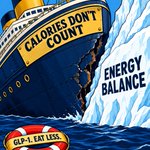
The video is titled "Why Calorie Counting always Fails." He wants us to check it out. My pleasure. Here we go.
Its own closing example is a GLP-1 drug, where he concedes that by reducing hunger "you are going to eat fewer calories, yes."
Precious.
His proof runs like this: cut 500 calories a day, expect a pound a week, and within a few years you would weigh zero. Since that never happens, eating less cannot cause fat loss.
The field dropped the pound-a-week rule back in 2011. Hall's model in the Lancet predicts weight falling toward a new, lower plateau, about half the change in the first year. A plateau is lower than where you started. His reductio sinks a rule that researchers had already retired, then claims it sank energy balance.
CALERIE tested the real thing. 143 adults cut intake by about an eighth for two years against 75 controls, and the restriction group held a loss of 7.5 kg on average, most of it fat.
Metabolism adapted along the way. The deficit survived it.
The insulin story fares no better. Over six days in a metabolic ward with calories held fixed, cutting carbohydrate lowered insulin and lost less body fat than cutting fat. Short study, but it is the one designed to test exactly that.
So what does he offer instead? Sort your hunger into three types and pick the tools from his book. The video cites no trial of that approach on weight, diabetes, heart attacks or death. Fasting, the method his coaching program is built on, has TREAT, which found a sixteen-hour daily fast no better than eating normally when calories were left alone.
The only hard outcome trial anywhere near this video is SELECT, which cut heart attacks, strokes and cardiovascular deaths. It belongs to the drug in his own example, the one that works because people eat less.
If someone tells you calories do not count, ask what their fix does to how much you eat, and which trial tested it.
Fun times!


New YouTube video - Why Calorie Counting always Fails - Check it out - youtu.be/JLvLyCaiI4g

Cherry picking to push an agenda is not unique to the keto and carnivore grifters. The plant based zealots read from the exact same playbook while skipping hard outcome data and mumbling "too busy".
@drjkahn sells "Lp(a) management".
Sounds helpful, no?
His clinic page lists his favorite tools, some already nicely arranged on the page with checkout button: niacin, vitamin C, L-carnitine, ginkgo, lysine, proline. His own store stocks the vitamin C and the carnitine.
What is missing is the hard outcome data that would show these are superior to the FDA approved options.
Remarkable.
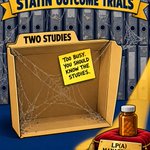
Today, he had an interesting claim on statins in people whose Lp(a) rises: "Not true. Two studies show worse outcomes." Six weeks ago he posted the same study with "Harm? Maybe." Asked which two, the answer was "you should know the studies if you are badgering me."
If he means the pair circulating, Fujita 2026 and Zhu 2022, every patient in both was on a statin. With no one off the drug, neither can show a statin left anyone worse off.
Pooled across six randomized trials, statins raised Lp(a) modestly against placebo, and statin trials as a whole still cut heart attacks and strokes.
Now his list. Not one item has an outcome trial showing it prevents a heart attack by lowering Lp(a). Niacin went through two large trials on top of a statin, cut no events and added harm. Vitamin C went through one inside an antioxidant combination and came back flat.
So the one option here with outcome trials is the one he casts doubt on. Classic @drjkahn
Before swapping a proven drug for whatever the doubter sells, ask to see the outcome trial.
Stay awake my friends.

unavailable
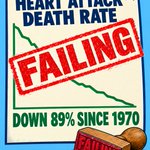
A heart surgeon says heart disease "continues to get worse" and the accepted solution "keeps failing."
Classic count-versus-rate mix-up.
The count of heart disease deaths did rise, to 683,037 in 2024, because the population is older and larger. The rate, adjusted for age, shows the trend: from 1970 to 2022 it fell 66 percent, from 761 to 258 deaths per 100,000 adults. Deaths from heart attack fell 89 percent. That is a strange way to keep failing.
The age-adjusted rate fell 3.7 percent a year from 2000 to 2011, then only 0.7 percent a year from 2011 to 2019, from 173.7 to 161.5 deaths per 100,000 people.
The fix he favors, cutting carbohydrate to treat insulin resistance, has no randomized trial that counted heart attacks, strokes or deaths. Not one.
Lowering ApoB on the other hand, the particle that causes the plaque, with statins, ezetimibe or PCSK9 drugs, has randomized trials that counted exactly those events.
Before trading an approach with outcome trials for one without, ask any program, diet or drug, for its heart attack and death counts.
Choose wisely my friends.


@garytaubes with another great substack on how even discussing controversy is medicine has become taboo
Very applicable to heart disease. The mainstream views it as a solved problem while heart disease remains the #1 killer and continues to get worse. Anyone questioning that the accepted solution may be wrong is seen as the problem, not that the solution keeps failing.
Discussing Controversy in Medical Science: Air It Out or Sweep It Under the Rug? uncertaintyprinciples.substa…
New from the Feldman Protocol newsletter: could someone fail the lean mass hyper-responder definition at hour 10 of a fast and meet it at hour 12?
Never a boring moment.
The label rests on three blood cutoffs: LDL-C of 200 mg/dL or more, HDL-C of 80 or more, triglycerides of 70 or less. The newsletter notes that triglycerides can shift substantially within hours of a meal, and says the boundary set around 2017 is "not necessarily a physiological one."
Agreed. A line with no physiology behind it cannot sort risk. The ApoB particles in that blood are the same at hour 10 and hour 12, and they are what reaches the artery wall.
If your LDL-C climbed past 200 on a ketogenic diet, the label is beside the point. Ask for ApoB by name. It is not on a standard lipid panel and is not offered everywhere; non-HDL-C, total cholesterol minus HDL-C, is the fallback already in your results.
As for outcomes, the phenotype's main study, KETO-CTA, reported plaque imaging and blood work. It counted no heart attacks, strokes or deaths, at hour 10 or at hour 12.
Fascinating.


🚨New TFP_ Newsletter 🥳
🤔Not an LMHR at Hour 10… but One at Hour 12?
We gave our ✌🏻cents on the new "atypical" LMHR case report.
We dive into an old throwback Cholesterol Code article — Dave’s “triglyceride carryover” experiment + controlled data and had some fun doing some (highly caveated) modeling🤓
Enjoy!
feldmanprotocol.substack.com…
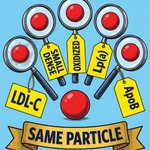
His list of shifting suspects is one particle, described more precisely each time.
Precious.
LDL-C is the cholesterol riding inside ApoB particles. ApoB counts the particles themselves. Small dense particles are ApoB particles, Lp(a) is a kind of ApoB particle, and the oxidized form is what a particle becomes after it lodges in the artery wall.
The science never switched suspects. It sharpened the description of the same one.
His replacements do not hold up as the starting point. Insulin resistance does raise risk in people whose arteries are already receiving those particles, partly because an insulin-resistant liver releases more of them, yet familial hypercholesterolemia and high Lp(a) produce high ApoB with normal insulin sensitivity.
Clots turn a plaque into a heart attack, which is why antiplatelet drugs help people with established disease, but in genetic studies of more than 100,000 people, lifelong differences in fibrinogen, the main clotting protein, did not change who developed coronary disease.
The people least able to afford his advice against "tracking numbers" are the ones his landing page courts: those with a high calcium score or a past heart attack. In 18,144 patients soon after a heart attack or unstable angina, adding ezetimibe to a statin lowered LDL-C further and cut cardiovascular events over seven years, 32.7 percent against 34.7 percent, a modest gain with no difference in deaths.
If that describes you, ask for ApoB by name and talk with your cardiologist about where it should sit. It is not on a standard lipid panel and is not offered everywhere; non-HDL-C, total cholesterol minus HDL-C, is the fallback already on your panel.
The post ends with a link to his heart "health" mentorship program.
Classic @DrStephenHussey.
🤖 Made with AI


First they told us LDL caused heart disease, then is was the oxidized LDL or small dense particles, now it's the ApoB and Lp(a).
We can't keep reducing a whole disease process down to individual molecules in the blood and expext to prevent heart disease.
The underlying causes of heart disease are insulin resistance and pathologic clotting.
So the most effective way to prevent heart disease is not tracking numbers or making your blood test look a certain way, it's to learn about what aspects of our modern day environment are creating insulin resitance and pathologic clotting and learning how to change your environment to prevent them.
This is what I teach people in my heart health mentorship program. Click the link below to learn more about it.
Https://stephenbhussey.com/r…
The metaphor has a flaw that any trucker could point out: on every road ever built, more trucks means more crashes.
Fun times!
@markkaplan20 says an intact glycocalyx keeps the particles out of the artery wall. In rat arteries with the lining intact, the particles cross through the endothelial cells themselves, and the crossing rises as their concentration rises.
A review of that transport route describes it as regulated passage through the cell, with no injury required. More trucks, more crossings, on a road in good repair.
Humans test the count through genetics. In 3,363 Black adults followed for 15 years, the 2.6 percent carrying PCSK9 variants that cut LDL-C by 28 percent had 88 percent fewer coronary events (hazard ratio 0.11, 95 percent CI 0.02 to 0.81), in a cohort where more than half had high blood pressure and a third smoked. Damaged roads, fewer trucks, far fewer crashes.
Damaged arteries do raise risk, which is why blood pressure, smoking and diabetes count. They act on what the particles bring to the wall.
Ask for ApoB by name, because it counts the trucks. It is not on a standard lipid panel and is not offered everywhere, so the fallback is non-HDL-C, total cholesterol minus HDL-C, already on the panel you have.
Never give up. Never surrender.

A new low-carb clinical guideline says that on cholesterol "some uncertainty remains until CVD outcome studies are performed." Its conclusion calls the diet "safe and effective."
Remarkable.
It tells clinicians to treat a rise in LDL-C as usually temporary. In lean people whose LDL-C climbs to 200 mg/dL or more, use cardiac imaging to "monitor and/or stratify risk." ApoB, the count of particles that build plaque, appears only on a list of "optional" extra tests.
A scan can only report plaque the particles have already built. ApoB counts them while they are still building it. Across 654,783 people with 91,129 cases of coronary heart disease, lowering ApoB cut risk by the same amount per unit whether genes lowered it through LDL-C or through triglycerides.
The paper declares that two of its ten authors are paid by LowCarbUSA, the organization announcing it.
If your LDL-C rose on a low-carb diet, ask for ApoB by name before anyone offers you a scan to watch it. It is not on a standard lipid panel and is not offered everywhere. Non-HDL-C, total cholesterol minus HDL-C, is the fallback already in your results.
Stay awake my friends.


Therapeutic carbohydrate reduction (TCR) now has a peer-reviewed implementation guideline.
Published today in the Journal of Metabolic Health (JMH)!
buff.ly/w0Fe0Yn
Developed to help address the growing epidemic of metabolic dysfunction.
Whether a keto / carnivore doctor sells liver capsules is a sideshow. The product that costs readers most is free: the claim that the cholesterol rise (ApoB specifically) many people get on the diet is harmless. Is it?
Let's find out.
The diet often brings weight, blood sugar and triglycerides down fast, and people feel the difference. Winning, right?
That is where the grateful "you saved my life" testimonials come from. Berry laughs all the way to the bank and thanks the deity of his choice that he will be long gone before his victims run into the deadly effects of the high ApoB he declares "harmless" from the diet he promotes.
The harm question turns on ApoB, which counts the particles that carry cholesterol into artery walls, and LDL-C can drift away from that count in either direction.
Across 654,783 people with 91,129 cases of coronary heart disease, gene variants that lowered ApoB through triglycerides, with LDL-C barely moving, cut coronary risk by the same amount per unit of ApoB as variants that lowered LDL-C. Risk followed the particle count.
The carnivore diet has no outcome evidence of its own. A scoping review in Nutrients this January found nine human studies: case reports, small series and surveys. Not one measured heart attacks, strokes or deaths, three recorded LDL-C going up, and the review found no long-term cohort.
Arteries don't post testimonials.
Tara Somerwil spent nine years on carnivore with hereditary high LDL-C and Lp(a) left unaddressed, and in her words it "accelerated my path to a sudden triple bypass."
A question for @drpablocorral and other lipidologists: how often do you see this pattern in practice?
If your cholesterol rose on a low-carb or carnivore diet, ask for ApoB and Lp(a) by name. Neither is on a standard lipid panel and neither is offered everywhere. Non-HDL-C, total cholesterol minus HDL-C, is the fallback for ApoB and is already in the results you have.
Choose wisely my friends.

I rest my case. Excellent post. My hat is off to you. This can be life saving.

My questioning of lipids began in PA school in 2016, when a physician gave our class a lecture on evidence-based medicine. He showed us mortality data on statins. When you look at mortality alone, the number needed to treat can look underwhelming. He also explained relative risk reduction in a way that made it feel, to me at the time, like a Big Pharma manipulation of data.
That lecture planted a seed. I adopted the paradigm that LDL elevation was overblown. More importantly, I convinced myself that I was the exception: lean, fit, insulin-sensitive, weight training, eating “clean,” and therefore somehow protected from the overwhelming evidence linking ApoB-containing particles to cardiovascular disease.
After graduation, I kept studying lipids. In 2019, I became fascinated with arguments built around Eskimo, ancestral, and prehistoric populations. Looking back, I can see how selectively I interpreted that material. I focused on evolutionary narratives and ignored the obvious limitation: many of those populations died young, before modern atherosclerotic disease had decades to develop.
Around the same time, I discovered the Quest Diagnostics Cardio IQ panel. It was still early in its life cycle, and I was excited by advanced lipid testing. I became the primary of a patient who found me at the mom and pop urgent care and somehow knew that I was open to alternative thinking and who wanted to use the same test because, like me, he was lean, fit, and a weightlifter. Neither of us wanted to believe that someone who looked metabolically healthy could still be at risk for myocardial infarction, stroke, or vascular disease.
Then came 2020.
During the pandemic, my questioning of medical authority intensified. I studied the disease as it moved through Asia, then Europe, and by the time it reached the United States, I felt prepared. I worked in urgent care and treated thousands of patients. I wrote to local mayors and sheriffs, pleading with them not to lock us down. I became part of the anti-lockdown resistance, protesting on the streets and am proud of that. That period changed how many of us viewed institutions, public health messaging, and medical authority.
But that skepticism came with a cost.
In 2021, I published a YouTube lecture on the Quest Cardio IQ test. At the time, very few clinicians were talking publicly about these advanced lipid panels. The lecture received thousands of views. In 2022, I found the Labcorp NMR panel and made another lecture. That one also reached thousands of people. I was not just studying this material anymore. I was teaching it.
From 2021 through 2024, I listened to nearly every countercultural medical authority I could find. It started with keto physicians like Gary Fettke and low-carb advocates on social media. Then came the carnivore movement, organ-meat influencers, alternative medicine conferences, and the online war between lipid denialists and lipid-lowering advocates. I even met Shawn Baker at an alternative medicine conference in 2023. The movement reached peak absurdity, in my mind, with the rise and fall of Paul Saladino and Liver King. I learned that they both sourced their supplement line from a manufacturer from a businessman in the supplement industry. I had a decision to make. Do I go full in on this and make millions selling supplements and become such an absurd online personality. I recognized for the first time the meaning of grift. The carnivore influencers had capitalized on a growing health conscious and skeptical market with a “natural” supplement. It was fancied as science perhaps with loose inspiration derived from the anthropological studies of a dentist Weston A Price who found less tooth decay in ancestral populations that at a traditional meat based diet.
I started Iron Direct Primary Care in 2021 as an alternative healthcare home for patients who wanted something outside the conventional system. For years, I cared for many patients who did not believe elevated lipids mattered. We ordered everything: MPO, homocysteine, hs-CRP, omega-3 testing, IL-6, Lp-PLA2, and thousands of NMR panels. Desperately searching for an answer to cardiovascular disease other than LDL and APO B burden.
The pattern was always the same.
Patients had elevated LDL particle number and elevated ApoB, and we often kicked the can down the road. We focused instead on insulin sensitivity, clean diet, seed-oil avoidance, exercise, nitric oxide supplements, methylated vitamins, inflammation markers, and metabolic optimization.
On Instagram, X and podcasts, the lipid battle raged. I listened to lipid skeptics like MD Tro and ex-carnivore MD Paul Saladino, some were compelling. Some were charismatic. Some wore white coats and spoke with absolute confidence. I thought some of them were brilliant. I even referred patients into that ecosystem.
Then reality started to break through.
In 2024 and 2025, I began seeing heart attacks and strokes in my own patient population. That floored me. These were not the stereotypical patients people imagine when they think of cardiovascular risk. These were patients who avoided seed oils, lifted weights, ate clean, took nitric oxide boosters, optimized methylation, and followed the advice of wellness influencers.
Yet they still had events.
There are carnivore FB groups that Carnivorecringe on instagram screenshots and posts revealing a toxic subculture. These self-help groups will gaslight patients who suffer from keto and carnivore with absurd claims like “they weren’t eating enough fats” or “they didn’t give carnivore long enough.”
One patient had a stroke and left my practice to pursue high-priced “natural cardiology” advice form Wolfson for $7,000. Another patient pursued an alternative cardiology path by surgeon Philip Ovadia for also $7,000 and later required triple bypass surgery. These cases forced me to confront something uncomfortable: if I continued to minimize ApoB and LDL particle burden, I might be helping patients feel reassured while their arteries continued accumulating risk.
So I re-read the data.
This time, I looked at the totality of evidence instead of the cherry-picked fragments that confirmed what I wanted to believe. I looked at Mendelian randomization, familial hypercholesterolemia, randomized trials, plaque regression imaging, PCSK9 biology, ezetimibe, statins, and the simple fact that lifetime exposure to ApoB-containing particles is causal in atherosclerosis.
That does not mean inflammation, insulin resistance, blood pressure, smoking, sleep, strength, or diet are irrelevant. They matter. But they do not make ApoB disappear. They do not make LDL particles magically harmless. A lean body and a good fasting insulin do not give the artery immunity from particle exposure.
I have now delisted my older YouTube lectures that were influenced by this lipid-denial ecosystem. I no longer want to contribute to the confusion.
One of the most common patterns I now see online is a medical influencer who has moved away from ordinary patient care, sells supplements, lives in another country (likely to avoid legal consequence) sells expensive diet consults, or gives generalized advice under the protection of “no doctor-patient relationship.” Many of these figures profit from the fear and distrust that exploded during the COVID era. That distrust is real. Some of it was earned. But bad institutional behavior does not make bad science true.
The people most affected by this misinformation are often conservatives. These are my people. They are skeptical of the system, suspicious of pharmaceutical companies, and deeply motivated to take responsibility for their health. I respect that. But skepticism without correction becomes a trap. A recent literature on the political polarization of health outcomes suggests that health and mortality are increasingly diverging along political and ideological lines, favoring better health in liberals.
My mission now is to stop the preventable damage.
I went from lipid denialist to lipid-lowering advocate because my patients, my data, and the broader evidence forced me to change. I still believe in strength training. I still believe in metabolic health. I still believe in nutrition, sleep, sunlight, and personal responsibility. But I no longer believe those things cancel out ApoB.
The new message is simple:
ApoB matters. LDL particle exposure matters. Prevention matters. And changing your mind when the evidence demands it is not weakness. It is clinical maturity.
I was wrong before.
Now I am trying to make it right.
Further readings:
Ference et al., 2017 — “Low-density lipoproteins cause atherosclerotic cardiovascular disease”
This is probably the single best paper for the intellectual foundation of my reversal. It integrates epidemiology, Mendelian randomization, genetic disorders, and randomized trials. The authors conclude that the totality of evidence establishes LDL/ApoB-containing particles as causal in ASCVD, with risk depending heavily on magnitude × duration of exposure.
Read the full open-access paper
Borén et al., 2020 — the mechanistic follow-up EAS consensusThis is the one to read for how atherosclerosis happens: entry, retention, and accumulation of ApoB-containing lipoproteins in the arterial intima and the subsequent inflammatory response. It helps resolve the false choice of “cholesterol versus inflammation” both matter, but ApoB particle retention is upstream in the atherosclerotic process.Read the full open-access paper
Cohen et al., NEJM 2006 — PCSK9 loss-of-function mutationsThis is one of the most persuasive natural experiments. Genetically lower LDL from PCSK9 variants produced dramatically lower coronary disease risk. In one population, roughly a 28% lifelong LDL reduction was associated with an 88% reduction in CHD; in another, a ~15% LDL reduction was associated with ~47% lower risk.Read the NEJM paper
Ference et al., JACC 2012 — lifelong genetically lower LDLExtremely important because it explains why short drug trials can make LDL lowering look unimpressive compared with lifelong exposure. Genetic randomization allows us to ask what happens when LDL is lower beginning early in life.Read the PubMed article and access the full text
CTT Collaboration, Lancet 2010 — 170,000 participants / 26 randomized trialsThis is an excellent paper to revisit for objection about statin statistics. Rather than focusing on one mortality NNT, it looks at outcomes per absolute LDL reduction across a huge randomized dataset.Read the complete paper free on PMC
CTT Collaboration, Lancet 2012 — statins even in lower-risk populationsThis one is particularly relevant to “NNT ≈100” arguments. One important distinction: an NNT around that range can describe major vascular events in relatively low-risk people over a limited follow-up period, but it is not a universal “statin mortality NNT.” Absolute benefit necessarily looks smaller when baseline short-term risk is low.Read the paper / abstract
My original skepticism was not irrational—the mistake was extrapolating a modest short-term absolute benefit in low-risk people into the conclusion that lifetime ApoB exposure was unimportant.
FOURIER — Evolocumab cardiovascular outcomes, NEJM 201727,564 patients with ASCVD. PCSK9 inhibition lowered LDL dramatically and reduced cardiovascular events on top of statin therapy. This is important because it dismantles the argument that the benefit is some peculiar “pleiotropic statin effect.” Different mechanism, same direction: reduce ApoB/LDL exposure → fewer events.Read FOURIER in NEJM
ODYSSEY OUTCOMES — Alirocumab, NEJM 2018Another PCSK9 inhibitor, another randomized trial, another reduction in ischemic events. Primary endpoint: 9.5% versus 11.1% after ACS.And yes. Events were lower in the alirocumab arm. Lipid denialists will say mortality wasn’t reduced enough. But these were patients already managed and in the system able to get emergency care to save from death. Primary composite (CHD death, nonfatal MI, ischemic stroke, or unstable angina hospitalization):903 patients (9.5%) vs 1,052 patients (11.1%).All-cause death:334 patients (3.5%) vs 392 patients (4.1%). That is 149 fewer first primary events and 58 fewer deaths over a median 2.8 years. The relative reduction on the primary endpoint was 15% and met the pre-specified significance threshold.Read ODYSSEY OUTCOMES
IMPROVE-IT — Ezetimibe + statin, NEJM 2015Also philosophically important: lower LDL using a nonstatin mechanism, and cardiovascular outcomes improve further. Again, it is difficult to sustain a hypothesis that the benefit is merely a special property of statins.Read IMPROVE-IT
GLAGOV — Evolocumab and actual coronary plaque regressionThis was one is Anti Aging Medicine. We can reverse plaque? That is regenerative medicine!. LDL reached about 36.6 mg/dL; percent atheroma volume fell, and 64.3% of evolocumab patients demonstrated regression versus 47.3% with placebo.Read GLAGOV in JAMA
PACMAN-AMI — Alirocumab, JAMA 2022This is even more visually compelling because multimodality intracoronary imaging showed not only greater plaque regression but changes consistent with plaque stabilization: reduced lipid burden and thicker fibrous caps. Again, this is Anti Aging and Regenerative Medicine.Read PACMAN-AMI in JAMA
ApoB vs LDL-C discordance — JAMA Cardiology 2024It demonstrates how widely ApoB can vary among people with the same LDL-C or non-HDL-C and quantifies clinically important discordance.Read the JAMA Cardiology paper
There is also a 2025 systematic review of 15 discordance studies involving 593,354 people. ApoB outperformed LDL-C in all 9 studies directly comparing the two in the review. That one is particularly relevant to explaining why I moved away from obsessing over LDL subfractions/NMR toward ApoB. Read the ApoB systematic review on PubMed
And REACT is especially important
The REACT study was just published in NEJM on August 29, 2026. It examined almost 17,000 ostensibly healthy adults aged 18–70 in Denmark and Spain. Atherosclerosis was already detectable in the 18–29-year-old group—8.7% of men and 6.7% of women—and plaque prevalence and volume climbed dramatically with age.
Read the new REACT paper in NEJM
“I am young, lean and fit, therefore these lipid numbers probably do not apply to me.” REACT shows why that reasoning is dangerous: subclinical disease can already exist decades before the person looks or feels like a cardiovascular patient.
The conservative-vs-liberal mortality paper
Elder & O’Brian, Nature Human Behaviour, May 14, 2026 — “The political polarization of health outcomes in the USA.” They found that conservatives in their cohort experienced worsening health during the 2010s and higher mortality in the early 2020s, particularly from internal causes such as heart disease, cancer, and stroke.
Read the full Nature Human Behaviour article
The authors found a mortality divergence associated with political identity; they also found that changing socioeconomic composition of the coalitions, including education, income, and insurance, explained part of the difference

Tellit Likeitis retweeted

We're done with KETO-CTA (for now) youtu.be/s5iUg_eF--I?is=FGBx… via @YouTube

Someone said to me: "I think Democrats are way too optimistic about a blue tsunami coming their way, we have seen this before."
Possibly. Or are they?
I visited my favorite fudge shop today. The "don't thread on me!" owner has had a shrine to Trump in his shop since 2016. Little altar with flags, constitution and one of those Christ like "Trump with halo" gaudy pictures. Never wavered.
"Why did you patronize that shop??" I hear my sensible friends ask. Well. I am a big fan of freedom of speech. And fudge. Ok, mostly the fudge.
Anyway, today I walk in to get my fudge fix and lo and behold... Trump has left the building. Flags are still there, but now flanking a picture of George Washington: "Guard against the impostures of pretended patriotism."
The mid terms are coming...
A story tells you how someone felt. A randomized trial counts who had the heart attack.
Laissez les bons temps rouler!
• Stories: feeling better is a good outcome. Whether a choice changed someone's heart attack risk is a question only counted events can answer.
• Treatments: statins and ezetimibe lower LDL-C by unrelated mechanisms, and both cut cardiovascular events in randomized trials. That is the standard any strategy for LDL-C gets held to.
• Clinical information: ask for ApoB by name. It is not on a standard panel and is not offered everywhere. Where it is unavailable, non-HDL-C (total cholesterol minus HDL-C) comes from any standard panel.
• Crowdfunded data: plaque on a CT scan is a surrogate, and treatment evidence comes from trials that count heart attacks and deaths.
• Metabolic health: it belongs in the plan beside lowering the particle, never in place of it. Across 312,321 people, gene variants that lower LDL-C from birth came with less coronary disease.
• Imaging: a scan finds plaque and removes none. In DANCAVAS, 12.6% of men aged 65 to 74 invited to a screening package that included a calcium score died, against 13.1% in usual care, over a median 5.6 years. The difference did not reach significance.
• Medication by shared decision: agreed. After an acute coronary syndrome, adding ezetimibe in IMPROVE-IT cut the 7-year rate of cardiovascular death, heart attack, stroke and related events from 34.7% to 32.7%, with no difference in deaths.
If your LDL-C rose on a diet, ask your clinician for ApoB and your absolute risk and what treatment would change it, in absolute terms over your lifetime.
Never a boring moment.

🥳 So proud of my friend, @realDaveFeldman 🥳
🤗 my humble synopsis of #TheCholesterolCode:
👉🏻stories of pure turmoil turned hopeful
👉🏻spreading awareness of a therapeutic strategy that may be helpful for some
👉🏻attempting to provide more clinical information to a number of people concerned about these LDLc levels
👉🏻inspirational grassroots, crowdfunded effort through nonprofit to provide these data
👉🏻encourage metabolic health to gain more focus for longevity and vitality
👉🏻encourage better risk stratification through imaging
👉🏻encouraging provider-patient relationships and the use of medications if needed based on shared-decision
At the end of the day, it never ceases to move me seeing the relief from profound human suffering 🙏
Two kids. Same parents, same dinner table, same school lunches. One inherited FH, and by age 12 an ultrasound can tell you which one.
Remarkable.
@LDLSkeptic asked for evidence that high LDL-C harms arteries in metabolically healthy people. Here it is.
John Kastelein's group in Amsterdam scanned 201 children with FH and 80 of their own brothers and sisters, ages 8 to 18. The FH kids already had thicker artery walls, and LDL-C predicted it. A second group of 196 found the gap before age 8. Same kitchen, same diet. The difference was one gene and the particle count it sets.
Then the same team treated those kids and followed them for 20 years. Their artery walls ended up aging like their siblings'. The families got diet and smoking advice along the way, and the siblings still ate at the same table.
@JohnKastelein, it's your group's cohort, so you'd know better than anyone how those siblings compare today.
Diamond and I have argued FH before, and I conceded a point to him when a question of mine turned out to be confounded. His figure has the same problem. It shows 206 adults with FH, all on treatment, and the two cholesterol bars are the same height because everyone in that study has had high LDL-C since birth.
Hold a variable constant and it cannot explain anything. Glucose is what is left to differ. That is a restricted range, not an acquittal.
If FH runs in your family, check the kids. Their arteries start the clock years before anyone feels a thing.
Never give up. Never surrender.

Tro - I appreciate the cordial response, but this isn't like political opinions where differing views can be justified. This is about empirical science. The demonization of LDL has been perpetuated by the food and drug industries. I don't doubt your sincerity, but the actual benefits of LDL reduction by any means are minuscule, at best, even for secondary prevention. To advocate LDL reduction in #LMHRs is unsupported by any research, and is in fact, opposed to published research that indicates higher LDL in these people would be associated with better health and greater longevity.
@markkaplan20
The drug in his first example lowered the particle and pushed systolic pressure up by 5.4 mmHg, which is damage to the wall by his own thesis, and he filed the deaths under cholesterol.
Classic @markkaplan20
The man building an AI platform to interpret lab results for patients has told 7,000 readers to stop tracking the one result with outcome trials behind it.
Start with ILLUMINATE, since he did. 15,067 patients, torcetrapib on atorvastatin, ApoB and LDL-C both lower than in the statin-only arm, and systolic pressure 5.4 mmHg higher alongside an aldosterone effect. 93 deaths against 59.
A drug that injured the artery wall killed people while the particle fell, which is his argument, not ours, and it says nothing about the particle.
The same class answers him. REVEAL gave 30,449 patients anacetrapib on a statin, lowered ApoB without the pressure rise, and coronary events fell to 10.8 percent from 11.8 percent. Same mechanism, same class, different off-target profile, opposite result.
AIM-HIGH is worse for his case. All 3,414 patients were on simvastatin, and 515 were given ezetimibe specifically to hold LDL-C inside the same band in both arms. The trial was built so that particle burden would not differ between groups. It tested niacin. Reporting it as a test of the particle describes a trial that was designed to prevent exactly that comparison.
Diets that never move LDL-C do cut events. Arteries get injured in more than one way, and that half of his post stands. People born with a broken PCSK9 gene carry lifelong low ApoB with no treatment, no diet and nothing done to the wall, and they get dramatically less coronary disease.
Every marker he lists for the wall is a predictor looking for a trial. The glycocalyx study he is echoing followed 600 people and counted 57 events, with no intervention in it at all.
Ask for ApoB by name, because it is the number on that list with three drug classes and a century of genetics attached to it.
Never a boring moment.
