

Research, investigations, compliance audits, news. Global energy markets. Contact us: [email protected]
Joined December 2023
- Tweets1.3K
- Following171
- Followers283
- Likes289



TradeFlow Intelligence retweeted

🚗⛽️ Cars burn only about 1/4 of the world's oil.
Passenger vehicles take 27%.
Road freight 18%, aviation 7%, shipping 4%, rail and waterways 2%.
Transport overall is 58%.
The other 42% never touches a road.
Petrochemicals 15%.
Other industry 13%.
Buildings 8%.
Power 4%.
That's the limit of the EV story....for now
Switch every car on earth to electric and about 73% of oil use is still there.
Trucks, ships and trains run mostly on diesel-type fuels, the product squeezed hardest right now.
Plastics and chemicals keep growing whatever happens to cars.
themerchantsnews.substack.co…
Source: OPEC, IEA, UBS estimates

TradeFlow Intelligence retweeted

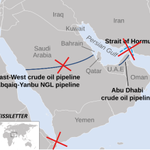
BREAKING: New high-resolution satellite imagery shows the pumping station on Saudi Arabia's East-West oil pipeline burned out end to end, with the entire process area blackened and crude oil that escaped the site pooled across the desert beyond the perimeter, per Vantor imagery.


BREAKING: Repairs to Saudi Arabia's East-West oil pipeline will take far longer than a month due to a lack of spare parts, with the pumping infrastructure catastrophically damaged and at least 8 locations on the pipe hit, per initial reports citing sources inside Saudi Arabia.
That leaves Saudi Arabia set to run out of crude oil stocks for export within five to seven days, taking around 4 million barrels per day, ~4% of global supply, off the market, per three industry sources to Reuters.
Some repaired points were struck again, using up the spares and undoing the work. Yanbu has about a week of stocks left on the kingdom's only export route that does not pass through Hormuz.
TradeFlow Intelligence retweeted

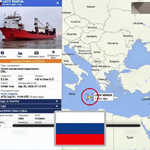
🚨🇷🇺🇸🇾 Russian convoy continues its journey toward the Eastern Mediterranean
The four vessels were spotted in the Strait of Sicily on September 1:
🔸 SPARTA, Ro-Ro cargo ship
🔸 ADMIRAL LEVCHENKO, Udaloy-class destroyer
🔸 GENERAL SKOBELEV, oil products tanker
🔸 AKADEMIK PASHIN, replenishment oiler
The convoy switched off its AIS shortly after passing Gibraltar. Port Said had been listed as the destination in AIS data before the vessels went dark, while Tartus or Tobruk remain possible destinations.


🚨🇷🇺🇸🇾 Russian convoy has just entered the Mediterranean sea
The four vessels have been spotted south of Spain.
🔸 SPARTA cargo ship
🔸 ADMIRAL LEVCHENKO destroyer
🔸 GENERAL SKOBELEV and AKADEMIK PASHIN tankers
The convoy switched off its AIS shortly after passing Gibraltar. AKADEMIK PASHIN had already used the same tactic last June, sailing through the Mediterranean with its AIS disabled.
After two months of absence from the Mediterranean, Russia is back. The convoy still indicates Port Said as its declared destination, but Tartus appears to be the more likely destination.

TradeFlow Intelligence retweeted

🚨🚨🚨 No stop in Murmansk for PORTOVYY.
The naval escort ended on August 22 as 🇷🇺 ADMIRAL KASATONOV returned to Severomorsk, but 🇷🇺 PORTOVYY (IMO 9246621) kept going.
Its AIS destination now reads VLADIVOSTOK, putting the 23-year-old LNG vessel on an unusual eastbound voyage via the Northern Sea Route. 🌏🧊
PORTOVYY had spent nearly four years as floating LNG storage at Gazprom's Portovaya facility before suddenly leaving the Baltic.
Interestingly, as EXCEL, it suffered a loss of propulsion off Alaska in 2015, followed by another engineering control failure. 👀
⚠️ Now the same hull faces thousands of nautical miles through one of the world's most challenging shipping environments.


TradeFlow Intelligence retweeted
🇨🇳 China just launched a shipping route that skips the Suez Canal and the Strait of Hormuz entirely.
A Chinese container line, started its regular "Ice Silk Road" service through Russia's Northern Sea Route this week, running almost the whole way along the Arctic coastline.
The first vessel, Dubai Tower, carries 1,740 TEU, tiny next to a modern mainline containership running 20,000-plus TEU.
The crossing takes about 20 days, versus roughly 40 days via Suez, half the transit time on paper.
Rosatom, Russia's state nuclear company, issues the Arctic navigation permits and supplies the nuclear-powered icebreakers that keep the route open in ice season.
Rosatom is already calling this the next step toward regular seasonal Arctic shipping, not a one off...
Strategically this matters more than the ship size suggests.
It's a Europe-Asia corridor that sidesteps Suez, Hormuz, and the Red Sea, all the chokepoints this account has covered all week, and gives China a shipping lane that doesn't run through anyone else's waterway.
One small ship doesn't reroute global trade but pair this with everything else running this week, the Yanbu to Sidi Kerir reroutes, Oman's Duqm bypass hub, and now a functioning Arctic corridor, and the pattern is the same everywhere...everyone's building a way around the chokepoints that used to be unavoidable.

TradeFlow Intelligence retweeted

CHART OF THE DAY: Global electricity generation in absolute terms, by source. A senior @IEA official, who shared the chart on LinkedIn, said coal was, for the time being, "the undisputed leading source of power generation." Perhaps we should spend more time talking about that?

TradeFlow Intelligence retweeted

Two of Australia's subsea internet cables were cut off Perth on August 9-10. Authorities cited "very suspicious activity from a vessel." No vessel has been publicly named.
Windward's multi-sensor analysis surfaced one whose movements align with the timing and location of the damage. Three independent sensors captured it: AIS showed erratic crossings over the cable corridor, EO imaged it 11km west of Perth, SAR placed it directly on the cable route hours before the cuts.
Any one of these signals can be argued with. Stacked together, the ambiguity collapses.
How the picture was built: okt.to/1VlghJ

TradeFlow Intelligence retweeted

Ukrainian attack drones successfully hit a second Russian logistics facility in Moscow this morning, setting it ablaze.
TradeFlow Intelligence retweeted

The main source of the money Russia uses to wage its criminal war against Ukraine is oil revenue generated through the shadow fleet.
‼️Some European, primarily Greek, companies transport Russian oil, supporting Russia’s war economy.
The price cap regime was introduced in 2022 to reduce Russia’s revenues while preventing a sharp decline in global oil supply. But today it has become a more harmful instrument that not only fails to reduce Russian profits, but also allows some European shipping company owners to make money at the expense of European security.
Let’s look at the numbers. In July 2026, vessels linked to G7 countries and their partners carried 36.2% of Russia’s seaborne crude oil exports. This was the fourth consecutive month of growth and the highest figure since July 2025.
‼️Greek companies were the main source of this increase: in July, they transported 26.4 million barrels of Russian oil, compared with 24.9 million in June. This was the highest monthly volume in almost three years.
Greek shipowners have already become an important part of Russia’s export system. In May 2026, vessels controlled by them carried almost 15% of Russia’s total seaborne crude oil exports. Back in April 2025, Reuters found that 15 of the 25 tankers loading Urals crude at key Russian ports were managed by Greek companies. These included Dynacom Tankers, Minerva Marine, and TMS Tankers.
The scale of this business is substantial. According to a Financial Times estimate published on July 7, 2026, Greek shipping companies earned at least $3.8 billion from transporting Russian oil over the previous three years. This figure covers only approximately 389 million barrels for which freight-rate data was available. Another roughly 153 million barrels transported by Greek companies were not included in the estimate. This means the documented volume amounts to at least 542 million barrels.
Several Greek companies are particularly prominent. Dynacom Tankers Management, founded by George Prokopiou, earned at least $915 million from transporting Russian oil since July 2023, according to the FT. Olympic Shipping and Management, linked to the Onassis Group, earned at least $404 million. Stealth Maritime and Polembros Shipping earned more than $200 million each. Minerva Marine, linked to Andreas Martinos, was among the companies that returned to transporting Urals crude in 2025. All of these companies say they operate within the sanctions regime.
This is an important clarification: the mere transportation of Russian oil does not constitute a sanctions violation. Under current EU rules, European companies can transport Russian oil, insure vessels, and provide brokerage and financial services as long as the oil is sold below the established price cap. Since February 1, 2026, the EU price cap for Russian crude oil has been $44.10 per barrel. In other words, the problem is not only sanctions evasion. Some of this business is explicitly permitted by the sanctions regime itself.
▪️ The first step for the EU is obvious: it needs to move from a price cap to a complete ban on European maritime services for Russian oil. European companies should be prohibited from transporting, chartering, managing, insuring, reinsuring, brokering, financing, certifying, or providing technical maintenance for Russian oil shipments regardless of the price of the cargo. This would immediately eliminate the legal channel through which Dynacom, Olympic, Stealth, Polembros, Minerva, and others can currently operate with Russian oil.
▪️ The second step is to audit the largest European operators of Russia’s oil exports. This should include a full audit of voyages by Dynacom Tankers, Olympic Shipping and Management, Stealth Maritime, Polembros Shipping, Minerva Marine, and other major operators. For each voyage, authorities should establish the vessel and IMO number, owner and beneficial owner, manager, charterer, Russian supplier, cargo volume, declared price, freight rate, loading port, final destination, insurer, P&I club, attestation provider, as well as any possible ship-to-ship transfers and AIS anomalies.
▪️ The third step is to change the sanctions criteria themselves. The EU should be able to impose restrictions not only for specific violations of the price cap, but also for systematic and economically significant support of Russia’s energy exports. A company that has earned hundreds of millions of dollars over years by maintaining Russia’s oil logistics should be assessed differently from an operator that made a single isolated voyage. At the same time, the criteria must be clear and sufficiently well-founded to withstand judicial review.
▪️ The fourth step is to remove the financial incentive. If transporting Russian oil provides a 30-40% premium on freight rates, the EU should make this business less profitable. Companies that continue to systematically transport Russian oil could lose access to certain forms of European insurance, government financial guarantees, export credit, port services, or other forms of public support. The calculation needs to change: the additional profit from a Russian voyage should be lower than the expected regulatory and financial costs.
▪️ The fifth step is tighter control over tanker sales. The sale of old oil tankers to high-risk third countries should require disclosure of the ultimate beneficial owner, source of financing, future manager, flag, insurer, and intended area of operation. For the riskiest transactions, simple notification is not enough - prior approval should be required. Particular attention should be paid to sales of old tankers to newly established companies in jurisdictions regularly used by the shadow fleet.
▪️ The sixth step is to establish real accountability for the transfer of vessels into the shadow fleet. If a tanker sold from the EU begins transporting Russian oil a few months later, regulators should determine whether the seller could have foreseen its end use, whether the buyer was a shell company, whether the sale price was abnormally high, who the intermediary was, and how quickly the owner, manager, flag, and insurer changed. Liability should depend on intent, knowledge, gross negligence, or failure to carry out adequate due diligence.
▪️ The seventh step is to sanction not just the vessels, but the entire network. The EU has already placed more than 630 shadow-fleet vessels on its sanctions lists, but this approach remains reactive. A vessel can quickly be resold, reflagged, or assigned a new manager or formal owner. The focus therefore needs to shift toward beneficial owners, commercial managers, ISM managers, crewing companies, brokers, insurers, flag registries, financial structures, and permanent ship-to-ship hubs.
▪️ The eighth step is to accelerate the sanctioning of individual tankers. The EU should not have to wait months for large political packages. It needs a mechanism for regular technical updates to the sanctions lists based on predefined criteria: transporting oil above the cap, AIS manipulation, false flagging, suspicious ship-to-ship transfers, lack of reliable insurance, repeated ownership changes through opaque SPVs, or work for already-sanctioned Russian entities.
▪️ The ninth step is to strengthen maritime enforcement together with the United Kingdom and EU coastal states. The detention of the Smyrtos in June 2026 showed that sanctions become significantly more effective when they have physical consequences. Where there is a legal basis - from false flagging to lack of adequate insurance or sanctions violations - inspections, detentions, and denial of port services should be used more actively.
▪️ The tenth step is to bring the issue of Greek shipping to the political level. According to the FT, citing European diplomats, Greece and Cyprus have repeatedly opposed a stricter price cap during internal EU negotiations. This creates an obvious contradiction: Europe is trying to reduce Russia’s oil revenues, while companies from EU member states are earning substantial revenues by maintaining the very system Europe is trying to dismantle.
‼️This is no longer just a matter of shipping policy. It is a matter of European collective security.

TradeFlow Intelligence retweeted

JD's call to Zelensky should be accompanied by a few hundred Patriot missiles in return.
If the US is going to make billions of dollars by doing deals with Russia indirectly, at least it shouldn't be at the cost of Ukrainian lives.
As of 2026, U.S. interest in Russian hydrocarbons is more indirect than commercial:
Direct purchases: almost zero. The U.S. has banned imports of Russian oil, petroleum products, and LNG since 2022.
Main interest: keeping enough Russian oil on the global market to prevent a sharp rise in international oil prices, while reducing Moscow’s revenues through sanctions and price caps.
Specific U.S. business interests: Chevron and ExxonMobil have major interests in Kazakh oil that crosses Russia through the CPC pipeline and is exported from Novorossiysk. Ukrainian attacks reduced these flows by up to 20% in July 2026, affecting both companies.
This explains why Washington recently asked Ukraine not to attack CPC tankers and infrastructure.
In one sentence: The U.S. does not need to buy Russian oil; it needs to prevent its disappearance from the global market from driving up prices and to protect U.S. investments that depend on routes through Russia.
Meanwhile, Trump is accused of manipulating the price of crude oil weekly with constant threats, attacks, or simply absurd statements.

TradeFlow Intelligence retweeted

US quietly sells seized Russian-linked shadow fleet tankers for scrap
⚓️The US government has sold seized shadow fleet tankers Era and Lileo to recycler GMS, with both vessels now heading to Alang for demolition
⚓️The sale closes a sanctions case spanning Venezuelan oil exports, Russian ownership structures and a dramatic US pursuit of Era across the Atlantic
⚓️Despite court approval and US Treasury waivers, banks, insurers and service providers were reluctant to engage, underscoring the difficulties of disposing of sanctioned vessels even after seizure
lloydslist.com/articles/2026…

TradeFlow Intelligence retweeted
🚨🚨🚨 Ship-to-ship operation underway north of the Suez Canal!
The two sanctioned 🇸🇱-flagged vessels VERNAL (IMO 9207027) and CAVELA (IMO 9259733) met yesterday at 14:30 UTC.
👀 The operation appears to be refueling VERNAL, which had just arrived at the 🇪🇬 Port Said anchorage.
We can only hope that no major spill occurs in this high-traffic shipping area.


TradeFlow Intelligence retweeted

❗️The most important news from Crimea today, which you might have missed:
▪️Fires broke out in Sevastopol after strikes hit positions of the Russian Electronic Warfare and Air Defense forces.
▪️Sevastopol is experiencing problems with electricity and gasoline, but the occupying authorities are not stopping their propaganda.
▪️A strike hit a repair base used by the occupiers in the village of Abricosovo, Primorsky district.
▪️Ukrainian intelligence operators struck at valuable targets in Crimea (video).
▪️What will happen to Crimea after the end of the 40-day operation?
▪️Swim at your own risk: sewage was discharged into the water in Yalta (video).
▪️A military unit of the Russian National Guard was on fire in Sevastopol.
Today marks the 1620th day of the war.


TradeFlow Intelligence retweeted

An LNG tanker carrying a shipment from Qatar was struck by a projectile while transiting the Strait of Hormuz 🚢⚠️
Security consultancies Vanguard Tech and Marisks identified the ship as the Gaslog Shanghai LNG tanker
The ship had picked up a cargo from Qatar last week

TradeFlow Intelligence retweeted
🚨🛢️ 2 MORE TANKERS ATTACKED AT THE CPC TERMINAL
The NISSOS SIFNOS, operated by Chevron-controlled Tengizchevroil, was struck by a drone while loading oil at the CPC Marine Terminal.
A fire broke out near the vessel’s crude-loading manifolds but was extinguished. No casualties or oil spill were reported.
A second tanker, the MARATHI, was also attacked around 6 nautical miles from the terminal while approaching to load crude.
CPC has now suspended oil-loading operations, although the pipeline itself remains operational.
This is not simply another attack on Russian infrastructure.
CPC carries more than 1 million barrels per day, mostly Kazakh oil, and serves Western shareholders and producers including Chevron, ExxonMobil, Eni, TotalEnergies and Shell.
The target is increasingly the entire physical chain: the pipeline, the loading point and now the tankers collecting the barrels.
Even without a major spill or structural failure, repeated attacks can deter vessels from calling at the terminal and disrupt exports through risk alone.


TradeFlow Intelligence retweeted
🚨🚨🚨 A Russian shadow fleet tanker abandoned off the coast of Oman is now leaking oil.
The 🇨🇲 CAROLINE BEZENGI (IMO 9224439) is more than just another maritime incident.
Here's why this case deserves close attention. 👇
[THREAD]


TradeFlow Intelligence retweeted

➡️ Russia made an oil delivery to Indonesia last week with a single Aframax tanker...but that's just the start.
➡️ The 150mn bbl contract, signed in April, runs to year-end 2026.
➡️ At ~625kbd, it easily makes Indonesia Russia's 3rd-largest crude buyer after India and China.
➡️ Russia needs the diversification, and the ongoing disruptions of the Strait of Hormuz make it highly likely more countries are going to prioritize locking in non-Persian Gulf supply going forward.
#oott

TradeFlow Intelligence retweeted

‼️.@CaolanReports Aughinish Alumina documentary has just dropped on YouTube.
Check it out!
Glad to have played a small part in this fantastic and well executed production.
#Alumina22
TradeFlow Intelligence retweeted

Back to our previous study.
This time, the focus is on ASKAR SARYDZHA.
ASKAR SARYDZHA (IMO: 9082142) is a general cargo vessel sailing under the Russian flag 🇷🇺. It has a length overall (LOA) of 139.81 meters and a beam of 16.56 meters. Source: @MarineTraffic @Kpler.
According to @Reuters (reuters.com/world/europe/ukr…), ASKAR SARYDZHA has been identified as transporting military equipment between Iran and Russia.
The vessel is also sanctioned by the U.S.
ASKAR SARYDZHA is currently located in the Caspian Sea (last reported 1 day and 16 hours ago).
Last known voyage:
• Departure: Anzali, Iran (UN/LOCODE: IRBAZ)
• Destination: Unknown
Given its reported route and destination, it is possible that the vessel is bound for Russia. However, the nature of its current cargo is unknown. Reuters has previously reported that the vessel transported military equipment between Iran and Russia, but there is no public confirmation that its current cargo is military-related.
@joyceslee @mmkelly22 @dansabbagh @InsidConflict @SONARROW_OSINT @TiaFarris10 @DimAmpatzidis @TradeFlowIntel @TheDeepDraftHQ @RFNOSBlog @staunovo @liebman_marc
#MaritimeSecurity #OSINT #Shipping #Maritime #News #Vessel #Russia #Iran #Ukraine #US


A short analysis of how #Iran and the #IRGC are supplied by #China.
According to @CNN journalists @MelissaBellCNN and @GianlucaMezzo (edition.cnn.com/2025/10/29/m…), Iran and China continue their commercial exchanges despite @UN sanctions. To rebuild its ballistic missile program, Iran requires sodium perchlorate, a key precursor used in the production of the solid propellant that powers many of Iran's medium-range ballistic missiles.
According to the report, shipments of sodium perchlorate have arrived from China at the Iranian port of Bandar Abbas, located on the Strait of #Hormuz, aboard cargo vessels that have been sanctioned by the United States. One example is the MV Basht, which had already been sanctioned by the #US. before departing from the Chinese port of Gaolan (Zhuhai), a port known for handling chemical cargo. The vessel reportedly departed Zhuhai on September 15 and arrived in Iran on September 29.
Several other vessels appear to have made similar voyages between China and Iran, including:
* MV HAMOUNA - IMO 9820271
* MV BASHT - IMO 9346536
* MV BARZIN - IMO 9820269
* MV ELYANA - IMO 9165827
* MV SHABDIS - IMO 9349588
* MV ABYAN - IMO 9349588
* MV ARZIN - IMO 9284142
According to a @washingtonpost investigation by @joyceslee and @mmkelly22 (washingtonpost.com/investiga…), these vessels appear to be affiliated with the Islamic Republic of Iran Shipping Lines (#IRISL).
Additional reporting also suggests that Iranian cargo vessels have supported #Russia's production of #Shahed-type drones by transporting components across the #Caspian Sea. According to The @guardian and @dansabbagh, the vessel Port Olya-4 (IMO 9481934) has been linked to these supply routes (theguardian.com/world/2025/a…). Shahed drones continue to be used extensively by Russian forces in the war against #Ukraine.
According to @Reuters (reuters.com/world/europe/ukr…), vessels such as the Composer Rakhmaninoff and the Askar-Sarydzha, both sanctioned by the #US, have been used to transport military goods between Iran and Russia.
The available reporting suggests that commercial maritime networks remain a critical enabler of Iran's missile and drone supply chains. Chinese exports of dual-use chemicals, combined with the logistical capabilities of IRISL-linked vessels, appear to sustain Iran's military production while also indirectly supporting Russia's continued use of Shahed drones in Ukraine despite international sanctions.
I invite the entire #OSINT community and all spotters to investigate.


