

Defence, arms industry, tech innovation & space. Usual caveats.
Berlin, Deutschland
Joined September 2017
- Tweets2K
- Following1.6K
- Followers2.2K
- Likes5.8K





Pinned Tweet
📢 Excited to share that my latest research paper, "Blinded by the Hype: How Envisioned Futures Shape the Role of Artificial Intelligence in Defence Applications and Warfare", has just been published in Zeitschrift für Außen- und Sicherheitspolitik! #ZfAS
Torben Schütz retweeted

"Europe is spending more on defence than ever, but real capability is built after the equipment arrives. Hungary's experience shows what the hard part involves."
rusi.org/explore-our-researc…

Torben Schütz retweeted

1/4 Die Europäer sind noch Lichtjahre von strategischer #Rüstung entfernt. "Der CARD-Bericht 2026 empfiehlt den Mitgliedstaaten, eine Zusammenarbeit von Anfang an – bereits in der Phase der Fähigkeitsplanung – in Betracht zu ziehen und nicht erst bei der Bereitstellung👉
Torben Schütz retweeted

Much needed qualification on the eternal hype over Arctic shipping routes.
One may add that while Russian Arctic/near Arctic hydrocarbon exports may benefit from the current situation, enduring penalties on extraction costs should limit appeal.
lowyinstitute.org/the-interp…

Torben Schütz retweeted

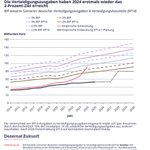
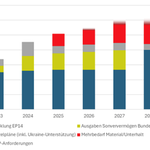
Diese Grafik von @fl_schuster ist die entscheidende Grafik um die Problematik des Haushalts zu verstehen

Torben Schütz retweeted
"Die Ukrainer schafften es, sich 2026 besser an russische Infiltrationstaktiken anzupassen und dank eigener technologischer Innovationen wieder in die Offensive zu kommen."
Erneut Reduktion auf Technik - das Gegenteil betonen alle Kdre von #Vivaldi
spiegel.de/ausland/ukraine-g…

Torben Schütz retweeted

Fascinating read on French concerns about Germany's acquisition of deep precision strike capabilities.
ft.com/content/7f61b561-bcbd…

Torben Schütz retweeted
"Was man nicht geübt hat, das kann man nicht"
Alter Grundsatz.
Dafür muss aber auch intensiv und realistisch geübt werden bei Großübungen und auch dazwischen.
Zumal derzeit viele neues Material zuläuft und das Zusammenwirken erst eingespielt werden muss.
br.de/nachrichten/bayern/bun…

Torben Schütz retweeted

I've heard similar anecdotes from other exercises with NATO militaries with Ukrainian drone teams. The NATO force often takes heavy losses on the first day, but then quickly adapts on the subsequent days of the exercise. The write ups in the media often fail to mention these adaptations or the specific conditions of the exercise, which limits the ways the forces can operate.

In a U.S. Army war game in Germany, Ukrainian drone pilots playing the enemy caused about 70% of an American tank brigade’s losses in the first three days. Three days later, that figure was under 30%.
defence-blog.com/ukrainian-d…

Torben Schütz retweeted

Südkorea hat quasi eine nicht-nukleare Triade an weitreichenden See-, Luft-, und Bodengestützen Raketen und Lenkflugkörpern aus fast ausschließlich pur nationalen Systemen bei 2,33% des BIP als Verteidigungsausgaben. Fast alle davon wurden in den letzten 20 Jahren eingeführt.

First Look At Hypersonic Boost-Glide Vehicle Just Tested By South Korea
There is something of a budding, but murky hypersonic arms race emerging on the Korean Peninsula.
twz.com/land/first-look-at-h…

Had the absolute pleasure of writing a short piece on the defence industrial dimension of Europeanizing NATO for @ICDS_Tallinn.
TL;DR: Despite a unique opportunity, longstanding challenges and incentive strcutures won't vanish and changing the system will entail political costs.

Reconfiguring the European Defence and Technological Industrial Base (EDTIB) for a more European NATO is possible but, like all serious reforms, entails high political cost. It is unreasonable to hope that private companies will change their current behaviour without state-induced incentives and pressure.
Defence industrial bases are vital for security of supply to the armed forces, writes Torben Schütz, Research Director of EDINA. @_schuetzt
icds.ee/en/europeanising-nat…

Nevertheless, for most relevant areas - production capacity, innovation & adaptability, quality & timeliness, economics & competitiveness, and dependencies - we have good ideas and best practices to use. Yet overcoming political inertia & industrial interests doesn't come cheap.
1
2
63
Make sure to check out the other pieces in this comprehensive series - many still forthcoming - and given them a follow here or on any platform of your choosing! icds.ee/en/category/european…
1
48
Torben Schütz retweeted

I haven’t seen the plan described in this article (although I want to) but I feel confident about its content and what’s next. Russian strategy has discussed for 10+ years what we are seeing now as strikes. A 🧵 on the calculated cruelty in the strategy:
nytimes.com/2026/10/02/world…

Torben Schütz retweeted
*surprised pikachu* on the defenece if you don't have C-UAS or your own drones you get killed. Incredible. Also the part about the trees is very important...


Interesting piece: ‚My unit took on Ukraine’s ‘Nemesis’ drone hunters. Here’s what really happened.‘ taskandpurpose.com/opinion/o…

Torben Schütz retweeted


Der Krieg in der Ukraine hat innerhalb von nur wenigen Jahren zu einer bemerkenswerten Veränderung der militärischen Feldbefestigung geführt.
hartpunkt.de/vom-schuetzengr…

Torben Schütz retweeted
Ah jemand war noch nie auf einem U-Boot, U-Jagdflugzeug oder Fregatte. Noch billiger als KI sind beispielsweise auch Algorithmen die schon seit den 70ern dort genutzt werden...

Torben Schütz retweeted
Bezüglich die 60 jährigen Generäle sind nicht innovativ genug. Das hier ist von 1998!

Torben Schütz retweeted
In fast jeder Zeitung wird aktuell über Rüstung geredet und dabei beschäftigt man sich nur mit was beschafft werden soll. Selbst bei den relevanten Abgeordneten bleibt es auf dieser Ebene. Wir reden null über die großen gesetzlichen Rahmenbediengungen. 🧵
Torben Schütz retweeted

AI Goes to War and Is Not (Yet) Winning
This is the core message of "Ambivalent Acceleration," my new comparative assessment of the current state of defense AI in (now) 37 countries. Frank Schmiedchen et al. will publish it in their forthcoming volume "Living with AI: State, Applications, and Challenges of Artificial Intelligence," which should be available from Springer later this year. This chapter updates the findings of all 25 case studies published in "The Very Long Game," and adds new insights from the latest DAIO case studies on PAK, POL, IDN, ROU, BEL, BRA, and all six GCC nations
Contrary to the prevailing rhetoric, AI is still primarily considered an extension of existing military systems and platforms, thus prolonging the imaginaries (see yesterday's post "Goodbye California – Hello Kyiv"), concepts, and practices developed to use them.
Yes, we are witnessing an accelerated push for defense AI driven by war(s), battlefield deployment, and increasing defense spending and private defense funding. But the outcome is ambivalent:
First, emulation is even more dominant than two years ago, albeit with a different twist as the fear of missing out on how Ukraine is using defense AI (FOMO-U) is creating a new role model. And so is, among others, the 5-day war between PAK and IND, as I argue in the paper.
Second, developing AI against the background of existing systems and platforms shapes AI in line with their prime tasks. This is strengthening "defense verticals." That's why software is not "eating" defense hardware, as the paper discusses.
Finally, concerns about digital sovereignty are significantly more pronounced today than two years ago. This creates a geostrategic dilemma as the partner you might want to work with for geopolitical reasons is the one that limits your leeway for geoeconomic reasons.
And now…..enjoy reading the paper. borchert.ch/wp-content/uploa…. Thank you
cc @KarasikTheodore @Lauren_A_Kahn @mchorowitz @paul_scharre @KofmanMichael @HoansSolo @Mauro_Gilli @aa_gilli @Konflikt_Sicher @HorizonDefence @Ce_Moll @breitenbauch @sambendett @Adib_Moghaddam @jessicadorsey @WarintheFuture

Torben Schütz retweeted
"Thus, policy-makers must approach military innovation from the position of advancing strategy towardss policy goals and not just adopting new technology for the sake of appearing innovative" tandfonline.com/doi/full/10.…
