
Assistant Professor @Cornell @CornellCIS Prev: Postdoc @allen_ai @uwcse; PhD @MIT_CSAIL; Sr. Research Scientist @UberATG @Waabi_ai
Joined August 2014
- Tweets509
- Following224
- Followers2.3K
- Likes769
Pinned Tweet
I've been wanting to make 3D reconstructions not just realistic, but also **interactable** and **actionable** for years.
Thanks to @XHongchi97338, we're now a step closer!
Introducing DRAWER — a framework for the automatic construction of realistic, interactive digital twins.

Glad to introduce our #CVPR2025 paper "DRAWER", allowing one to create a realistic and interactable digital twin from a video of a static scene without any interactions with the environment. It unlocks many opportunities in gaming and robotics!
Webpage: drawer-art.github.io
Wei-Chiu Ma retweeted

The dogma of the last decade in computer vision is that all classical algorithms should be replaced by neural networks. This has been very productive but, counterintuitively, with the latest frontier models, I find myself sometimes turning back to classical methods.
If you have the training data, the dogma still holds. But there are situations where data is hard to get, there exist good classical algorithms for solving a problem, optimization methods are just better, or where some simple code just does the thing you want.
When writing code was time consuming and error prone, training everything made sense. Now, that a frontier model can code up and test solutions quickly, getting a solution through coding can be faster than gathering training data and training a model. Consequently, I think there will be more hybrid approaches that blend trained models and code.
We now have generic, high-level, planners that can execute sequences of lower-level tasks to solve large problems. These lower-level tasks may be solved by a neural network, a classical method, or specialized code written on the fly.
It never pays to be religious about technology. The future is probably hybrid. Pick the thing that works for you.
Wei-Chiu Ma retweeted

RL needs rewards, but reward models are hard to generalize and they often fail to capture nuance! We found that VLMs can generalize but tend to have a considerable amount of confirmation bias - they think things are far more successful than they actually are.
@memmelma and team found a frustratingly simple answer - decouple a description of whats happening from an assessment of how good this is. I think of this a lot like rubric based rewards for LLMs, first define what your notion of success is and then score things consistently according to this rubric. This pretty simple decoupling provides pretty significant benefits on reward model calibration.
It's a simple change, but it's super helpful and @memmelma has done a bunch of work to make it usable out of the box. Stick in your OpenRouter key and give it a try :)
weirdlabuw.github.io/dna/dem…
And as always, we show it works to enable real-world RL :)
Website: weirdlabuw.github.io/dna/
Paper: arxiv.org/abs/2611.03622

Want to turn any VLM into a better reward model for robotics? (yes, even Astra)
Introducing D&A: decoupling description and assessment improves any VLM family for zero-shot robot rewards.
D&A scales with improvements across GPT, Gemini, Claude, Qwen, ...
It enables zero-shot RL and filtered IL, improves code-as-policies via rich language feedback, and achieves SOTA on three benchmarks.
Website: weirdlabuw.github.io/dna
Wei-Chiu Ma retweeted

Agentic Computer Graphics
LLM agents are now generating and refining graphics code. This survey provides a unified taxonomy and an agentic literature system to navigate the rapidly growing field.
Wei-Chiu Ma retweeted

How should we approach research, when the very field we work on is going through rapid and potentially fundamental changes?
I recently gave a talk at the Stanford Vision Seminar, reflecting on my PhD journey and how AI is changing the way I think about research. I adapted part of it into a new blog post, organized around three questions:
1. What should we work on?
2. How should we work with AI?
3. What is a PhD for?
I hope some of my reflections are helpful. The talk ended with an open discussion, and I’d love to continue it here; curious how others are thinking about these questions.
Personally -- as much as there's FOMO, I also think life is very long, and we have time.
toruowo.github.io/blog/posts…

Wei-Chiu Ma retweeted

Hi all, I have a new result I'm excited to share. It turns out that *all existing implementations* of softmax and cross-entropy (that's JAX, PyTorch, textbooks, etc) have a subtle bug --- two bugs, actually. A simple rewrite fixes both, and eliminates "slingshots" when grokking:
Wei-Chiu Ma retweeted

If you're working on camera-controllable video models (recammaster, gen3c, etc.), I believe you'll be extremely interested in trying out our neurips spotlight (1 out of 33) benchmark!

Excited to share our #NeurIPS2026 E&D 🏆 Spotlight!
We all agree that memory is essential for modeling a persistent 4D world.
But: 🙋 Can 4D Foundation Models Remember?
Introducing 🔥 PersistBench: a benchmark for testing visual memory in camera-controllable video models / 4D reconstruction models / video-to-360° models.
One key challenge in evaluating visual memory is obtaining real-world ground truth for what happens to an object after it leaves the camera’s view.
In PersistBench, we introduce a simple way to sidestep this challenge. 🤫
🌐 Project Page: guangzhaohe.com/persistbench…
🏆 Leaderboard: huggingface.co/spaces/therea…
🐙 GitHub: github.com/guangzhaohe/Persi…
🤗 Dataset: huggingface.co/datasets/ther…
See how well your models do and submit to our leaderboard today!
🧵 [1/n]
Wei-Chiu Ma retweeted

Exploration is hard for RL when training high-DoF dex hands ✋
X-Reset makes generalist object-centric RL easier by resetting to human hand-object states 🙋♀️
We mitigate the exploration problem, and train a single policy to manipulate a variety of objects to any goal pose 🧵
Wei-Chiu Ma retweeted

DINOv2 has never seen a caption, and Qwen3 has never seen an image. We still aligned their embedding spaces without a single image-caption pair.
It even works when the images and the captions come from different datasets.
Project page: dominik-schnaus.github.io/un…
⬇️
Wei-Chiu Ma retweeted

Excited to also share PersistBench that explores whether 4D foundation models remember (TL;DR not really!) #NeurIPS2026
Excited to share our #NeurIPS2026 E&D 🏆 Spotlight!
We all agree that memory is essential for modeling a persistent 4D world.
But: 🙋 Can 4D Foundation Models Remember?
Introducing 🔥 PersistBench: a benchmark for testing visual memory in camera-controllable video models / 4D reconstruction models / video-to-360° models.
One key challenge in evaluating visual memory is obtaining real-world ground truth for what happens to an object after it leaves the camera’s view.
In PersistBench, we introduce a simple way to sidestep this challenge. 🤫
🌐 Project Page: guangzhaohe.com/persistbench…
🏆 Leaderboard: huggingface.co/spaces/therea…
🐙 GitHub: github.com/guangzhaohe/Persi…
🤗 Dataset: huggingface.co/datasets/ther…
See how well your models do and submit to our leaderboard today!
🧵 [1/n]
Wei-Chiu Ma retweeted
Excited to share our #NeurIPS2026 E&D 🏆 Spotlight!
We all agree that memory is essential for modeling a persistent 4D world.
But: 🙋 Can 4D Foundation Models Remember?
Introducing 🔥 PersistBench: a benchmark for testing visual memory in camera-controllable video models / 4D reconstruction models / video-to-360° models.
One key challenge in evaluating visual memory is obtaining real-world ground truth for what happens to an object after it leaves the camera’s view.
In PersistBench, we introduce a simple way to sidestep this challenge. 🤫
🌐 Project Page: guangzhaohe.com/persistbench…
🏆 Leaderboard: huggingface.co/spaces/therea…
🐙 GitHub: github.com/guangzhaohe/Persi…
🤗 Dataset: huggingface.co/datasets/ther…
See how well your models do and submit to our leaderboard today!
🧵 [1/n]
Wei-Chiu Ma retweeted

The craziest experiment in my lab is a new setup by @diatkinson where he has found a way induce introspection on open LMs using @dillonplunkett's protocol, that lets him look inside introspection. It's nuts.
Here's how the experiment works... 🧵 →

Wei-Chiu Ma retweeted

Want autoresearch on private research data you'd rather not share with a frontier lab? Outerloop now supports self-hosted LLM backends.


Wei-Chiu Ma retweeted

Andrej Karpathy just dropped a 1-hour Stanford lecture on AI engineering from scratch:
"You can basically delete everything… delete everything, keep Graph"
Here are the core ideas:
10% → LLM: "I treat GPT like a general-purpose computer that can be reprogrammed at runtime"
30% → Prompt: "I give that computer a program written in natural language"
50% → Agent: "I wrap the model with a goal, context, memory, and tools that turn prediction into action"
70% → Loop: "I separate the inner loop, where the model learns from context, from the outer loop, where training updates the weights"
100% → Graph: "I organize communication as data-dependent message passing across directed graphs"
This 1-hour Stanford lecture will teach you more about AI engineering than most 100 random YouTube tutorials combined
"Just chop everything up and throw it into the mix"
Bookmark it and watch later
Then read the full article below ↓

Wei-Chiu Ma retweeted
Ever suffered from making slides like I do? 😭
Aligning everything, fighting animations, trying to add cool interactive visualizations…while AI generated slides still look extremely confusing and overwhelming.
So I vibecoded JostSlides
⭐ github.com/guangzhaohe/JostS…
🧵 (1/n)
Wei-Chiu Ma retweeted

Students sometimes ask me if it still makes sense, in this accelerating age, to pursue a PhD in AI.
Perhaps counterintuitively, I think it's a great time to do so.
I wrote up some thoughts on this here: web.mit.edu/phillipi/www/wri…
Wei-Chiu Ma retweeted

AI often decouples knowledge—which is about access to information—from understanding—which is about mastery. There is danger in settling for the former when what one needs is the latter. Understanding is harder to gain and quantify, but ultimately much more important.
Wei-Chiu Ma retweeted

Can 4D Foundation Models Remember?
@AlexHe00880585, @ElorHadar, @weichiuma
tl;dr: benchmark->visual memory in 4D foundation models
arxiv.org/abs/2609.20819


Wei-Chiu Ma retweeted
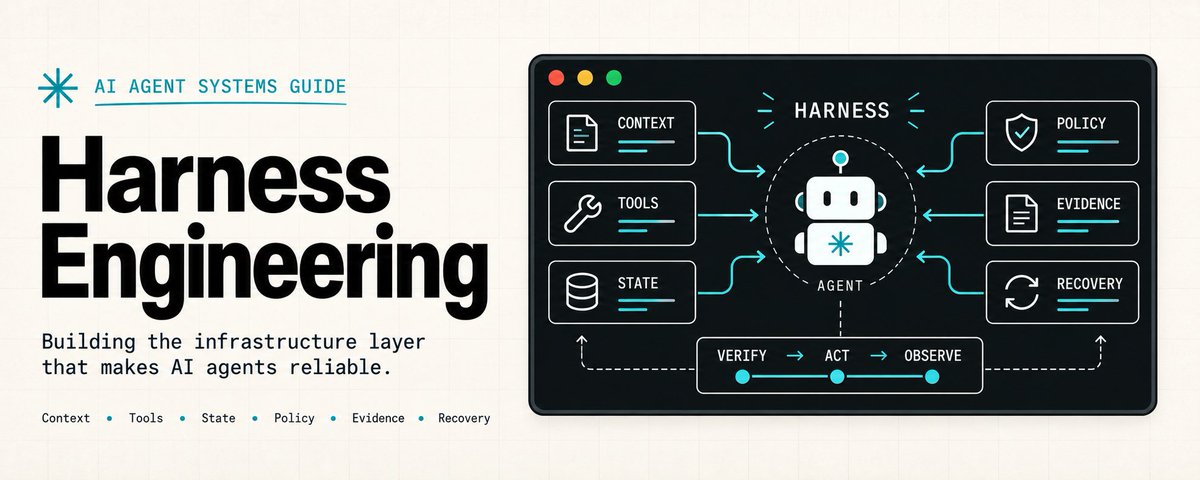
We built our 3D coding harness earlier this year (arxiv.org/abs/2606.02580), back when none of the models we tested could really hit the bar.
Revisiting it now with stronger models like Astra, we’re seeing a sharp threshold: below it, the harness helps a lot. above it, almost not at all. This is mostly the same across all model providers.
A small warning for everyone building “agents”: all of today’s scaffolding will eventually get eaten by the base model.
Also, we're not done playing with this. Sharing more interesting stuff soon :)

Wei-Chiu Ma retweeted
Getting the details of a sim2real stack is a huge pain, and attention to detail is key! We’ve been using Tao’s library at UW and would highly recommend :)

🚀 Looking for a reliable Franka controller with seamless sim-to-real transfer?
Meet FrankaTwin: github.com/tsrobcvai/frankat…
🎮 Joint/Cartesian position & impedance + gripper
🎯 System ID: 3.6 mm EE / 28 mrad joint RMSE (sim vs. real)
Wei-Chiu Ma retweeted

I increasingly think future software will combine code for control flow with small neural programs for "fuzzy" judgments.
That's what I've been exploring with ProgramAsWeights, which answers the question of where those neural programs come from: they are "compiled" from English descriptions.
For example, I combined 30 neural programs with a decision tree to build a course website helper that looks like a chatbot but runs locally. Each small program handles a question like "Which specialist answerer should this be routed to", and code controls the overall flow.
You can try building with it here:
programasweights.com

After co-inventing ChatGPT, I kept asking myself: why have superhuman chat models not led to AGI?
I’ve spent the last 2 years in stealth building a new way to train models (RLCD), and a new type of frontier AI model that we are releasing today: Jev
• 20-200x faster
• 40-400x cheaper (w/ output tokens free)
• Frontier composable intelligence optimized for decisions
AFAICT the shortest path to AI-based economic revolution