

Classis is the journal Of Classical Christian Education, published by the ACCS. Join us as we pursue a "new old way."
Joined June 2025
- Tweets165
- Following77
- Followers47
- Likes142







Pinned Tweet
The Classic Novel The Brother’s Karamozov is often known for its central chapters: Rebellion and The Grand Inquisitor. Most professors who include this book in their curriculum read the chapter to show their students the impossibility of God or the wicked and hopeless state of the world, however, it is much more than that.
Here’s how Dostoevsky uses the character of Ivan as a foil to the real message of the book...
Classis retweeted

my friends, it is time:
in conjunction with @avemariapress and a new book they released, i spent the last few months illustrating the entire structure of the summa theologica, by thomas aquinas.
in my shop here: owen-cyclops.myshopify.com/
can i show and tell you, in this thread:


Classis retweeted

From @PeteHegseth’s book (co-written with @goodwind67), Battle for the American Mind:
“No other faith can claim integration with recorded history like Christianity. No other form of education integrates everything so naturally—history, literature, language, philosophy, theology, science, art, mathematics, and music—into a single system of understanding. And from this integrated study, classical Christian students gain perspective and wisdom as they evaluate story after story through the lens of a Christian viewpoint—not as indoctrination, but rather as they investigate the historical narrative. Could it be that Progressive schools study so little history because they cannot avoid the historicity of Christianity?”

Classis retweeted
WTM has been going woke for a while.
None-woke homeschool companies:
@RomanRoadsPress and @KeplerEducation (companies I founded)
@ClassicalConv (@TheRobertBshow)
@LogosPress and @canonpress
@veritaspress
@MemoriaPress
@IEW
@tpusaeducation
And many more! (Add handles as you think of them below)
Classis retweeted

How do the common arts explain or illustrate the liberal arts, and what ramifications may this have for classical educators?
Join Austin Hoffman as he explains Hugh of St. Victor's novel presentation of the the mechanical arts as an image of philosophy as a whole.
Link below:
Classis retweeted
youtu.be/SHDo9iFs5Zs
Join Devin O'Donnell (@BroethiusDevin) as he explores the etymology behind key terms in classical education.
Episode one of Isidore's Pub reminds us of the Greek root behind "school."

How can we approach AI optimistically without taking a Polly-Anna attitude towards technology? @crwiley1962 provides a hopeful vision of life with artificial intelligence in "Apple Pie and Rocket Ships"
Come for the philosophy, stay for the short stories ("Neo-Amish World with an AI Twist" and "Butlerian Jihad-Lite")
Link below:


"We are all Blade Runners now. We teachers find ourselves, just like Harrison Ford’s Deckard, sitting at a desk and searching for a soul, trying to sense whether there was ever a person on the other side of the page we’re reading."
Dr. Austin Freeman (@DrAustinFreeman) invites us to consider the threat of AI to education and how we can cultivate our students to pursue what is good rather than what is easy. Referencing Dante's instruction to the gluttonous on Mount Purgatory, Freeman wishes that we would dream of more than electric sheep.
Link below:

"AI and the Path of Temptation," by Austin Freeman, Classis Vol. 33, No. 1.
classicalchristian.org/class…

Classis retweeted
Come check out the third episode of "The Four"!
Heather Lloyd, @goodwind67, @BroethiusDevin, and @TyRallens discuss four questions of classical consequence.
This episode's questions include:
1. Smartboards in the classroom. Good or Bad?
2. Audiobooks - Yes or No? Good or Bad?
3. Thesis Projects. Are they still worth it in the age of AI?
4. Battle question! What is the classical Christian response to AI?
The Association of Classical Christian Schools (ACCS) is a membership and accreditation organization for schools committed to classical Christian education in the Protestant tradition. The Four is a podcast of the ACCS to equip school leaders to face the tough questions of classical education in the modern world.
Classis retweeted

Apple Pie and Rocket Ships—my proposal for a hopeful future with Artificial Intelligence


Classis retweeted
Here is the next episode of our new show - The Four!
Heather Lloyd, @goodwind67, @BroethiusDevin, and
@TyRallens discuss four questions of classical consequence.
This episode's questions include:
1. Cheerleaders - Are they Good or Bad?
2. Gentle Parenting - Is it Good or Bad?
3. Teaching Logic in one grade, teaching Logic across several grades, teaching Logic too early or too late, or not teaching Logic at all. What is the best way to teach Logic?
4. Battle question! Are house systems a necessary way to shape school culture—do they work? Why not student council instead?
The Association of Classical Christian Schools (ACCS) is a membership and accreditation organization for schools committed to classical Christian education in the Protestant tradition. The Four is a podcast of the ACCS to equip school leaders to face the tough questions of classical education in the modern world.
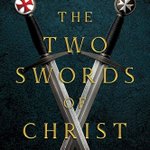
If you didn't preorder Raymond Ibrahim's latest, what are you even doing? We highly recommend Defenders of the West and Sword and Scimitar as powerful antidotes to modernist assumptions about the crusades (Christians bad; muslims good).
His newest book, The Two Swords of Christ, promises to be just as good.

Classis retweeted

"Boethius shows that while Stoicism can steady the soul, fulfillment is grounded in an intelligible worldview and a belief in a God who takes a personal interest in our own well-being."


"We ought to imagine ourselves, holding our diplomas high above the heads of our small and hopping students, provoking their longing. But just like these pilgrims, who realize that the only way to fulfill their hunger is to move further up the mountain, we ought to dangle that diploma until the student learns how to build a ladder to reach it. At some point, they should realize that they spend more effort trying to circumvent the process than by simply doing the work correctly."
Austin Freeman, "AI and the Path of Temptation," Classis 33.1
From the forthcoming issue of Classis on AI and Technology:
"We are all Blade Runners now. We teachers find ourselves, just like Harrison Ford’s Deckard, sitting at a desk and searching for a soul, trying to sense whether there was ever a person on the other side of the page we’re reading."
-- "AI and the Path of Temptation," Austin Freeman